


NATO Strengthens Baltic Defence Architecture
Syllabus: GS2/ IR
Context
- NATO has restructured its Baltic command format by assigning the German-Netherlands Corps to directly oversee the tactical defense of Estonia and Latvia.
What is the German-Netherlands Corps?
- The German-Netherlands Corps is a multinational military headquarters based in Muenster jointly led by Germany and Netherlands.
- It forms part of NATO’s rapid-response and collective defence structure.
- The corps reportedly includes participation from around 16 countries.
- In wartime conditions, a corps-level command can oversee approximately 40,000–60,000 troops across multiple divisions.
- Previous System: All three Baltic nations (Estonia, Latvia and Lithuania) and northern Poland operated under the single Multinational Corps Northeast command headquartered in Szczecin, Poland.
About NATO
- NATO, or the North Atlantic Treaty Organization, is a military alliance of countries.
- Establishment: It was founded in 1949 with the signing of the North Atlantic Treaty, more popularly known as the Washington Treaty.
- Aim: To ensure the security and defense of its member countries through collective defense.
- Founding Members: The original members of NATO were Belgium, Canada, Denmark, France, Iceland, Italy, Luxembourg, the Netherlands, Norway, Portugal, the United Kingdom, and the United States.
- Collective Defense: The cornerstone of NATO is Article 5 of the North Atlantic Treaty, which states that an armed attack against one or more of its members is considered an attack against all members.
- Decision-Making: Decisions within NATO are made on the basis of consensus among member countries.
- The North Atlantic Council, which includes the ambassadors of all member countries, is the principal political decision-making body.
- Members: It has 32 member countries, Finland and Sweden became the 31st and 32nd members respectively.
- On signing the Treaty, countries voluntarily commit themselves to participating in the political consultations and military activities of the Organization.
Source: TH
Concerns Over Anti-Dumping Duties on Chemicals
Syllabus: GS3/ Economy
Context
- Anti-dumping duties on chemicals have become a key conflict between large manufacturers seeking protection from cheap imports and MSME-driven downstream industries facing higher raw material costs.
What are Anti-Dumping Duties?
- Anti-dumping duty (ADD) is a trade remedial measure imposed by a country to protect domestic industries from unfairly cheap imports.
- Dumping occurs when a foreign company exports goods at prices lower than their domestic market price, or the cost of production.
- In India, anti-dumping duties are imposed under the Customs Tariff Act, 1975 after investigation by the Directorate General of Trade Remedies (DGTR) under the Ministry of Commerce and Industry.
- The WTO permits anti-dumping measures under the Agreement on Anti-Dumping.
Need for Anti-Dumping Duties on Chemicals
- NITI Aayog noted that India’s chemical manufacturing base has weakened due to rising cheap imports, particularly from China.
- India imported chemicals worth $75 billion compared to exports worth $44 billion, accounting for a trade deficit of around $31 billion.
- Anti-dumping duties aim to prevent unfair trade practices, support domestic production and reduce excessive import dependence in strategic sectors.
- They are also used to strengthen India’s manufacturing base and promote self-reliance in critical chemical value chains.
Concerns
- Higher Input Costs: Anti-dumping duties increase the cost of chemical raw materials for downstream industries.
- Impact on MSMEs: MSMEs in textiles, plastics, footwear and auto components face reduced competitiveness due to expensive inputs.
- Burden on Exports: Higher production costs make Indian manufactured goods less competitive in global markets.
- Benefit to Large Manufacturers: Large domestic producers gain protection, while smaller downstream industries bear higher operational costs.
- Reduced Industrial Efficiency: Long-term protection can discourage innovation, efficiency and diversification in the chemical sector.
Source: IE
Special Intensive Revision (SIR)
Syllabus: GS2/Polity and Governance
Context
- The Supreme Court upheld the legal validity of the Special Intensive Revision (SIR) of electoral rolls being carried out by the Election Commission of India (ECI).
About
- It held that the SIR is intended to secure the constitutional mandate of free and fair elections by ensuring that the roll on which the election rests is accurate and reliable.
- SC has clarified that such an exercise did not amount to a final determination of citizenship under the Citizenship Act, 1955.
- It would be incumbent upon the ECI to refer the matter to the competent authority under the Citizenship Act for adjudication in accordance with law.
- If such individuals are ultimately found to be citizens, their names must be restored to the electoral rolls.
Special Intensive Revision (SIR) of Electoral Rolls
- The Election Commission of India, as per the law is empowered for preparation and revision of Electoral Rolls.
- To maintain the integrity of the electoral roll, the Commission orders revision of electoral roll before every election or as per requirement.
- ECI’s 2025 order announcing the SIR lays two major reasons for the exercise:
- A demographic change due to rapid urbanisation and migration in the last 20 years since the intensive revision in 2003 which has led to repeated, multiple and defective entries on the electoral roll.
- The mandate of the Commission under Article 326 to ensure that only Indian citizens are on the electoral roll.
- Section 21(3) of the Representation of the People Act, 1950 empowers the ECI to order a “special revision” of electoral rolls for any constituency (or part thereof) at any time, overriding routine revision schedules, provided that reasons are recorded.
Source: TH
India enters Wi-Fi 7 Era
Syllabus: GS3/ Science & Technology
Context
- TP-Link has started local manufacturing of Wi-Fi 7 devices in India, beginning with enterprise access points, marking India’s entry into the Wi-Fi 7 era.
About Wi-Fi 7
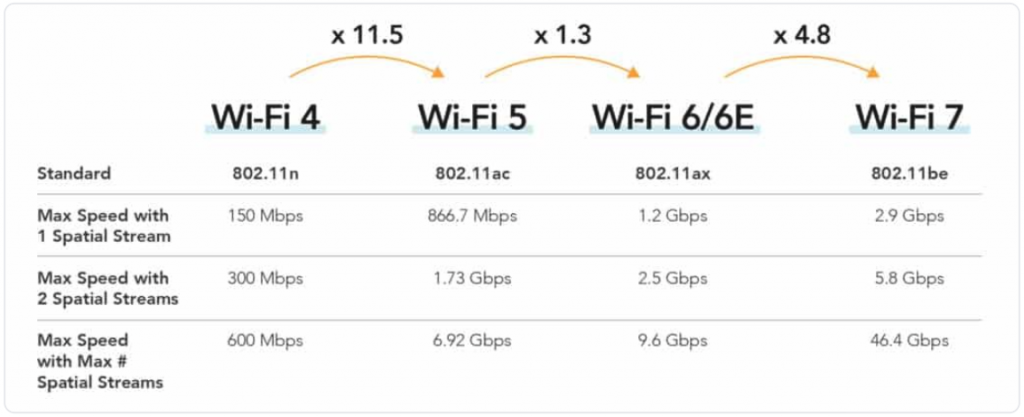
- Wi-Fi 7, officially called IEEE 802.11be Extremely High Throughput (EHT), is the latest generation of wireless networking technology.
- Unlike Wi-Fi 6, which mainly focused on handling large numbers of connected devices, Wi-Fi 7 is designed to deliver much higher speed, ultra-low latency, reduced congestion, and more reliable connectivity.
Key Features
- Maximum theoretical speed up to 46 Gbps, nearly 4.8 times faster than Wi-Fi 6.
- Around 4× lower latency, improving real-time communication and gaming.
- Uses India’s licensed 5925–6425 MHz spectrum, providing cleaner and less congested connectivity.
- Enhanced Target Wake Time (TWT) improves power efficiency and battery life.
Applications
- Supports 4K/8K streaming, Augmented/Virtual Reality, cloud computing, online gaming, Industrial IoT, smart factories, smart homes.
- It also supports high-density public networks such as hospitals, airports, stations, hotels, offices, and campuses.
Source: TH
India–US Critical Minerals Framework
Syllabus: GS3/ Science & Technology
Context
- India and the United States signed a major framework agreement to strengthen cooperation in the supply, mining, processing, recycling, and management of critical minerals and rare earth elements (REEs).
- The initiative follows concerns over China’s 2025 export controls on REEs, which disrupted global technology supply chains.
What are Critical Minerals?
- Critical minerals are minerals essential for a country’s economic development, national security, and industrial growth.
- Supply disruptions or concentration of mining and processing in a few countries can create major strategic vulnerabilities.
- They are important for technologies such as solar panels, semiconductors, wind turbines, batteries, medical devices, and electric vehicles.
- These minerals are central to the green and digital economy and support India’s energy transition and self-reliance goals.
Rare Earth Elements (REEs)
- REEs are a group of 17 metallic elements, including the 15 lanthanides along with scandium and yttrium.
- They are widely used in consumer electronics, defence systems, renewable energy technologies, EVs, communication systems, and nuclear energy.
- India has the world’s third-largest rare earth reserves, mainly found in monazite minerals.
Source: TH
Coal Gasification can help substitute imports of up to ₹3 lakh crore: Union Coal Minister
Syllabus: GS3/Energy
Context
- Union Coal Minister said that the Coal gasification can help substitute imports of up to ₹3 lakh crore.
What is Coal Gasification?
- Coal gasification is a thermochemical process of converting coal into synthesis gas (syngas), which is a mixture of fuel-rich gases like carbon monoxide (CO), carbon dioxide (CO2), hydrogen (H2), and methane (CH4).
- The syngas can be used for producing Synthetic Natural Gas (SNG), electricity generation, energy fuel (methanol and ethanol), ammonia for fertilisers, and chemicals.
- The coal gasification process involves oxidation of coal at higher temperatures and pressures to produce syngas.
- There are two main types of gasification: Surface gasification and Underground coal gasification (UCG).
- In surface coal gasification, coal is first mined and then converted into gas in above-ground industrial reactors using oxygen, steam and high temperatures.
- Underground coal gasification converts coal into gas while it is still buried deep underground by injecting air or oxygen into coal seams through wells and extracting the resulting gas to the surface.
Package To Boost Coal Gasification
- Recently, the Union Cabinet approved a Rs 37,500 crore scheme to promote surface coal and lignite gasification projects.
- The scheme is expected to support the national target of gasifying 100 million tonnes of coal by 2030 while reducing dependence on imports of key products such as liquefied natural gas (LNG), urea, ammonia and methanol.
- India currently holds around 401 billion tonnes of coal reserves and nearly 47 billion tonnes of lignite reserves.
- Coal contributes more than 55% to the country’s energy mix.
- India has the fourth-largest coal reserves globally.
Source: TH
Previous article
National Health Accounts 2022-23
Next article
The Implications of India’s 1.9 Fertility Rate
