


Syllabus: GS3/ Economy
Context
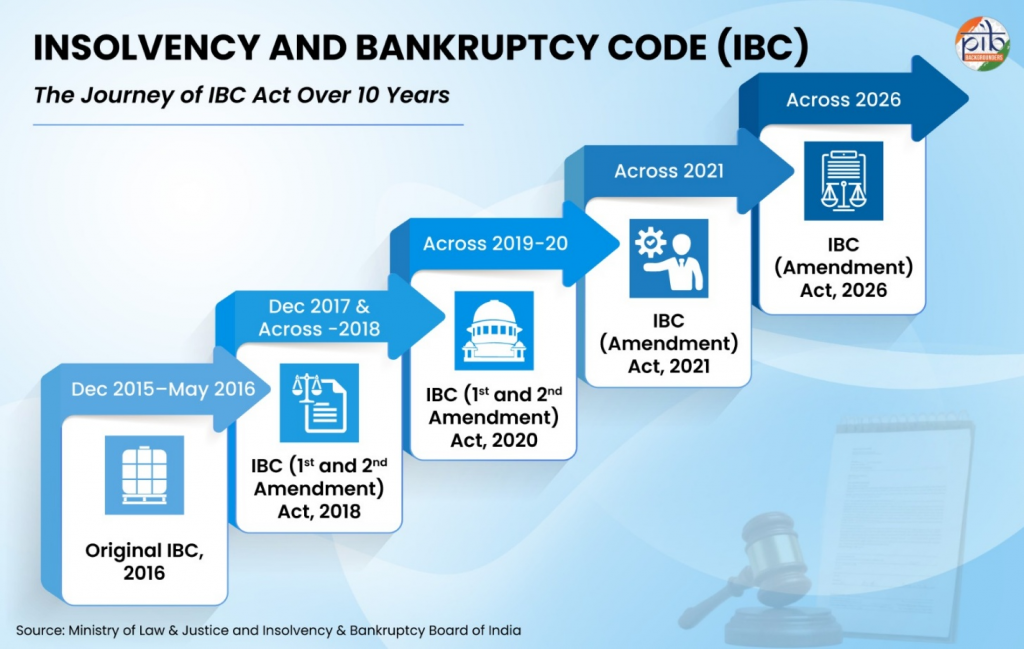
- The Insolvency and Bankruptcy Code (IBC), introduced in 2016 to create a time-bound insolvency resolution mechanism, has completed a decade.
Insolvency and Bankruptcy Code (IBC) 2016
- IBC was introduced in 2016 to address rising Non Performing Assets and ineffective debt recovery mechanisms in India.
- Objectives of the IBC resolution are;
- Business Revival: To save businesses through restructuring, changes in ownership, or mergers,
- Maximization of Asset Value: To preserve and maximize the value of the debtor’s assets,
- Promoting Entrepreneurship and Credit: To encourage entrepreneurship, improve credit availability, and balance the interests of stakeholders, including creditors and debtors.
- Currently a maximum 330 days is allowed to find a resolution for a company admitted into the insolvency resolution process.
- Otherwise, the company goes into liquidation.
Institutional Framework under IBC
- Insolvency and Bankruptcy Board of India (IBBI): The apex regulatory body established to oversee the functioning of insolvency professionals, insolvency professional agencies, and information utilities.
- National Company Law Tribunal (NCLT): The adjudicating authority responsible for admitting insolvency petitions, declaring moratoria, and approving resolution plans for companies and LLPs.
- Insolvency Professionals (IPs): IPs administer the affairs of distressed entities, safeguard assets and facilitate meetings of creditors. They oversee the resolution process in compliance with the Code and applicable regulations.
- Committee of Creditors (CoC): The supreme decision-making body comprising the distressed entity’s financial creditors. They evaluate, vote on, and approve the resolution plan.
Need for Insolvency Reforms in India
- Rising NPA Crisis: India’s banking sector suffered from massive Non-Performing Assets (NPAs), especially after the infrastructure and corporate lending boom of the 2000s.
- Ineffective Earlier Mechanisms: Earlier recovery mechanisms such as the SARFAESI Act, Debt Recovery Tribunals (DRTs) and Lok Adalats were slow and inefficient.
- Recovery proceedings continued for several years without effective resolution.
- Weak Credit Discipline: Defaulting promoters used to retain control over companies despite persistent loan defaults. The absence of strict consequences encouraged wilful defaults and poor repayment culture.
- Improving Ease of Doing Business: India’s insolvency resolution system ranked poorly in global ease of doing business indicators before the IBC.
- A predictable exit mechanism was necessary to attract domestic and foreign investment.
Success of the Insolvency and Bankruptcy Code
- Debt recovery framework: Till March 2026, a total of 8,987 Corporate Insolvency Resolution Processes (CIRPs) had been admitted under the IBC framework.
- Out of these cases, 1,419 corporate debtors were successfully resolved through approved resolution plans.
- Several additional cases were closed through settlements, appeals, reviews and withdrawals under Section 12A of the Code, reflecting the behavioural impact of the IBC on borrowers.
- Improved recovery outcomes: As of March 2026, creditors realised nearly ₹4.32 lakh crore through approved resolution plans under the IBC.
- Recoveries also amounted to more than 94.56% of the fair value of stressed assets, indicating better value maximisation under the resolution process.
- Strengthened financial discipline: The fear of losing management control has improved repayment discipline among corporate borrowers.
- Many firms have opted for early settlements before formal insolvency admission, thereby reducing prolonged litigation.
- The Reserve Bank of India’s “Report on Trends and Progress of Banking in India 2024-25”, highlighted that IBC accounted for nearly 52.4% of the total recoveries made by banks.
- Recoveries through the IBC were significantly higher than recoveries made through SARFAESI, Debt Recovery Tribunals (DRTs) and Lok Adalats.
What are the Concerns?
- Rising Delays in Resolution: The average resolution timeline increased to nearly 744 days by FY2026 against the statutory limit of 330 days.
- Nearly 78% of insolvency cases exceeded the prescribed timeline.
- Delays lead to erosion of asset value and reduce investor interest in stressed assets.
- High Haircuts for Creditors: On average, creditors face haircuts of around 67%, recovering only about one-third of their admitted claims.
- The IBC lacks clear provisions for handling issues unique to modern firms, such as intellectual property valuation, employee claims, and technology continuity.
- This limits effective resolution of non-traditional enterprises.
- Capacity Constraints: The NCLT and NCLAT continue to suffer from manpower shortages and limited infrastructure.
- Cross-Border Insolvency Challenges: Insolvency cases involving multinational assets and creditors face legal and procedural uncertainty.
Way Ahead
- Strengthen NCLTs: The government must increase the number of NCLT benches, judges and technical members to reduce pendency and delays.
- Reduce Delays: Strict timelines for appeals and insolvency proceedings must be enforced to preserve asset value.
- Prioritise Resolution: The insolvency framework must focus more on revival and restructuring of viable firms rather than liquidation.
- Limit Haircuts: Greater transparency and better valuation mechanisms are needed to reduce excessive creditor haircuts.
- Protect MSMEs: Operational creditors and MSMEs should receive fairer treatment under resolution plans.
Source: BS
