


Comptroller and Auditor General (CAG) of India
Syllabus: GS 2/ Polity and Governance
Context
- Senior Indian Administrative Service officer K. Sanjay Murthy has assumed office as the Comptroller and Auditor General (CAG) of India.
- He replaced Girish Chandra Murmu, who was appointed as the CAG in August 2020.
About: Comptroller and Auditor General (CAG) of India
- Mandate: CAG is a Constitutional Body, and its mandates are covered in Articles 148 to 151 of the Indian Constitution.
- Term and appointment: Appointed by the President of India, CAG holds office for 6 years or up to the age of 65 years, whichever is earlier.
- Status and removal: It enjoys the same status as a sitting judge of the Supreme Court of India in order of precedence and can be removed by the President of India on the same grounds and in the same manner as a judge of the Supreme Court.
- Duties and powers: CAG heads the Indian Audit and Accounts Department, serves as the guardian of the public purse, and oversees the entire financial system of the country at both the central and state levels.
- The CAG submits audit reports to the President or the Governor, who then places them before the Parliament or the State Legislature.
| Do you know? – CAG traces its origin to the office of the Accountant General to the Government of India set up in 1858 in British India. The first Auditor General was appointed in 1860. – The auditing functions of the Auditor General of India were detailed in the Audit and Accounts Order, 1936 which largely forms the basis of the audit mandate of the Comptroller and Auditor General of India post-independence. – The first Indian Comptroller and Auditor General of independent India took over in 1948. |
Source: AIR
Ustad Bismillah Khan Yuva Puraskar
Syllabus: Miscellaneous
In News
The Ustad Bismillah Khan Yuva Puraskar will be conferred on 82 young artists for the years 2022 and 2023 in a special ceremony on 22nd November 2024
About the award
- The Ustad Bismillah Khan Yuva Puraskar, instituted by the Sangeet Natak Akademi in 2006, is awarded annually to young artists up to 40 years of age who have demonstrated exceptional talent in the fields of music, dance, and drama.
- The award aims to recognize outstanding practitioners in these areas.
- Eligibility: Artists up to 40 years old (age as of April 1 of the year of nomination) are eligible.
- Award Categories: Music,Dance,Theatre,Other Traditional/Folk/Tribal Music, Dance, Theatre, and Puppetry Contribution/Scholarship in Performing Arts
- Award includes: A cash prize of Rs. 25,000, a plaque, and an angavastram.
- Annual Limit: A maximum of 33 awards may be given each year.
- The purpose of the award is to encourage young talent and celebrate their contribution to the performing arts in India.
Source: Air
Amur Falcon
Syllabus: GS 3/Species
Context
- The 9th Amur Falcon festival was celebrated in Tamenglong district of Manipur to raise awareness about the Amur falcons, the world’s longest travelling birds.
- These birds roost in Tamenglong during October and November each year as part of their migration to southern and eastern Africa.
About: Amur Falcon
- They are small raptors of the falcon family with the scientific name Falco amurensis.
- The species is named after the Amur River that forms the border between Russia and China.
- It breeds in southeastern Siberia and northern China, and migrates in millions across India and then over the Indian Ocean to Africa before returning to Mongolia and Siberia.
- Conservation Status:
- IUCN Red List: Least Concerned
- Indian Wildlife Protection Act, 1972: Protected
- The Convention on Migratory Species (CMS): Protected
Source: AIR
PACE program
Syllabus: GS3/Science and Technology
In News
The Department of Scientific & Industrial Research (DSIR) signed Project Agreements under the Patent Acquisition and Collaborative Research and Technology Development (PACE) Programme.
About PACE program
- The PACE program by the Department of Scientific & Industrial Research (DSIR) promotes collaborative research between Indian industries and R&D organizations, academic institutions, or universities.
- It focuses on innovative work and the development of new technologies for commercializing products and processes to address unmet industrial needs.
- Projects with practical applications and demonstrating proof-of-concept are supported, typically for durations of 1 to 3 years.
Source: PIB
Russia fires Intercontinental Ballistic Missile at Ukraine
Syllabus: GS3/Defence
Context
- Russia launched an intercontinental ballistic missile (ICBM) during an attack on Ukraine, marking the first use of such a powerful, nuclear-capable weapon in the ongoing conflict.
About ICBM
- ICBM is a type of long-range missile designed to carry nuclear or conventional warheads.
- Range: More than 5,500 kilometers (about 3,400 miles), enabling them to travel across oceans and strike targets in distant countries.
- Speed: It can reach a speed of up to 24,000 km/h (about 15,000 mph).
- Payload: ICBMs are usually equipped with nuclear warheads, but some may carry conventional warheads or other types of payloads.
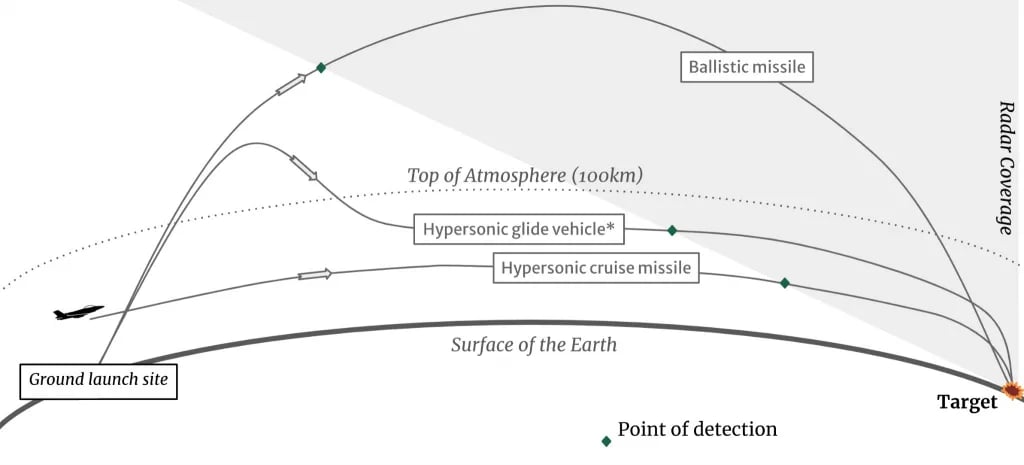
- A ballistic missile follows a parabolic trajectory with a boost, mid-course and terminal stage.
- The highest point where the missile reaches is called apogee and for ICBMs, it is over 4,000 km.
- Precision: ICBMs are equipped with advanced guidance systems, ensuring accuracy in hitting their intended targets, even over intercontinental distances.
Source: HT
Andhra Pradesh Scrapped Two-child Policy for Local Body Elections
Syllabus: GS2/Governance
Context
- The Andhra Pradesh government has repealed the two-child norm for candidates contesting local body elections.
About
- The move comes amid concerns over the state’s declining fertility rate.
- The latest National Family Health Survey (NFHS-5) for 2019-21 reveals that Andhra Pradesh’s total fertility rate is 1.7 children per woman, significantly below the replacement level of 2.1.
Two-child Policy
- The two-child policy was introduced in 1994, mandating that candidates seeking election to Gram Panchayats, Mandal Praja Parishads, and Zilla Parishads should not have more than two children.
- The rule aimed to curb population growth, disqualifying contenders who exceeded the limit.
- Rajasthan became the first state to adopt the “two-child policy” at the panchayat level in 1992, followed by Andhra Pradesh (then undivided) and Haryana in 1994.
- Subsequently many Indian States adopted the policy.
- Of the 13 states and UTs that adopted the policy, Chhattisgarh, Haryana, Himachal Pradesh, and Madhya Pradesh rolled it back in 2005.
Source: IE
Buddhist Doctrines
Syllabus: GS1/ History and culture, GS2/ International Relations
Context
- At a regional security conclave in Laos, India’s Defence Minister emphasized the relevance of Buddhist doctrines in addressing modern-day conflicts and challenges to the global order.
Buddhist Doctrines
- The Four Noble Truths;
- Life is suffering (dukkha).
- Suffering arises from attachment and desire.
- Suffering ceases when attachment and desire are overcome.
- The path to cessation is the Noble Eightfold Path.
- The Noble Eightfold Path;
- Ethical Conduct: Right Speech, Right Action, Right Livelihood.
- Mental Discipline: Right Effort, Right Mindfulness, Right Concentration.
- Wisdom: Right Understanding, Right Intention.
- Nonviolence (Ahimsa): A commitment to avoid harm to all living beings.
- Interdependence (Pratītyasamutpāda): The understanding that all phenomena arise in dependence upon other phenomena.
Significance in Contemporary world
- The doctrine of Right Speech encourages constructive communication and avoidance of hostility.
- Compassion, guides nations toward humane policies and humanitarian interventions.
- Middle Path: It addresses polarizing global issues, such as climate negotiations or trade disputes.
- Nonviolence: Offers a framework for peaceful coexistence and arms control agreements.
Do you know ?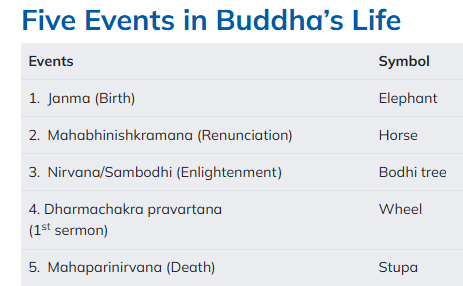 |
Source: TH
Armenia Becomes Member of International Solar Alliance
Syllabus: GS2/International Relations
Context
- Armenia has become the 104th member of the International Solar Alliance.
About
- India and France jointly launched the International Solar Alliance (ISA) during 21st Conference of Parties (COP21) to the United Nations Framework Convention on Climate Change (UNFCCC) held in Paris in 2015.
- The ISA aims to contribute to the implementation of the Paris Climate Agreement through the rapid and massive deployment of solar energy.
- Secretariat: Gurugram.
- Members: Member Countries are countries which have signed and ratified the Framework Agreement of the ISA.
- At present, 120 countries are signatories to the ISA Framework Agreement.
| Do you know ? Armenia is a landlocked country Neighboring Countries : in the North: Georgia; in the East: Azerbaijan; in the South: Iran; in the West: Turkey.Highest Mountain Peak: Aragats (4,090 meters) 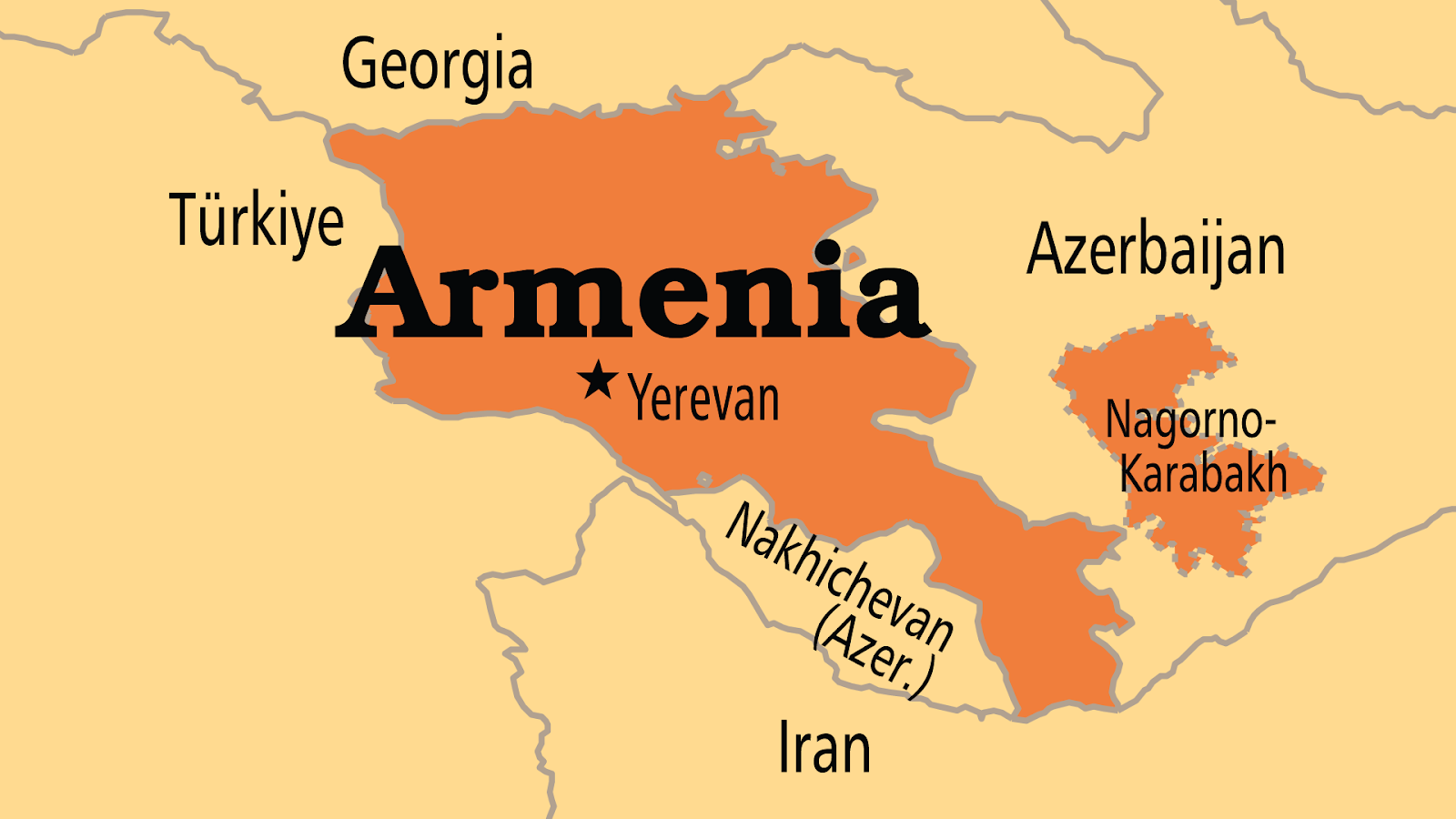 |
Source: ANI
Previous article
India’s Ambition to be an Export Hub of Green Hydrogen
Next article
Socialism in India means a welfare state: CJI
