


Syllabus: GS3/ Economy
Context
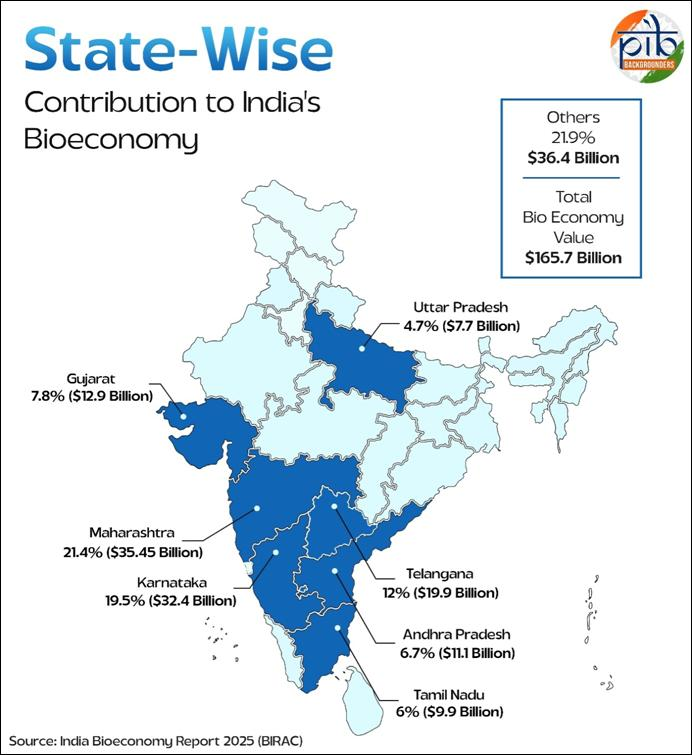
- Union Minister Dr. Jitendra Singh said India’s bioeconomy has witnessed a remarkable surge from around $10 billion in 2014 to over $195 billion in 2025, underlining the country’s emergence as a fast-growing global biotechnology hub.
What is BioEconomy?
- The BioEconomy is the knowledge-based production and use of biological resources to provide products, processes and services in all economic sectors within the frame of a sustainable economic system.
- It encompasses sectors like agriculture, forestry, fisheries, food production, biotechnology, and bioenergy.
- Subsectors of the BioEconomy in India are;
- BioPharma or BioMedical: It includes the development and production of medical products and services, such as pharmaceuticals, medical devices, and lab-grown organoids.
- BioAgri: It includes the development and production of genetically modified crops and animals, precision agriculture technologies, and bio-based products. EX: Bt Cotton
- BioIndustrial: It includes the development and production of biobased chemicals and products using enzymes, biosynthetic routes, and recombinant DNA technology.
Growth Trajectory of India’s Bioeconomy
- India’s bioeconomy has expanded nearly 20-fold over a decade, reflecting strong structural growth in the biotechnology sector. India ranks 3rd in the Asia-Pacific region and 12th globally in terms of biomanufacturing.
- It currently contributes around 5% to India’s GDP, indicating its increasing macroeconomic significance.
- Four key subsectors: BioIndustrial (47%), BioPharma (35%), BioAgri (8%), and BioResearch (9%).
Major Government Initiatives
- BioE3 Policy (Biotechnology for Economy, Environment and Employment): Promotes sustainable biomanufacturing and bio-based industries.
- The focus areas include smart proteins, precision therapeutics, and climate-resilient agriculture.
- Research, Development and Innovation (RDI) Fund: ₹1 lakh crore corpus aimed at supporting deep-tech innovation and scaling startups.
- Startup and Incubation Support: Strengthening biotech clusters and innovation hubs across India.
- Inclusive Talent Development: Special focus on tier-2 and tier-3 cities, women entrepreneurs, and young researchers.
Challenges for BioEconomy of India
- Global Competition: India’s BioEconomy faces stiff competition from more established bio Economies in countries like the USA, EU, and China, which have more advanced infrastructure, funding, and R&D capabilities.
- Intellectual Property (IP) Protection: Protecting intellectual property in the biotech sector is challenging, leading to concerns over innovation theft and lack of incentives for research.
- Lack of Infrastructure: Insufficient infrastructure for research, development, and commercialization of biotechnology innovations.
- Brain Drain: Talented scientists and researchers leave India for better opportunities abroad, reducing the country’s capacity for innovation.
Way Ahead
- Strengthening Regulatory Frameworks: Streamlining approval mechanisms while ensuring biosafety and ethical compliance.
- Scaling Deep-Tech Financing: Efficient deployment of the RDI Fund to support high-risk, high-reward innovations.
- Expanding Global Integration: Positioning India as a global hub for biomanufacturing and biotech exports.
- Capacity Building: Investment in advanced skill development, especially in frontier technologies like synthetic biology and bioinformatics.
Source: DD News
Previous article
India’s Push For self-reliance in Drone Manufacturing
Next article
India’s Sports Equipment Manufacturing Sector
