


Syllabus: GS3/ Economy
Context
- NITI Aayog released a report titled “Realising the Export Potential of India’s Sports Equipment Manufacturing Sector”, presenting a comprehensive assessment of India’s manufacturing capabilities, and global market opportunities.
Global Market Opportunity in Sports Sector
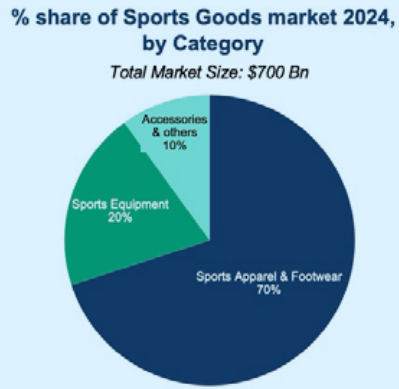
- The global sports goods market, encompassing sports apparel, footwear, equipment, and accessories, was valued at approximately $700 billion in 2024 and is projected to cross $1 trillion by 2036.
- Within this ecosystem, the sports equipment segment alone accounts for approximately $140 billion, with global demand expected to reach around $283 billion by 2036.
India’s Position in Sports Equipment Manufacturing
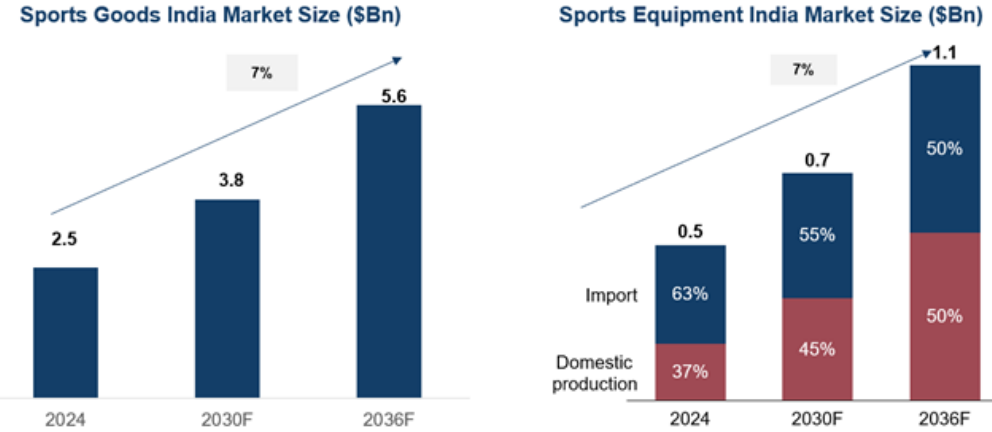
- India’s domestic sports goods market is estimated at approximately $2.5 billion, with sports equipment accounting for nearly $0.5 billion, indicating substantial scope for expansion in both domestic production and exports.
- India currently exports approximately $275 million worth of sports equipment annually, representing around 0.5% of the global export market.
- Manufacturing activity is concentrated in established clusters such as Jalandhar (Punjab) and Meerut (Uttar Pradesh), supported by a network of exporters, domestic manufacturing units, and thousands of micro enterprises.
- The sector is overwhelmingly MSME-driven, with nearly 90% of production undertaken by small and micro enterprises.
Key Challenges Affecting Export Competitiveness
- High customs duties on critical raw materials such as carbon fibre, EVA foam, and polyurethane materials
- High certification costs required to meet international sporting standards
- Logistics inefficiencies and higher input costs
- Limited access to advanced manufacturing technologies
- Weak linkages with global sports brands and procurement ecosystems
- Limited global visibility and branding of Indian sports equipment.
Policy Recommendations to Boost Sports Equipment Exports
- Cost Competitiveness: Rationalise import duties on critical raw materials such as carbon fibre, EVA foam, and polyurethane to reduce input costs.
- Strengthening MSME Ecosystem: Expand targeted financial support, credit access, and technology upgradation schemes for MSMEs.
- Cluster-Based Manufacturing Development: Develop new port-proximate greenfield clusters to reduce logistics costs and improve export efficiency.
- Establish dedicated sports technology innovation hubs in collaboration with academia and industry.
- Quality Standards: Set up world-class testing and certification facilities to meet international standards.
Concluding remarks
- India needs a holistic ecosystem approach combining cost competitiveness, quality enhancement, and global integration is essential.
- With sustained policy push, it can transition from a low-share exporter to a global leader in sports equipment manufacturing.
Source: PIB
Previous article
India’s Bioeconomy Moving Towards $300 billion Target By 2030
Next article
News In Short 20-03-2026
