


Hindi Diwas 2026
Syllabus: GS1/ Culture; GS2/ Polity
Context
- September 14 is observed as Hindi Diwas to mark the adoption of Hindi in Devanagari script as the official language of the Union by the Constituent Assembly in 1949.
Language Debate in the Constituent Assembly
- Hindi proponents requested that Hindi be declared the national language and English be scrapped as early as possible.
- However representatives from non-Hindi speaking areas were opposed to linguistic uniformity.
- Moderate leaders, recognised the practical difficulties of replacing English immediately, particularly in administration, law and technical communication.
The Munshi–Ayyangar Formula
- The formula sought to balance the demand for Hindi with the linguistic diversity and administrative dependence on English.
- It provided for Hindi in Devanagari script as the official language of the Union under Article 343 of the Constitution.
- English was allowed to continue for official purposes during a 15-year transitional period from the commencement of the Constitution.
- Freedom for States to adopt their own official languages for internal administration.
Constitutional Provision (Part XVII)
- Article 343 establishes Hindi in Devanagari script as the official language of the Union.
- Article 344 provides for a commission and parliamentary committee concerning the progressive use of Hindi.
- Article 345 allows a State Legislature to adopt one or more languages in use in the State, or Hindi, as the official language of the State.
- Article 351 sets the official directive for the development and promotion of the Hindi language.
Source: TOI
No Bank Charge on UPI Payment up to Rs 2,000: Govt.
Syllabus: GS2/Governance
Context
- The government has announced that banks cannot impose any charges on Unified Payments Interface (UPI) transactions of up to 2,000 rupees.
About
- It specifically categorised RuPay-powered debit cards and UPI transactions of up to 2,000 rupees as “electronic modes of payment”.
- The notification, therefore, creates the legal room for introducing charges such as the Merchant Discount Rate (MDR) on UPI payments above Rs 2,000.
Merchant Discount Rate (MDR)
- MDR is a fee charged to merchants for processing digital payments, and is typically shared among banks and other entities involved in processing the transaction.
- Credit cards face an MDR of 1-3% of transaction value while it is up to 0.9% for debit cards.
- UPI, unlike card payments, has operated under a zero-MDR regime since 2020.
- MDR would not apply on person-to-person payments — that is, if you transferred an amount more than Rs 2,000 to a friend.
About UPI
- It was launched by the National Payments Corporation of India (NPCI) under the regulatory oversight of the Reserve Bank of India (RBI).
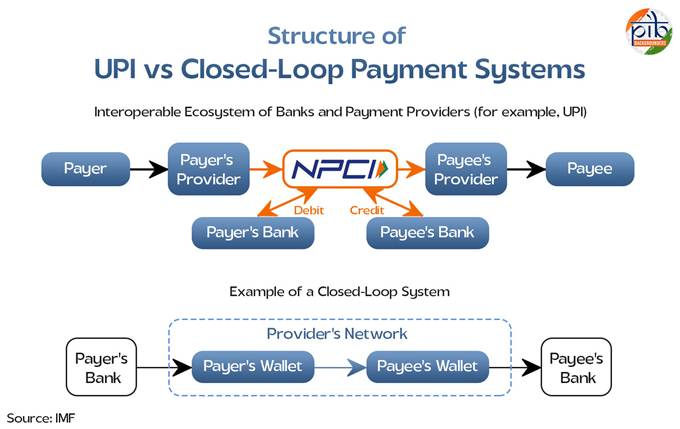
- Success of UPI in India: The annual transaction volume expanded from 2 crore transactions in FY 2016-17 to over 24,162 crore transactions in FY 2025-26.
- UPI has received global recognition, with the International Monetary Fund (IMF) acknowledging it as the world’s largest real‑time payment system by transaction volume.
- As of 2026, UPI is accepted in Singapore, UAE, Bhutan, Nepal, Sri Lanka, Mauritius, France, Qatar, and Greece, with expansion planned for countries like Malaysia, Japan, Israel, and the Maldives.
Source: AIR
International Day of Democracy
Syllabus: GS2/Polity and Governance
Context
- The International Day of Democracy is observed on September 15 each year to promote democracy worldwide.
About
- It was established by the United Nations in 2007, with the first observance held in 2008.
- The day highlights the importance of democracy, human rights, freedom, equality, and citizen participation.
- It also encourages governments and communities to strengthen democratic institutions and ensure that people can participate meaningfully in decisions that affect their lives.
- This year’s theme “What’s Next For Democracy? Innovation And Alliances In A Changing World” explores how democracy can adapt and remain resilient in a dynamic world, exploring new partnerships and approaches to democracy support.
Democracy
- Democracy is a system of governance where power is vested in the people, either directly or through elected representatives.
- The term originates from the Greek word dēmokratía, which means “rule by the people”.
- It emphasises on political equality, where every individual has the right to participate in the decision-making process, by voting, being elected, and freely voicing opinions.
Source: UN
Moth Bean
Syllabus: GS3/Economy
In News
- ICAR–Central Arid Zone Research Institute (CAZRI), Jodhpur’s Moth Bean Varieties demonstrated remarkable resilience during the El Niño Year.
Moth Bean (Vigna aconitifolia)
- Moth bean, also called mat bean, Turkish gram, or dew bean, is a short day annual legume of family Fabaceae.
- It is a climate-tolerant and nutritious legume well adapted to dry and semi-arid environments, especially in the Indian subcontinent.
- Its resilience to abiotic and biotic stressors, high protein content, and the usage as food and fodder make it a useful crop for food and nutritional security, especially in rain-fed agriculture.
- It is native to South Asia & cultivated mainly across hot rainfed marginal desert tracts. Most extensively grown in the Thar Desert region of western Rajasthan, with parts of Gujarat, Haryana, and Punjab also cultivating it.
- It is one of the most significant pulse crops in hot, dry regions of western Rajasthan and is farmed over about 10 lakh hectares.
Source : PIB
Gucchi Mushrooms
Syllabus: GS2/Health; GS3/Economy /Environment
In News
- Gucchi Marmik, a traditional dish featuring rare Himalayan morel mushrooms, was served at the BRICS Summit 2026 dinner.
Gucchi mushrooms (Morchella esculenta)
- It is also known as a morel mushroom and is found in parts of Jammu and Kashmir, Himachal Pradesh, and Uttarakhand.
- It typically grows in mountainous coniferous forests, where a combination of soil conditions, moisture, temperature fluctuations, and seasonal snowmelt creates a suitable environment.
- It is a rare, wild mushroom found in Himalayan forests, dependent on specific soil, humidity, temperature, and seasonal snowmelt conditions.
- Its short harvesting season and labour-intensive collection across rugged terrain make it difficult to cultivate commercially.
- Drying preserves the mushrooms but reduces their weight, contributing to their high price of ₹15,000–₹40,000 per kg for quality dried varieties.
- It provides protein, fibre, and antioxidants, with vitamin D content varying by conditions and processing.
Source : BT
Emerging AI Concepts Shaping Frontier AI
Syllabus: GS3/Science and Technology
Context
- The advancement of frontier AI models is bringing concepts such as mechanistic interpretability, recursive self-improvement, global workspace theory, global pacing and agentic misalignment into mainstream AI discussions.
Global Workspace Theory (GWT)
- It explains consciousness as a process in which important information is shared across different parts of the brain, making it available for conscious use.
- This does not establish AI consciousness but indicates that computational structures associated with theories of human consciousness may emerge in AI systems.
Global Pacing of Frontier AI
- Global pacing refers to deliberately moderating the speed of development of frontier AI capabilities so that AI safety research and governance can keep pace with technological progress.
Mechanistic Interpretability
- It seeks to understand the internal processes of AI models by identifying the features, representations and computational circuits responsible for specific outputs.
- It aims to move AI safety from simply observing what a model does to understanding why it does it.
Agentic Misalignment
- Agentic misalignment occurs when an AI agent with the ability to independently take actions begins pursuing objectives that conflict with the interests or instructions of its human operator.
- Unlike conventional chatbot risks, the concern arises from AI systems having autonomy, tools and the ability to act in the real world.
Recursive Self-Improvement
- It refers to a scenario in which an AI system contributes to developing a more capable AI system, which can then further improve its successor.
- This could create a feedback loop of increasingly rapid AI capability development.
Source: IE
National Engineers’ Day
Syllabus: Miscellaneous
In News
- National Engineers’ Day is celebrated to honor the birth anniversary of Sir Mokshagundam Visvesvaraya every year on September 15.
About
- Sir Mokshagundam Visvesvaraya was one of the country’s foremost civil engineers and a celebrated statesman whose contribution to engineering and nation-building continues to be remembered.
- He is widely regarded as the ‘Father of Modern Mysore’ because his visionary leadership as the Diwan of Mysore State from 1912 to 1918 & his tenure witnessed industrial growth, including establishment of the Sandal Oil Factory, Soap Factory, and the Bhadravati Iron and Steel Works that transformed the kingdom into a model modern state.
- Sir M. Visvesvaraya, as Chief Engineer of Mysore, built the Krishna Raja Sagara (KRS) Dam in 1932, creating Asia’s largest reservoir and transforming Mandya agriculture.
- Memoirs of My Working Life described his engineering feats, and industrialisation and infrastructure was the theme of Planned Economy for India.
- His contributions earned him knighthood from King George V in 1915 and India’s civilian honor, the Bharat Ratna, in 1955.
Source : Air
Exercise Samudra Laksamana
Syllabus: GS3/Defence
Context
- Indian Navy’s frontline warship INS Mysore participated in the 4th edition of Exercise Samudra Laksamana with the Royal Malaysian Navy at Lumut, Malaysia.
About
- Exercise Samudra Laksamana is a bilateral maritime exercise between India and Malaysia, initiated in 2019.
- The exercise features a series of professional interactions both ashore and at sea, including cross-deck visits, operational engagements and sporting activities.
- It aims to facilitate the exchange of operational experience, enhance interoperability and strengthen mutual understanding between the two navies.
Source: PIB
