


Syllabus: GS3/Economy/ Agriculture/ Environment, GS2/ Social Justice
Context
- According to the United Nations Environment Programme, India wastes 78–80 million tonnes of food annually, valued at ₹1.55 lakh crore, making it the second-largest food waste globally.
Status of food wastage in India
- As per UNEP Food Waste Index Report 2024, the estimated food wastage in India in 2022 is 55 kg/capita/year in India, lower than the global average of 79 kg/capita/year.
- Concern: India ranks 102 out of 123 countries in the Global Hunger Index 2025.
- Around 12% of India’s population is undernourished, which is approximately ~170–175 million people.
- Globally 1.05 billion tonnes of food is wasted each year. Around 60% of food waste occurs at the household level, followed by food services (28%) and retail (12%).
Key Drivers of Food Waste in India
- Post-Harvest Losses: Lack of scientific storage, grading, and packaging leads to significant losses.
- Storage Infrastructure: The absence of sufficient modern storage facilities leads to spoilage of food grains stored in traditional warehouses.
- Supply Chain Inefficiencies: Inefficient logistics, multiple intermediaries, and delays in transportation contribute significantly to food spoilage.
- The absence of integrated supply chains leads to mismatches between supply and demand.
- Social Practices: Food wastage at weddings, social gatherings, and households is driven by over-preparation and lack of awareness.
Government Initiatives to Reduce Food Waste
- Food Security and Distribution: The Public Distribution System ensures the distribution of subsidised food grains to vulnerable populations.
- The Pradhan Mantri Garib Kalyan Anna Yojana has expanded food access during times of crisis and economic distress.
- Agriculture Infrastructure Fund (AIF): Provides medium-to-long-term debt financing for post-harvest management projects, including warehouses, silos, and cold storage.
- The Pradhan Mantri Kisan Sampada Yojana aimed at creating modern infrastructure for food processing and preservation.
- Mega Food Parks: Clusters that link agricultural production to markets through high-tech supply chains.
- Integrated Cold Chain: Providing preservation facilities like refrigerated transport and cold storage to reduce spoilage of perishables.
- Operation Greens: Focused on stabilizing the supply and reducing waste of crops like Tomato, Onion, and Potato (TOP).
- Market Reforms: The e-NAM facilitates better price discovery and reduces inefficiencies in agricultural markets.
Key Challenges in Reducing Food Waste
- India lacks a comprehensive national database to track food waste across sectors.
- The cold chain infrastructure remains inadequate, particularly in rural and semi-urban areas.
- There is no strong legal framework mandating the redistribution of surplus food.
- Behavioral and cultural factors continue to encourage food wastage in social settings.
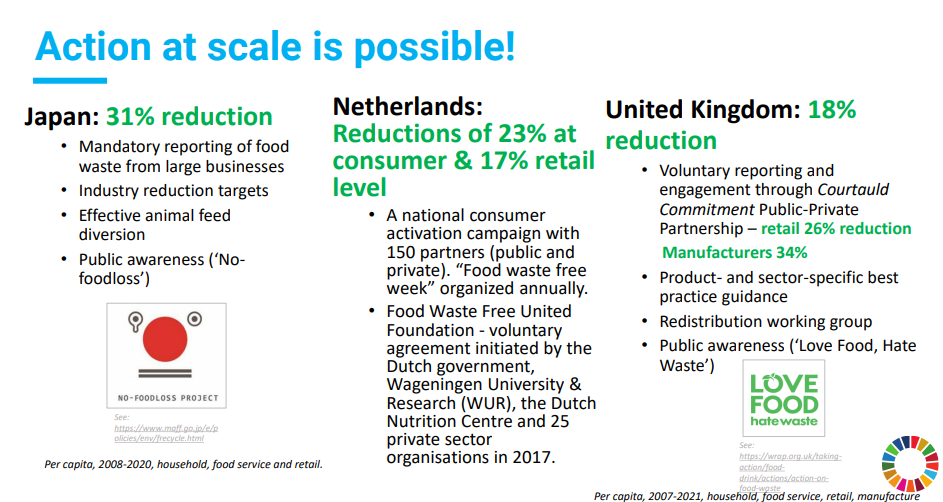
Global Best Practices
Way Ahead
- Food waste in India highlights systemic inefficiencies in production, distribution, and consumption, even as hunger persists.
- Addressing this issue is essential for improving food security, resource efficiency, and sustainability.
- It is also critical for achieving SDG 2 (Zero Hunger) and SDG 12 (Responsible Consumption and Production), making food waste reduction a key developmental priority.
Source: TH
Previous article
Digital Piracy & Legal Consequences
Next article
Industrial Unrest in India’s Manufacturing Hubs
