


Syllabus: GS3/Environment
Context
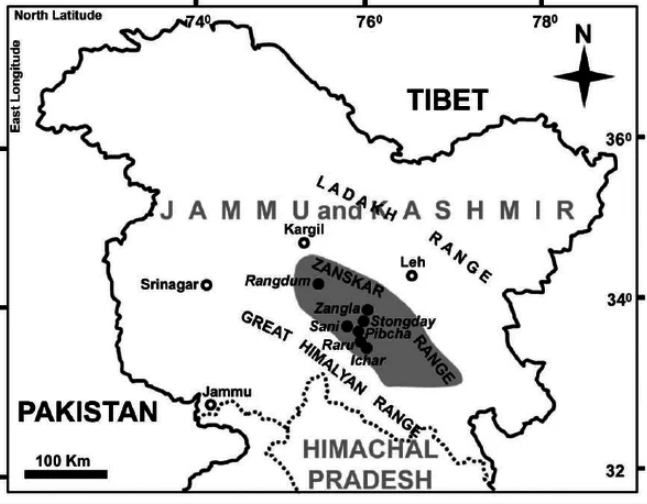
- According to a new study, between 1992 and 2023, 12 glaciers in the Zanskar region of Ladakh slowed at an average rate of 2.4 m/year per decade, along with increased glacier thinning.
What are Glaciers?
- They are large and thick masses of ice that are formed on land due to the accumulation of snow over centuries.
- They hold 70 per cent of the Earth’s freshwater, currently encompassing around 10 percent of the planet’s land area.
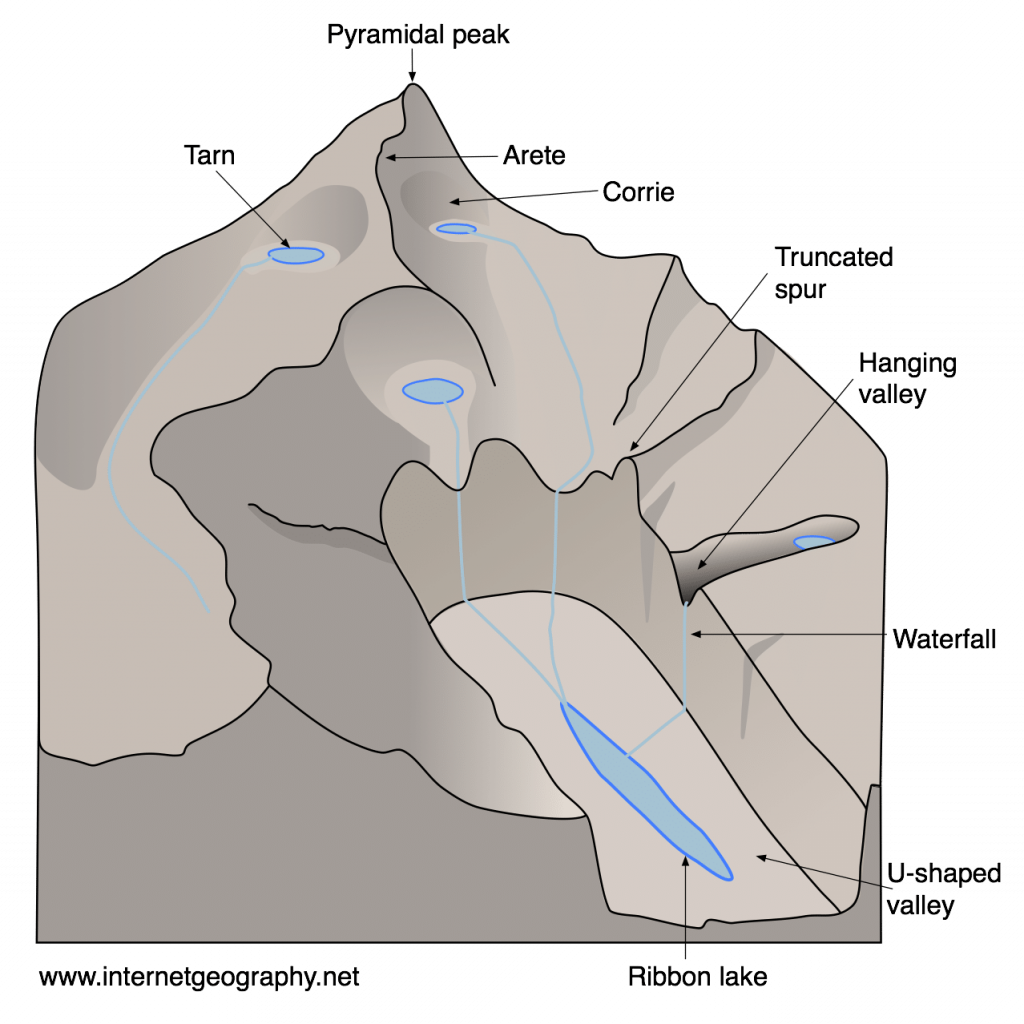
- Glacial processes of erosion, transportation, and deposition, creating distinct erosional and depositional glacial landforms.
Key Findings of the Study
- Glacier slowdown: The research found that in the past three decades the surface velocity of glaciers has gone down.
- Accelerating thinning: The glacier surface thinned at a faster rate, from 0.22 m/year in 2000–05 to 0.57 m/year in 2015–20.
- Reason: Since warmer temperatures cause more loss and thinning of ice, when glaciers thin their driving stress decreases and this reduces the force, driving ice down slope.
- Reduced ice transport: Slower glaciers transfer less ice from the high elevation accumulation zones to lower elevation where melting occurs.
- Regional variation: Not all the glaciers reacted to warming in the same way. Factors influencing glacier flow speed include glacier geometry, debris cover, and conditions at the glacier terminus (snout).
Significance of Zanskar Glaciers
- The Zanskar region contains some of the largest and most widespread glaciers in the Himalaya. Example: Machoi Glacier, Parkachik Glacier etc.
- They are natural reservoirs of fresh water that release it as meltwater throughout the warmer months.
- This seasonal supply feeds the rivers, ecosystems, farms and local residents in the otherwise parched Ladakh area.
Implications for the Indus Basin
- Glaciers contribute to Indus River flows during the dry summer months, when rainfall is limited.
- Initially, accelerated glacier melting can increase river discharge, a phenomenon known as peak water. However, once glaciers lose a substantial share of their stored ice:
- Meltwater contribution is expected to decline.
- Long-term water availability may become more uncertain.
- Risks may emerge for agriculture, hydropower, ecosystems and downstream water security.
Global Initiatives to Conserve glaciers
- Paris Agreement 2015: Aims to limit global warming to well below 2°C, preferably to 1.5°C, above pre-industrial levels.
- High Mountain Summit (WMO): Recognizes mountains and glaciers as climate sentinels and promotes early warning systems and enhanced data sharing.
- International Cryosphere Climate Initiative (ICCI): Established in 2009 as a result of the COP-15, it is a network of senior policy experts and researchers that works with governments and organizations.
- It creates and implements initiatives designed to preserve the Earth’s cryosphere.
- The National Mission for Sustaining the Himalayan Ecosystem (NMSHE) is a government initiative aimed at addressing climate change and its impacts on the Himalayan region.
- It focuses on developing sustainable strategies, and addressing issues like glacial melt, natural hazards, and biodiversity loss.
- The Arctic Council: It is a forum for Arctic countries to collaborate on environmental protection, sustainable development, and climate change mitigation in the Arctic region.
- Global Ice Monitoring Initiatives: Like the World Meteorological Organization’s Global Cryosphere Watch (GCW) and the European Space Agency’s CryoSat mission use satellite-based remote sensing to monitor changes in glaciers and ice sheets.
Way Ahead
- Establish a coordinated Himalayan glacier-monitoring network using satellite remote sensing, drones and ground-based observations to track glacier mass balance, thickness, velocity and meltwater discharge.
- Expand automated weather stations at higher elevations to generate reliable data on temperature, snowfall, precipitation and radiation, which are essential for accurate glacier modelling.
- Protect wetlands, springs and high-altitude ecosystems that can act as natural water buffers, while preventing unsustainable development in fragile mountain areas.
Source: TH
