



Kodali Karuppur Silk Sari
Syllabus: GS1/ Culture
Context
- The Kodali Karuppur silk sari, a luxurious garment once favoured by the Maratha kings of Thanjavur is now witnessing a steep decline in its traditional handloom weavers.
About
- It derives its name from Karuppur, a village near Kumbakonam in the Thanjavur (Tanjore) region of Tamil Nadu.
- These are handwoven silk saris, dhotis, and furnishings of Karuppur that combined hand painting, block printing, and brocade-weaving.
- They were popular up to the 19th Century.
- In some Maratha states like Baroda, Kohlapur and Satara, the Karuppur sari was an essential part of the bride’s trousseau, as was the Karuppur turban for the groom
- The Kodali Karuppur saree does not currently have a GI (Geographical Indication) tag.
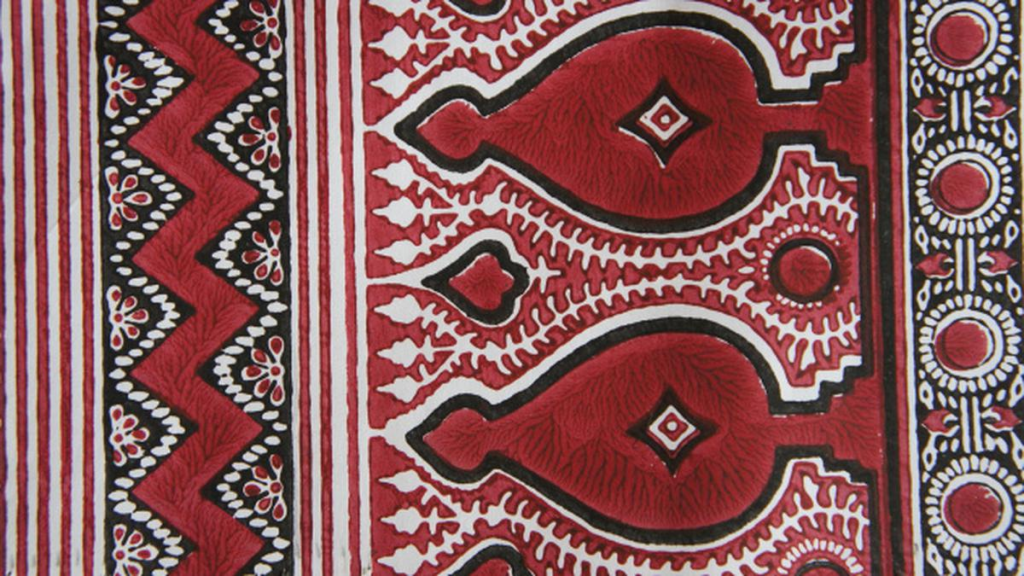
Source: TH
MERITE Scheme
Syllabus: GS2/Governance
In News
- The Union Cabinet approved the Multidisciplinary Education and Research improvement in Technical Education (MERITE) Scheme in technical institutions across India.
MERITE Scheme
- It is a central Sector Scheme which has a budget of ₹4,200 crore for 2025-30, including a ₹2,100 crore World Bank loan.
- It aligns with NEP-2020 to enhance quality, equity, and governance and will be managed via a Central Nodal Agency.
- It focuses on improving student employability through updated curricula, internships, faculty training, research hubs, and innovation centers, aiming to increase placements and reduce unemployment among engineering graduates.
- It will support 275 government technical institutions, including NITs, state engineering colleges, polytechnics, and technical universities, along with State/UT education departments.
- Prestigious institutions like IITs, IIMs, and regulatory bodies will aid implementation.
Source: TH
Scheme for 23rd National Awards for e-Governance (NAeG) 2026
Syllabus: GS2/ Governance
Context
- The Department of Administrative Reforms and Public Grievances (DARPG) issued the scheme guidelines for the 23rd National Awards for e-Governance (NAeG) 2026.
About
- The National Awards for e-Governance are presented annually to honor and encourage excellence in implementing e-Governance initiatives.
- Nominations for National Awards for e-Governance 2026 can be submitted under 7 Categories:
- Government Process Re-engineering by use of technology for Digital Transformation,
- Innovation by Use of AI and other new age technologies for providing Citizen-Centric Services,
- Best e-Gov. Practices/Innovation in Cyber Security,
- District Level Initiatives in e-Governance,
- Grassroots Level Initiatives by Gram Panchayats or equivalent Traditional Local Bodies for Deepening/ Widening of Service Delivery,
- Replication and Scaling of Nationally Awarded and Mission-mode, e-Governance Projects by State/UTs/Districts,
- Digital transformation by use of data analytics in digital platforms by Central Ministries/States/ UTs.
- The NAeG Awards 2026 will comprise; a trophy, a certificate, and an incentive of ₹10 lakh for each Gold Awardee and ₹5 lakh for each Silver Awardee.
- A total of 16 awards will be conferred, including 10 Gold Awards and 6 Silver Awards.
- The incentive will be awarded to the respective district/organization for use in project or programme implementation or to bridge resource gaps in any area of public welfare.
Source: PIB
Sleeping Sickness
Syllabus: GS2/Health; GS3/Science and Tech
Context
- WHO has announced that Kenya has eliminated sleeping sickness as a public health problem.
About the Sleeping Sickness
- It is a vector-borne disease, also known as Human African Trypanosomiasis (HAT), and is endemic in sub-Saharan Africa.
- It is caused by protozoans of the genus Trypanosoma, transmitted to humans by bites of tsetse flies (glossina) which have acquired the parasites from infected humans or animals.
- Rural populations dependent on agriculture, fishing, animal husbandry or hunting are deemed most at risk of exposure.
- Symptoms include fever, headaches, joint pain, and, in advanced stages, neurological symptoms like confusion, disrupted sleep patterns, and behavioral changes.
- Without treatment, it is generally fatal. Common treatments include Pentamidine and Nifurtimox.
Source: AIR
India’s First-of-its-Kind State-of-the-Art Animal Stem Cell BioBank
Syllabus :GS3/Science and Technology
In News
- India’s first-of-its-kind state-of-the-art Animal Stem Cell Biobank and Animal Stem Cell Laboratory opened at the National Institute of Animal Biotechnology (NIAB), Hyderabad.
| Stem cells – They are special cells capable of developing into various cell types in the body and play a key role in repair and regeneration. – There are two principal types of stem cells: embryonic stem cells and adult stem cells. – Embryonic stem cells are derived from early-stage embryos and are pluripotent, meaning they have the remarkable ability to develop into any cell type found in the human body. – The adult stem cells are found in various tissues throughout the body, such as bone marrow or skin. These cells are generally multipotent, so they can develop into a limited range of cell types related to their tissue of origin. |
India’s first Animal Stem Cell Biobank and Laboratory
- The cutting-edge facility of Animal BioBank , spread over 9,300 sq ft and constructed at a cost of ₹1.85 crore.
- It will focus on regenerative medicine and cellular therapies for livestock.
- It is equipped with a stem cell culture unit, 3D bioprinter, bacterial culture lab, cryostorage, autoclave rooms, advanced air handling systems, and uninterrupted power backup.
- It is supported by the National Biopharma Mission (NBM) of DBT–BIRAC .
Relevance
- It aligns with PM Modi’s BioE3 policy, positioning India as a leader in biotechnology innovation.
- It will advance research in disease modelling, tissue engineering, and reproductive biotechnology.
- It will be expanded to enable biobanking of animal stem cells and their derivatives.
| Do you know? – The National Biopharma Mission (NBM)– Innovate in India (I3) is an Industry-Academia Collaborative Mission for Accelerating Discovery Research for development of Bio-pharmaceuticals. – BIRAC has the mandate to enable and nurture an ecosystem for preparing India’s technological and product development capabilities in bio pharmaceuticals, vaccines, biosimilars, medical devices and diagnostics. – The project was sanctioned with a total cost US$ 250 million which is 50% co-funded by the World Bank. |
Source :PIB
Kaleshwaram Project
Syllabus: GS3/ Infrastructure
Context
- The Kaleshwaram Lift Irrigation Project (KLIP), is mired in controversies over the manner in which it has been conceived and executed.
About
- Location: The Kaleshwaram Lift Irrigation Project (KLIP) is a multi-purpose irrigation project on the Godavari River in Kaleshwaram, Bhupalpally, Telangana.
- The project starts at the confluence point of Pranahita River and Godavari River.
- Infrastructure: It utilises a canal network of more than 1,800 km and is the world’s largest multi-stage irrigation project.
- The barrages were constructed across Godavari at Ramadugu, Medigadda, Sundilla and Annaram.
- The objective of the project includes providing irrigation water to a large area of agricultural land, and meeting the drinking water requirements.
Lift Irrigation Projects
- In lift irrigation projects, water is not transported by gravity.
- Instead, it is lifted using pumps or surge pools to a main delivery chamber at the highest point of the project, from where it is distributed to the fields for irrigation.
Source: TH
World Lion Day
Syllabus: GS3/ Environment
Context
- On World Lion Day (August 10), Gujarat celebrated a record 891 Asiatic lions, as per the 2025 Lion Census, with over half living outside Gir.
Asiatic Lion (Panthera leo persica)
- It is one of the five big cat species found in India.
- Physical Characteristics: Asiatic lions are slightly smaller than African lions.
- Males have less developed manes, leaving their ears visible.
- Prominent longitudinal fold of skin along the belly (a distinguishing feature from African lions).
- Distribution: In India, concentrated in the state of Gujarat in and around the Gir Forest mainly in;
- Gir National Park and Wildlife Sanctuary
- Paniya Wildlife Sanctuary
- Mityala Wildlife Sanctuary
- Barda Wildlife Sanctuary
- Conservation Status:
- IUCN Red List status: Endangered
- CITES: Appendix I
- Wildlife Protection Act, 1972: Schedule I
Source: AIR
Previous article
NITI Aayog Launched Report on Electric Vehicles in India
Next article
SC Ruling On Stray Dogs
