


Birsa Munda
Syllabus: GS1/ Modern History
Context
- PM Modi paid tributes to Dharti Aaba Bhagwan Birsa Munda Ji on his martyrdom day.
About
- Birsa Munda was born on 15th November 1875 in Ulihatu of the erstwhile Bengal Presidency (present day Jharkhand) .
- He was a legendary Indian tribal freedom fighter, religious leader, and folk hero from the Munda tribe.
- Birsait religion: He founded a new religion called “Birsait“ and declared himself as God’s messenger. He believed in One God.
- People of Munda and Oraon community joined the sect and challenged British conversion activities of tribals.
- He was referred to as ‘Dharti Abba or Father of Earth’ by his followers.
- Munda Rebellion: It was the tribal movement led by Birsa Munda against the oppressions of the British Raj and local exploiters (Dikus).
- It is also referred to as ‘Ulgulan’ or the ‘Great Tumult’.
- In 1900 he was arrested in Jamkopai forest and passed away in custody (due to cholera).
- Outcome: The British government introduced the Chotanagpur Tenancy Act in 1908, to prohibit the transfer of tribal land to non-tribals (Dikus).
- Janjatiya Gaurav Divas: Observed on November 15 since 2021 to honor his legacy.
Source: PIB
Hindu Kush Himalaya
Syllabus: GS1/ Geography
Context
- The HKH Monsoon Outlook 2026, projects below-normal rainfall and above-normal temperatures across the Hindu Kush Himalaya (HKH) region during the 2026 monsoon season.
Hindu Kush Himalaya (HKH)
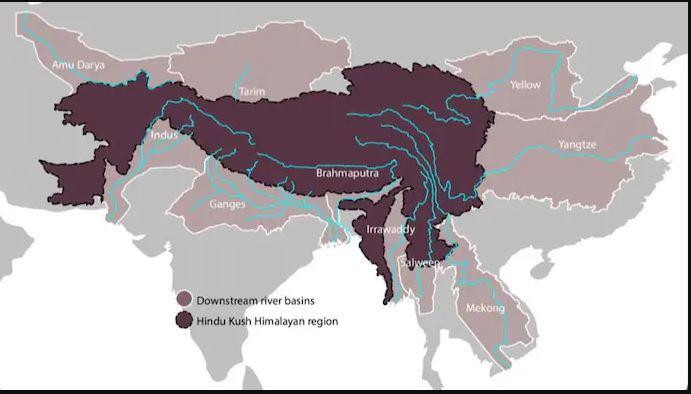
- The HKH mountains extend around 3,500 km over eight countries — Afghanistan, Bangladesh, Bhutan, China, India, Nepal, Myanmar, and Pakistan.
- These mountains are also called the “water towers of Asia” because they are the origins of 10 crucial river systems on the continent — Amu Darya, Indus, Ganga, Brahmaputra, Irrawaddy, Salween, Mekong, Yangtse, Yellow river, and Tarim.
- These river basins provide water to almost one-fourth of the world’s population and are a significant freshwater source for 240 million people in the HKH region.
Source: IE
Coal Exchange Rules, 2026
Syllabus: GS3/ Energy
Context
- The Ministry of Coal has notified the Coal Exchange Rules, 2026, paving the way for the establishment of Coal Exchanges in the country to enable transparent and market-driven coal trading.
What is a Coal Exchange?
- A Coal Exchange is an electronic marketplace where coal producers, consumers, traders, and other participants can buy and sell coal through transparent trading mechanisms.
- It facilitates efficient price discovery based on market demand and supply conditions.
Key Features of the Coal Exchange Rules, 2026
- Market-Based Trading: The framework shifts coal marketing from the traditional one-to-many model (producer to multiple consumers) to a many-to-many trading model.
- Price Discovery: Coal prices will be determined through market forces rather than administrative allocations.
- Regulatory Oversight: The Coal Controller Organisation (CCO) is the nodal authority tasked with registering and overseeing these exchanges.
- Exchange Registration: Entities operating an exchange must be incorporated as a company in India with a minimum net worth of ₹50 crore. Registrations are granted for 25 years.
- Transition Timeline: Pre-existing electronic coal trading platforms must transition and register as a Coal Exchange within six months of the first registered exchange’s commencement.
- Demutualization: The ownership and management do not hold any trading rights in the exchange.
Coal Sector in India
- India is the world’s second-largest producer and consumer of coal. India has the fifth-largest coal reserves globally.
- Coal accounts for around 55% of India’s primary commercial energy requirement and about 70% of electricity generation.
- Major coal-producing regions are concentrated in states such as Odisha, Jharkhand, Chhattisgarh, Madhya Pradesh, and West Bengal
Source: AIR
Dark Patterns
Syllabus: GS3/Science and Technology
Context
- According to a report, Indian consumers are losing an estimated ₹25,000 crore to ₹28,000 crore annually due to dark patterns, across online marketplaces.
About
- Dark patterns are user interface or user experience designs that manipulate, pressure, or mislead people into making choices they might not otherwise make.
- The term ‘dark patterns’ was coined by Harry Brignull in 2010.
- It encompasses a wide range of manipulative practices such as drip pricing, disguised advertising, bait and click, choice manipulation, false urgency and privacy concerns.
- Dark patterns can:
- Undermine informed consent.
- Reduce user autonomy.
- Lead to unintended purchases or data sharing.
- Erode trust in products and companies.
India’s Laws Related to Dark Patterns
- Consumer Protection Act, 2019 & CCPA Guidelines, 2023: The Consumer Protection Act empowers the Central Consumer Protection Authority (CCPA) to curb unfair trade practices.
- The CCPA’s Guidelines for Prevention and Regulation of Dark Patterns, 2023 explicitly prohibit deceptive practices such as false urgency, basket sneaking, confirm shaming, and subscription traps.
- Consumer Protection (E-Commerce) Rules, 2020: Require transparency in pricing, advertisements, and terms of sale, and prohibit misleading practices on e-commerce platforms.
- Digital Personal Data Protection Act, 2023: Mandates free, informed, and unambiguous user consent for data processing, thereby discouraging dark patterns that manipulate users into sharing personal data.
Source: TH
Digital Arrest
Syllabus: GS3/Cybercrime
Context
- As per the National Human Rights Commission (NHRC), Indians have lost around ₹52,976 crore to cyber-enabled frauds over the past six years, with nearly 8% of the losses linked to “digital arrest” scams.
About
- A digital arrest refers to a cyber scam where fraudsters use fake video calls, forged IDs, and official-looking websites to falsely accuse individuals of crimes and coerce them into paying money.
- Emerging technologies such as artificial intelligence, deepfakes and synthetic identities are likely to make such frauds more convincing and difficult to detect in the future.
- The Ministry of Home Affairs (MHA) and Indian Cyber Crime Coordination Centre (I4C) have issued public advisories.
Source: TH
New Rule Requires Fish Survival Test for Caustic Soda Industry Wastewater
Syllabus: GS3/Environment
Context
- Wastewater from caustic soda plants using membrane cell technology will now have to pass a laboratory-based fish survival test under new environmental standards notified by the Union government.
About
- The new standards apply to standalone caustic soda plants that use membrane cell technology.
- Membrane cell technology uses a special membrane to control the chemical process and is considered less polluting than older mercury-based processes.
- The rules say at least 90% of fish must survive after 96 hours in 100% wastewater during laboratory-based bioassay testing.
- The standards also set limits for pH, chloride, suspended solids, dissolved solids, water use and wastewater generation.
- Experts say enforcement will be key, as bioassay testing requires specialised laboratories, trained staff and regular independent monitoring.
Caustic soda
- Caustic soda, also known as sodium hydroxide, is one of India’s most widely used industrial chemicals.
- It is used in industries such as soap, detergents, paper, textiles, aluminium, petrochemicals and water purification.
- India has about 32 to 37 caustic soda plants, with annual production of more than five million metric tonnes.
- But the industry can also pose environmental risks because its wastewater is often highly alkaline and saline. It may contain chlorine, hydrochloric acid and high levels of dissolved solids.
Source: DTE
Previous article
Indian Reservoirs can Host 102 GW Floating Solar Capacity: Report
Next article
Strict Enforcement of PCPNDT Act Needed: SC
