


11 Years of Jan Suraksha Schemes
Syllabus: GS2/ Governance
Context
- Recently, PM Modi highlighted the impact of flagship social security schemes launched by the Union Government 11 years ago, including the Pradhan Mantri Jeevan Jyoti Bima Yojana (PMJJBY), Pradhan Mantri Suraksha Bima Yojana (PMSBY), and Atal Pension Yojana (APY).
- PMJJBY, PMSBY and APY were launched on 9th May, 2015.
Pradhan Mantri Jeevan Jyoti Bima Yojana (PMJJBY)
- Scheme: PMJJBY is a one-year life insurance scheme renewable from year to year offering coverage for death due to any reason.
- Eligibility: Persons in the age group of 18-50 years having an individual bank or a post office account are entitled to enroll under the scheme.
- People who join the scheme before completing 50 years of age can continue to have the risk of life covered up to age of 55 years upon payment of regular premium.
- Benefits: Life cover of Rs. 2 Lakh in case of death due to any reason against a premium of Rs. 436/- per annum.
Pradhan Mantri Suraksha Bima Yojana (PMSBY)
- Scheme: PMSBY is a one-year accidental insurance scheme renewable from year to year offering coverage for death or disability due to accident.
- Eligibility: Persons in the age group of 18-70 years having an individual bank or a post office account are entitled to enroll under the scheme.
- Benefits: Accidental death cum disability cover of Rs.2 lakh (Rs.1 lakh in case of partial disability) for death or disability due to an accident against a premium of Rs.20/- per annum.
Atal Pension Yojana (APY)
- Background: It is an initiative of the Government to provide financial security and cover future exigencies for the people in the unorganised sector.
- APY is administered by Pension Fund Regulatory and Development Authority (PFRDA) under the overall administrative and institutional architecture of the National Pension System (NPS).
- Eligibility: Open to all bank account holders aged 18 to 40 years.
- Applicants must not be income tax payers.
- The subscriber must contribute for a minimum period of 20 years.
- Contribution amount varies based on the chosen pension slab and age of joining.
- Benefits: Subscribers would receive the guaranteed minimum monthly pension of Rs. 1000 or Rs. 2000 or Rs. 3000 or Rs. 4000 or Rs. 5000 after the age of 60 years, based on the contributions.
- Disbursement of the Scheme Benefits: Pension is first paid to the subscriber.
- After the subscriber’s death, the spouse receives the pension.
- Upon the demise of both subscriber and spouse, the accumulated pension corpus is given to the nominee.
- In Case of Premature Death (Before Age 60): The spouse can continue the contributions until the subscriber would have turned 60, maintaining pension eligibility.
Source: AIR
Multiple Independently Targeted Re-Entry Vehicle system
Syllabus: GS3/Defence
In News
- India conducted the successful flight-trial of an Advanced Agni missile with Multiple Independently Targeted Re-Entry Vehicle (MIRV) system from Dr APJ Abdul Kalam Island, Odisha.
Multiple Independently Targeted Re-Entry Vehicle (MIRV) system
- MIRV technology enables missiles to carry multiple warheads that can strike different targets simultaneously, causing extensive damage.
- It strengthens a country’s counterattack capability, especially for nations like India with a no-first-use nuclear policy.
- It is difficult to intercept because each warhead follows a separate trajectory and can also carry dummy warheads to bypass missile defence systems.
- Advanced sensors and avionics further improve targeting accuracy and effectiveness.
- Developed in the 1960s and first used by the United States and the Soviet Union, it was later adopted by China, United Kingdom, and France.
Importance
- MIRV technology allows a single missile to carry multiple warheads that can strike the same or different targets simultaneously, making it more advanced than traditional single-warhead missiles
- India’s acquisition of MIRV capability significantly strengthens its Agni missile system, especially in response to similar developments by China and Pakistan
Agni missile
- Defence Research and Development Organisation (DRDO) developed the Agni missile series as India’s main land-based nuclear missile system.
- Earlier variants, Agni-1 to Agni-4, have ranges between 700 and 3,500 km and carry single warheads.
- The latest variant, Agni-5, equipped with MIRV technology, can strike multiple targets with high accuracy at ranges over 5,000 km, potentially reaching intercontinental range.
- It uses a three-stage solid-fuel engine and has undergone several successful tests since 2012, including a night trial in 2022
Source:PIB
Homogeneous Accretion
Syllabus: GS3/science and technology
In News
- A Nature Astronomy study found that Earth formed mainly from local inner solar system materials through a process called homogeneous accretion.
Homogeneous accretion
- Homogeneous accretion is a planetary formation model where a planet grows from a uniform mixture of materials (metals, silicates, volatiles) accreting together at the same time.
- This means the planet’s building blocks were chemically similar throughout its growth, unlike heterogeneous accretion, where different materials accrete in stages
Source:TH
Survey records 143 Odonata species across Western Ghats
Syllabus: GS3/Environment
In News
- A recent study in the Western Ghats highlights a significant biodiversity gap in dragonflies and damselflies, documenting only about 65% of historically recorded species, suggesting a possible 35% decline.
- The Western Ghats is a 1,600-km mountain chain along India’s west coast and a globally recognised biodiversity hotspot.
Odonata
- Odonata is an insect order that includes dragonflies (suborder Anisoptera) and damselflies (suborder Zygoptera).
- They are characterized by transparent wings, long slender bodies, and a sloping thorax.
- Usually found near water, odonates are active daytime predators, and both adults and aquatic larvae feed on other
Key Findings of the survey
- The survey recorded 143 odonata species across 144 sites in five States between 2021 and 2023, including 40 endemic species.
- While some species such as Elattoneura souteri, Protosticta sanguinostigma, and Cyclogomphus ypsilon are classified as vulnerable, many others fall under data deficient or not evaluated categories in the International Union for Conservation of Nature (IUCN) Red List, indicating knowledge gaps.
- State-wise results show highest endemism in Kerala and Maharashtra, while Gujarat recorded the lowest diversity.
- The study identifies major threats such as infrastructure expansion, hydropower projects, pollution, land-use change, tourism pressure, forest fires, and climate change. It also finds higher biodiversity in the southern Western Ghats due to better habitats and perennial streams.
Source:TH
Canary Islands
Syllabus: GS1/Geography
Context
- A cruise ship carrying passengers with a hantavirus outbreak has arrived in Spain’s Canary Islands.
About
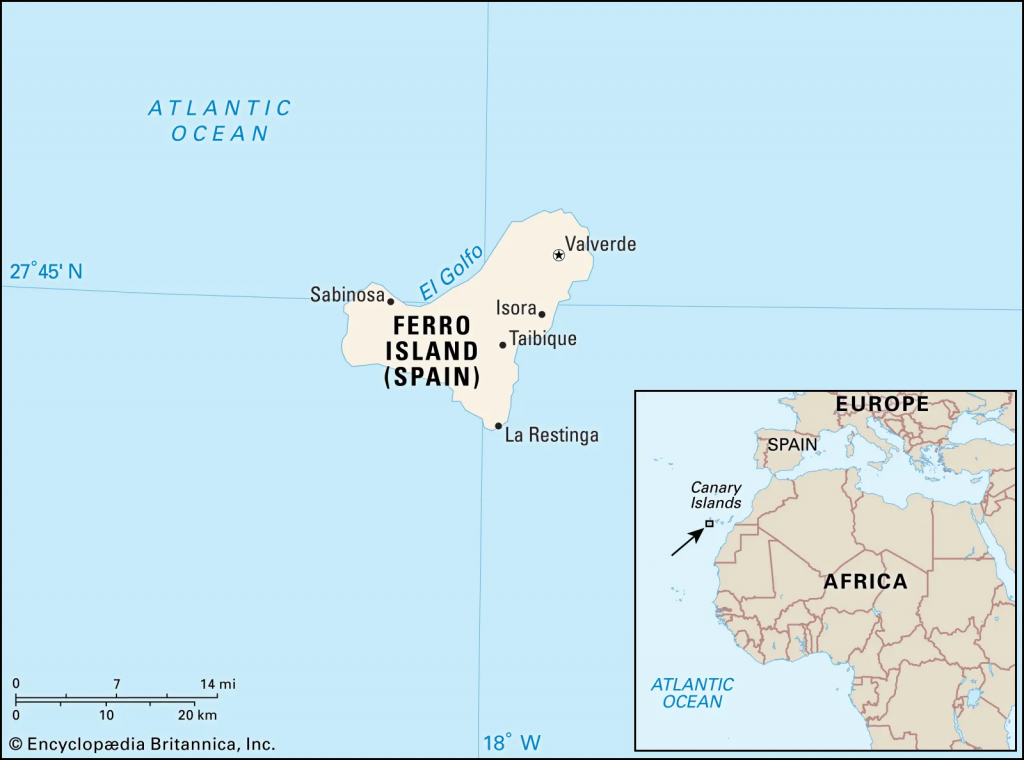
- The Canary Islands, also known as the Canaries, are an archipelago in the Atlantic Ocean and form the southernmost autonomous region of Spain. They are located about 100 kilometres off the northwestern coast of Africa.
- The islands are divided into two groups: a western group (Tenerife, Gran Canaria, La Palma, La Gomera, and Ferro islands) and an eastern group (Lanzarote, Fuerteventura Island, and six islets).
- The islands sit near important Atlantic shipping routes connecting Europe, Africa, and the Americas, giving them economic and strategic importance.
- Formed by volcanic eruptions millions of years ago, the islands have a subtropical climate with warm temperatures and little seasonal variation.
Source: TH
Previous article
Sustainable Agriculture
Next article
Understanding India’s Changing Weather Patterns
