


Sengol
Syllabus:GS1/History
In News
The newly released NCERT Class 9 Social Science textbook, Understanding Society and Beyond – Part 2, shows the Sengol as a symbol of righteous governance.
Sengol (or Chenkol)
- It is a traditional Tamil royal sceptre symbolising monarchy, righteousness, justice, and rightful authority.
- It historically signified dharmic kingship, the validity of royal authority, and the ruler’s accountability to divine and ethical ideals.
- It was considered a symbol of the path of duty, service, and nationhood in the Great Chola Empire
- It originated in Tamil Nadu and was a ceremonial emblem of rulers
- For example, it was associated with the goddess Meenakshi among the Madurai Nayakas and later placed in the throne room to signify the function and obligations of the monarch.

- The Sethupatis of Ramnad also acquired a ritually sanctified Sengol from the priests of the Rameswaram temple upon becoming kings.
- Under the guidance of Rajaji and the sages of Adheenams, this Sengol became the symbol of the transfer of power.
Description by NCERT
- NCERT describes the Sengol as a cultural symbol of righteous governance and mentions that Shaivite Adheenam saints had presented it to Jawaharlal Nehru at India’s Independence in 1947 as a mark of the transfer of authority from British rule to an independent Indian state.
- This account is consistent with the description of the Sengol by the Union Ministry of Culture as a symbol of ethically exercised kingship.
- Historians, including Rajmohan Gandhi, have said that there is no record in Nehru’s or C. Rajagopalachari’s papers and writings that it was a formal symbol of the transfer of power.
Source: TH
Annual Survey of Industries
Syllabus: GS3/Economy
In News
Ministry of Statistics and Programme Implementation (MoSPI) has released the results of the Annual Survey of Industries (ASI) for the reference period April 2024 to March 2025 (i.e. financial year 2024-25)
Annual Survey of Industries
- It is conducted by the Ministry of Statistics and Programme Implementation (MoSPI).
- It is one of the most important surveys in the country and covers the formal manufacturing sector.
- It is conducted with the primary objective of providing meaningful insight into the dynamics of change in the composition, growth, and structure of various manufacturing industries in terms of output, value added, employment, capital formation, and a host of other parameters.
- Its data serves as an important input for policymaking, supports the compilation of National Accounts Statistics, and meets the information needs of various Ministries while enabling stakeholders to make informed decisions.
Key Findings
- Growth of industrial sector: India’s industrial sector grew broadly. The number of factories increased by 2.6% to 2.7 lakh, and factory employment rose by 7.3% to 1.67 crore
- Average factory earnings rose 5.3% to Rs 2.28 lakh, but Jharkhand was the only state to register a loss, with average pay falling 5.2% to Rs 3.04 lakh.
- Uttar Pradesh emerged as a main engine of industrial growth, with the number of factories going up 12.8% to 24,964 and workers increasing 14%, while wages rose 6.7%.
- Tamil Nadu continued to have the biggest number of factories (41,221) and workers (26.1 lakh).
- Gujarat suffered a marginal decline of 1% in factories, bringing its share of the national pie down to 12.4% and registered a paltry 2% wage growth.
- Bihar saw the biggest wage gain of 16.7% across big states, yet its factory workforce fell 2%.
- Gross Value Added and Employment Metrics: GVA increased from ₹2458.3 thousand crore to ₹2694.2 thousand crore, indicating sustained growth (9.59%) in industrial value addition.
- Maharashtra recorded the highest GVA in 2024-25, followed by Gujarat, Tamil Nadu, Karnataka, and Uttar Pradesh
- Employment in the registered manufacturing sector continued to expand. The estimated number of persons engaged in the registered manufacturing sector increased significantly from 1.96 crore in ASI 2023-24 to 2.10 crore in 2024-25, with a growth of 7.19%.
- Tamil Nadu, Maharashtra, Gujarat, Uttar Pradesh and Haryana were the five leading States in terms of the number of persons engaged in the manufacturing sector in 2024-25.
Source: IE
Rebate of State and Central Taxes and Levies (RoSCTL) Scheme
Syllabus:GS3/Economy
In News
The Ministry of Textiles has extended the RoSCTL Scheme for exports of apparel/garments and made-ups for a further term of three months, from 1st October to 31st December 2026, at the existing prices and under the prevailing norms.
Rebate of State and Central Taxes and Levies (RoSCTL) Scheme
- It was launched in 2019 by the Ministry of Textiles, and it aims to rebate all embedded State and Central taxes and levies not covered under any other scheme.
- It is based on the principle of zero-rating of exports, ensuring remission of unrefunded taxes embedded in exported products.
- It continues to serve as a key support mechanism for the textile export sector, particularly benefiting MSME exporters, who constitute a major share of its beneficiaries.
- It enhances the global competitiveness of India’s apparel and made-up exports.
Progress and Importance
- The Scheme helped around 15,400 exporters in 444+ districts during 2025-26, with the beneficiary base being predominantly MSMEs.
- The Scheme’s broad geographical coverage emphasises its importance in bolstering a dispersed manufacturing ecosystem and boosting the involvement of small and medium exporters in global markets.
- The extension would promote continuity and predictability of policy for exporters and help maintain the competitiveness of India’s labour-intensive and value-added clothing and made-ups sector in an increasingly competitive global trading environment.
Source: PIB
ASEAN-India Maritime Exercise (AIME-2026)
Syllabus: GS3/Defence
In News
The Second Edition of the ASEAN-India Maritime Exercise (AIME-2026) commenced at Subic Bay, Philippines.
ASEAN-India Maritime Exercise
- It brings together maritime forces from India and ASEAN countries for professional, operational, and social engagements aimed at enhancing mutual understanding, cooperation, and interoperability.
- It is conducted under the theme “Anchored in Trust, United at Sea”
Features
- The Harbour Phase will comprise a series of professional, operational, and social engagements, including Subject Matter Expert Exchanges, sporting and cultural activities, community engagement, and Operational Synchronisation, followed by a Pre-Sail Brief before commencement of the Sea Phase.
- The exercise will transition to the Sea Phase, wherein the participating maritime forces will undertake coordinated maritime exercises and operational serials.
- The sea phase is aimed at enhancing professional understanding, operational coordination, and interoperability through practical training and coordinated activities at sea.
Importance
- The participation of INS Sahyadri and INS Kulish in AIME-2026 underscores the Indian Navy’s continued commitment to strengthening maritime partnerships and promoting practical cooperation with ASEAN maritime forces.
- The exercise is being conducted in furtherance of India’s Act East Policy and the vision of MAHASAGAR (Mutual and Holistic Advancement for Security and Growth Across Regions).
Source :PIB
Increase in the Minimum Support Prices (MSP) for all mandated Rabi crops
Syllabus: GS3/Economy
In News
The Cabinet Committee on Economic Affairs (CCEA) has approved the increase in the Minimum Support Prices (MSP) for all mandated Rabi Crops for Marketing Season 2027-28.
Minimum Support Prices (MSPs)
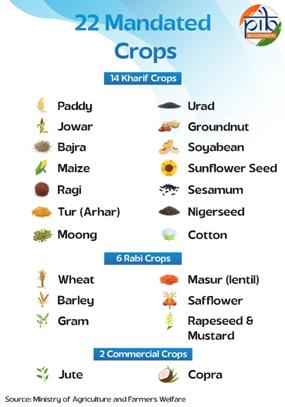
- Government announces Minimum Support Prices (MSPs) for 22 mandated crops based on the recommendations of the Commission for Agricultural Costs & Prices (CACP), after considering the views of the concerned State Governments and Central Ministries/Departments.
- In addition, MSP for Toria and de-husked coconut is also fixed on the basis of MSPs of rapeseed & mustard, and copra, respectively.
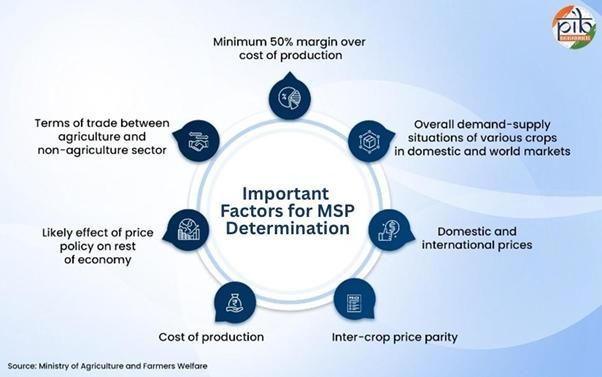
Factors for MSP
- CACP considers important factors, i.e., cost of production, overall demand-supply situations of various crops in domestic and world markets, domestic and international prices, inter-crop price parity, terms of trade between agriculture and non-agriculture sector, likely effect of price policy on rest of economy and a minimum of 50 per cent as the margin over the cost of production.
Source : TH
SC/ST (Prevention of Atrocities) Act, 1989
Syllabus: GS2/ Social Justice
Context
- The Calcutta High Court has observed that casteist abuses on social media can attract the provisions of the SC/ST (Prevention of Atrocities) Act, 1989, saying the “public view” under the Act cannot be confined to physical venues only.
About the SC/ST (PoA) Act, 1989
- The Act intends to prohibit atrocities against members of Scheduled Castes (SCs) and Scheduled Tribes (STs).
- It also provides for special courts and measures to protect victims.
- The Act covers offences ranging from caste-based abuse to social and economic boycotts and violence.
- Legal Clause: Sections 3(1)(r) and 3(1)(s) of the SC/ST Act criminalise intentionally insulting, intimidating or abusing a member of a Scheduled Caste or Scheduled Tribe by caste name “in any place within public view.”
Judicial Interpretation of ‘Public View’
- The Supreme Court in Hitesh Verma v. State of Uttarakhand (2020) held that “public view” means a place where members of the public can witness or hear the alleged utterance.
- Sooraj V. Sukumar v. State of Kerala (2022): Kerala High Court said SC/ST Act needs to be construed in light of technological innovation.
- It said the notion of public view may be applied to the digital domain because of the availability and distribution of internet content.
- Ramkrishna Chauhan v. State of Uttar Pradesh (2026): The Supreme Court reiterated that the mere occurrence of an alleged caste-related incident on school premises does not establish the requirement of public view.
- The circumstances under which the supposed remarks were made and whether they were observed or heard by members of the public need to be looked into.
Source: IE
Third Phase of Corporate Average Fuel Economy (CAFE-3) Norms
Syllabus: GS2/ Governance, GS3/ Environment
Context
- The Union Government has notified the third phase of Corporate Average Fuel Economy (CAFE-3) norms for passenger vehicles, effective from April 1, 2027, to March 31, 2032.
What are CAFE norms?
- Corporate Average Fuel Economy (CAFE) norms regulate the average fuel consumption and CO₂ emissions of a carmaker’s passenger-vehicle fleet rather than imposing the same efficiency requirement on every individual vehicle.
- The objective is to encourage manufacturers to produce more fuel-efficient and low-emission vehicles, thereby reducing petroleum consumption and transport-sector emissions.
What are the new norms?
- Under the new norms, the fuel-consumption benchmark will be tightened from 3.996 litres per 100 km in 2027–28 to 3.3273 litres per 100 km in 2031–32, amounting to an improvement of about 16.7% over the five-year period.
- The new norms will apply to new passenger vehicles manufactured or imported for sale in India.
- The Corporate Average Fuel Efficiency norms use 1,229 kg as the reference vehicle weight.
- The fleet’s average fuel consumption will be calculated using the Modified Indian Driving Cycle (MIDC) and expressed in petrol-equivalent litres per 100 km.
- For individual models, fuel consumption will be calculated using their notified tailpipe CO₂ emissions.
- Under the CAFE-3 norms, carmakers can count;
- Each battery electric vehicle or range-extended EV as three vehicles,
- Each plug-in hybrid or flex-fuel strong hybrid as 2.5 vehicles,
- Each strong hybrid as 1.6 vehicles and
- Each flex-fuel ethanol vehicle as 1.1 vehicles when calculating fleet fuel efficiency.
- Carbon Neutrality Factors: CAFE-3 also introduces Carbon Neutrality Factors (CNFs) that reduce the declared CO₂ emissions of eligible vehicles based on the use of biofuels and ethanol blends.
- For E20 or higher ethanol-blended petrol vehicles, including strong and plug-in hybrids, declared emissions can be reduced by 8%.
- Flex-fuel ethanol vehicles receive a 22.3% reduction.
- For CNG vehicles, the reduction is 5% or the notified compressed-biogas blending percentage, whichever is higher.
- For diesel vehicles, the reduction corresponds to the actual biofuel-blending percentage notified by the Ministry of Petroleum and Natural Gas.
Source: TH
‘Beamline for Schools’ Competition
Syllabus: GS3/Science and Technology
Context
- A group of Indian school students is among the five winning teams of the 13th edition of the ‘Beamline for Schools’ competition.
‘Beamline for Schools’ Competition
- It is a physics competition for high school students from all around the world organised by the European Organization for Nuclear Research (CERN).
- A beamline is a facility that provides high-energy fluxes of subatomic particles that can be used to conduct experiments in different fields.
- The team proposed an experiment to study pion charge exchange, i.e., how frequently a charged pion changes into a neutral pion when interacting with light atoms such as lithium and beryllium.
- Pions are subatomic particles that can possess positive, negative or zero electric charge.
CERN
- CERN is one of the world’s leading centres for particle physics research.
- Location: Near Geneva, Switzerland, on the Franco-Swiss border.
- Established: 1954, with the aim of promoting peaceful cooperation in fundamental scientific research in Europe.
- CERN is run by Member States, each of which has two official delegates to the CERN Council.
- The CERN Council is the highest authority of the Organization and has responsibility for all-important decisions.
- Its most famous facility is the Large Hadron Collider (LHC), the world’s largest and most powerful particle accelerator.
- CERN played a major role in the discovery of the Higgs boson in 2012, which provided evidence for the Higgs field associated with the mechanism through which fundamental particles acquire mass.
Source: TH
Bond Yield
Syllabus: GS3/Economy
Context
- The yield on the 30-year US Treasury bond hit the highest level in around 25 years.
About
- A bond is a loan given by an investor to a government or company, in return, the investor receives interest.
- The yield denotes the return on investment that a lender can expect when loaning the money to the government for a particular length of time.
- Price and yield of a bond have an inverse relationship; as bond prices increase, yields typically decrease.
- Reasons for Rise in Bond Yield: The US government is borrowing a large amount of money and investors are also concerned about inflation and future interest rates.
- Therefore, they demand higher returns for lending their money to the US government for a long period.
- Implications of Rise in Yield:
- It signals higher borrowing costs for the US government, if yields on existing bonds are rising, the US government has to pay more interest on its debt.
- Rising US bond yields can also affect other countries: Since US government bonds are an important benchmark for global financial markets, higher US yields can influence global investment flows, currencies, interest rates and stock markets.
Source: IE
