


Syllabus: GS3/ Economy/ Agriculture
Context
- The International Day of Awareness of Food Loss and Waste is observed every year on September 29 to promote awareness and collective action to reduce food loss and waste.
Food Loss and Food Waste
- Food loss refers to the reduction in the quantity or quality of food during production, post-harvest handling, storage, processing and transportation, before it reaches retail.
- Food waste refers to food discarded at the retail, food-service and household levels, including food that is still suitable for consumption.
Status of food wastage in India
- As per UNEP Food Waste Index Report 2024, the estimated food wastage in India in 2022 is 55 kg/capita/year in India, lower than the global average of 79 kg/capita/year.
- Concern: India ranks 102 out of 123 countries in the Global Hunger Index 2025.
- Around 12% of India’s population is undernourished, which is approximately ~170–175 million people.
- Globally 1.05 billion tonnes of food is wasted each year. Around 60% of food waste occurs at the household level, followed by food services (28%) and retail (12%).
Impact of Food Loss and Waste
- Nutritional security: Food losses diminish the food available for consumption and unnecessary waste aggravates food insecurity and hampers efforts to promote nutrition.
- Economic losses: Post-harvest losses affect farmers’ incomes, raise the expenses of the supply chain and reduce the returns on investments in agricultural production.
- Environmental degradation: Food loss and waste also means loss of land, water, energy, fertilisers and other resources utilised in its production.
- Climate change: Decomposing organic waste in landfills generates methane, a potent greenhouse gas, contributing to global warming.
Challenges in Tackling Food Loss
- Inadequate infrastructure: Gaps in cold chains, storage, transport and processing increase post-harvest losses.
- Data gaps: Limited data on retail, food-service and household waste hinders effective policymaking.
- Limited finance: High costs and inadequate credit restrict adoption of modern loss-reduction technologies.
- Fragmented approach: Multiple sectors and institutions lead to uncoordinated interventions.
- Poor waste segregation: Mixed waste reduces the potential for composting, biogas and resource recovery.
Government Initiatives to Reduce Food Waste
- Food Security and Distribution: The Public Distribution System ensures the distribution of subsidised food grains to vulnerable populations.
- The Pradhan Mantri Garib Kalyan Anna Yojana has expanded food access during times of crisis and economic distress.
- Agriculture Infrastructure Fund (AIF): Provides medium-to-long-term debt financing for post-harvest management projects, including warehouses, silos, and cold storage.
- The Pradhan Mantri Kisan Sampada Yojana aimed at creating modern infrastructure for food processing and preservation.
- Mega Food Parks: Clusters that link agricultural production to markets through high-tech supply chains.
- Integrated Cold Chain: Providing preservation facilities like refrigerated transport and cold storage to reduce spoilage of perishables.
- Operation Greens: Focused on stabilizing the supply and reducing waste of crops like Tomato, Onion, and Potato (TOP).
- Market Reforms: The e-NAM facilitates better price discovery and reduces inefficiencies in agricultural markets.
- Measuring Food Loss: India has conducted three nationally representative post-harvest loss assessments, covering 45, 45 and 54 commodities during 2005–07, 2012–14 and 2020–22, respectively.
- These assessments, conducted by the Ministry of Food Processing Industries (MoFPI), provide evidence on losses across the agricultural supply chain, from farms to retail.
- The Food and Agriculture Organization (FAO) and the Small Industries Development Bank of India (SIDBI) are working to connect food-loss hotspots with climate-resilient technologies and facilitate financing for small and medium enterprises.
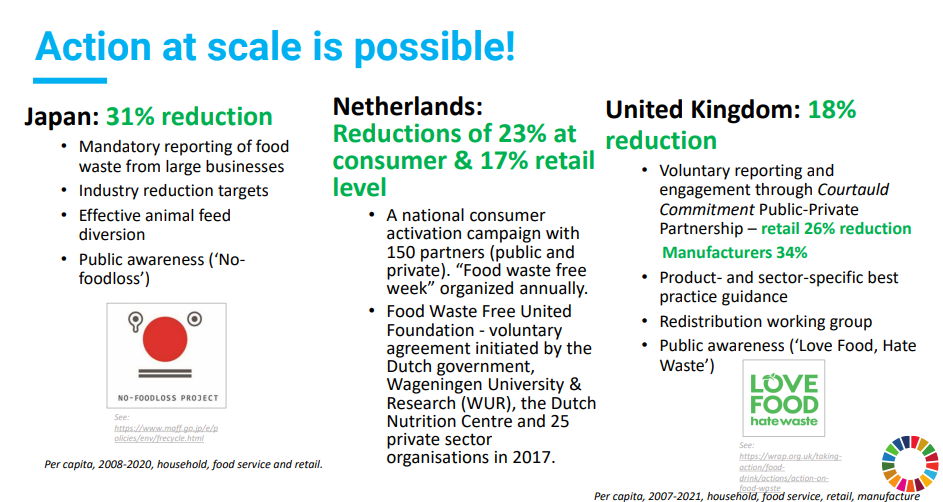
Global Best Practices
Way Ahead
- India’s food wastage is a symptom of systemic inefficiencies in the production, distribution and use of food while hunger remains.
- Addressing this issue is essential for improving food security, resource efficiency, and sustainability.
- It is also critical for achieving SDG 2 (Zero Hunger) and SDG 12 (Responsible Consumption and Production), making food waste reduction a key developmental priority.
Source: TH
Previous article
News In Short 28-09-2026
