


Syllabus: GS4/Ethics
Context
- The Prime Minister of India recently shared Sanskrit Subhashitam stressing the virtues of Compassion (Karuna) and Contentment (Santosha). He said that this ethos further strengthens the links of collaboration and peace in society.
About Compassion and Contentment
- Compassion and contentment are mutually enriching virtues, strengthening individual character and public morals alike.
- Compassion is the awareness of the pain of others with the desire to relieve it; contentment is a condition of inner adequacy and happiness, without overwhelming yearning.
- Together they advocate a life of empathy not ego, moderation not consumerism.
Core Concepts
- Compassion (Karuna): An active care for the well-being of others. It creates emotional resilience, strengthens interpersonal connection and gives a natural sense of dignity.
- Contentment (Santosha): It is a state of inner satisfaction with what we have. It soothes greed, reduces anxiety, and ends the never-ending quest for external recognition.
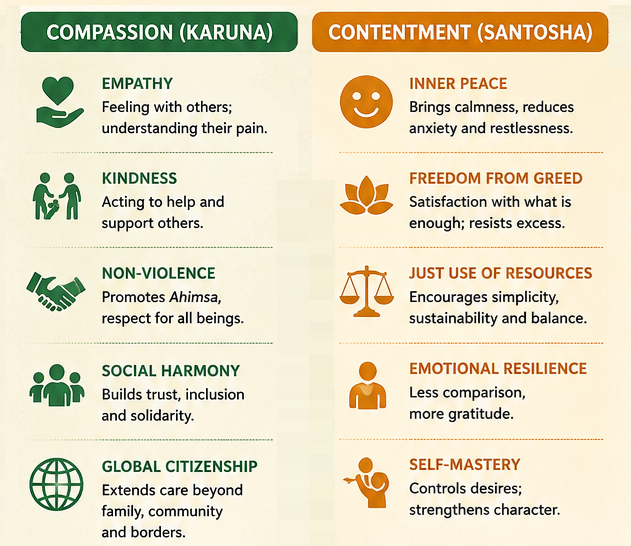
Compassion and Contentment as Foundations of Morality
- Rules alone do not preserve morality; it requires the proper frame of mind in human beings.
- Compassion enlarges the moral circle beyond self-interest, and it inspires caring for the weak.
- Contentment restrains greed, envy, ceaseless pursuit of self-interest. Compassion pushes us to give, while contentment teaches us when to stop taking.
- These attributes have been extolled in Indian intellectual systems since ages:
- ‘सन्तोषः परमं सुखम्’ (Santoshaḥ paramam sukham): Highest happiness is contentment.
- Likewise, the Sanskrit ideal of दया (dayā) places compassion at the heart of moral conduct.
- In the spirit of ‘Vasudhaiva Kutumbakam’ the world is one family extending compassion beyond restricted identities.
Importance of Compassion and Contentment
- Human Well-being: Compassion enhances social cohesion and diminishes alienation Contentment fosters thankfulness, mental calm and resilience
- Social Harmony: Compassion is the cure for prejudice and apathy toward the downtrodden. Contentment diminishes vicious competition, envy and materialism.
- Moral Decision-making: These attributes collectively serve to balance ambition with accountability. They promote the advancement of humanity without sacrificing the dignity of the human being or ecological sustainability.
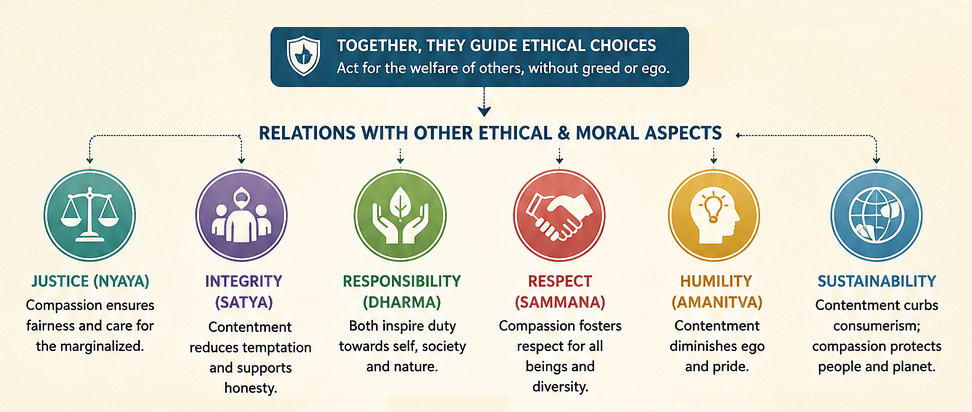
Role in Civil Services
- For a government worker, compassion is citizen-centric governance and sensitivity for the poor, aged, women and other vulnerable groups.
- It prevents administration from being hampered by mechanical rules. Contentment is, nevertheless, an ethical bulwark against corruption, avarice and misuse of position.
- A compassionate and content public servant can exert authority with empathy, integrity and prudence.
- In the end these values turn governance from simply providing services into an instrument for human dignity and social justice.
Conclusion
- The essence of morality is compassion, its balance is contentment.
- In an age of inequality and excessive materialism, it is necessary to cultivate these virtues for the sake of personal happiness, as well as for the sake of ethical and humane public governance.
Previous article
Rise in Female Labour Force Participation rate (FLFPR)
Next article
News In Short 24-08-2026
