


Pradhan Mantri Annadata Aay Sanrakshan Abhiyan (PM-AASHA)
Syllabus: GS3/Economy
In News
PM-AASHA has emerged as a strong and structured mechanism to support farmers through assured procurement, price stabilization, and effective market interventions.
Pradhan Mantri Annadata Aay Sanrakshan Abhiyan (PM-AASHA)
- It was launched in September 2018 and brings together multiple price-support mechanisms covering different crops and market situations.
- It is a framework through which the government seeks to ensure that farmers receive better prices for their produce.
- It seeks to protect farmers from distress sales while also maintaining price stability for consumers.
Components
- It combines four key components — the Price Support Scheme (PSS), Price Stabilization Fund (PSF), Price Deficiency Payment Scheme (PDPS) and Market Intervention Scheme (MIS).
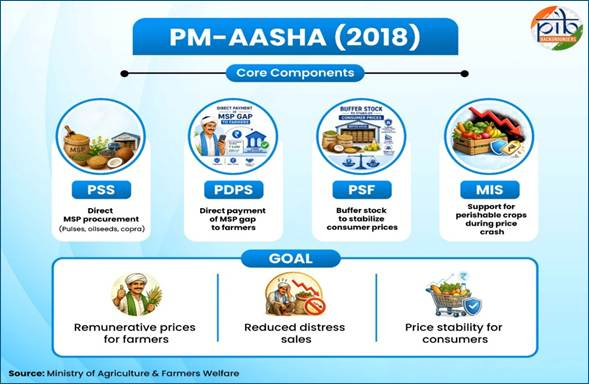
- Price Support Scheme (PSS) provides for procurement of pulses, oilseeds and copra at MSP to prevent distress sale when market prices collapse. From 2024-25, Tur, Urad and Masur can be procured up to 100% of the State production.
- The Price Stabilisation Fund (PSF) keeps buffer stocks of essential commodities including pulses, onions and potatoes to keep the prices stable.
- The Price Deficiency Payment Scheme (PDPS) is the scheme in which the difference between MSP and market prices is paid to farmers, mostly for oilseeds, without physical purchase.
- The MIS (market intervention scheme) is aimed at helping farmers of perishables like tomatoes, onions, and potatoes in case of a price crash or oversupply in the market.
Objectives
- It is designed to provide farmers with greater price assurance and reduce distress sales
- It strengthens agricultural markets while balancing the need for consumer price stability.
- It aims to strengthen the link between MSP and actual price realisation by farmers.
- It seeks to address different situations that can affect farm incomes.
Source: DD
Terrier Cyber Quest 2026
Syllabus: GS3/Internal Security
In News
The Territorial Army, in collaboration with CyberPeace, has launched Terrier Cyber Quest 2026 (TCQ 3.0).
Terrier Cyber Quest
- It is a national-level hackathon aimed at developing innovative solutions to contemporary defence, cybersecurity and information-domain challenges.
- It seeks to bring together technical talent from academia, industry, research institutions, government organisations and the Armed Forces.
- It will focus on emerging areas including Artificial Intelligence (AI), cybersecurity, threat mitigation and digital awareness, while encouraging development of indigenous solutions relevant to national security.
Latest Developments
- TCQ 3.0 will be conducted across three competition tracks:
- Bug Hunting: A cybersecurity challenge commencing with an online Capture-the-Flag (CTF) qualifier and culminating in an in-person live sandbox finale.
- Participants will be required to identify and document vulnerabilities in simulated critical infrastructure environments.
- AI Kavach: An AI and machine-learning based challenge aimed at developing solutions for predictive threat intelligence, automated defence mechanisms and anomaly detection.
- Creators Challenge: A digital media and storytelling competition for content creators, communicators and influencers to develop impactful awareness campaigns addressing threats such as deepfakes, phishing, online scams and misinformation.
- Bug Hunting: A cybersecurity challenge commencing with an online Capture-the-Flag (CTF) qualifier and culminating in an in-person live sandbox finale.
Source:PIB
Rising cases of Swine Flu
Syllabus:GS2/Health
In News
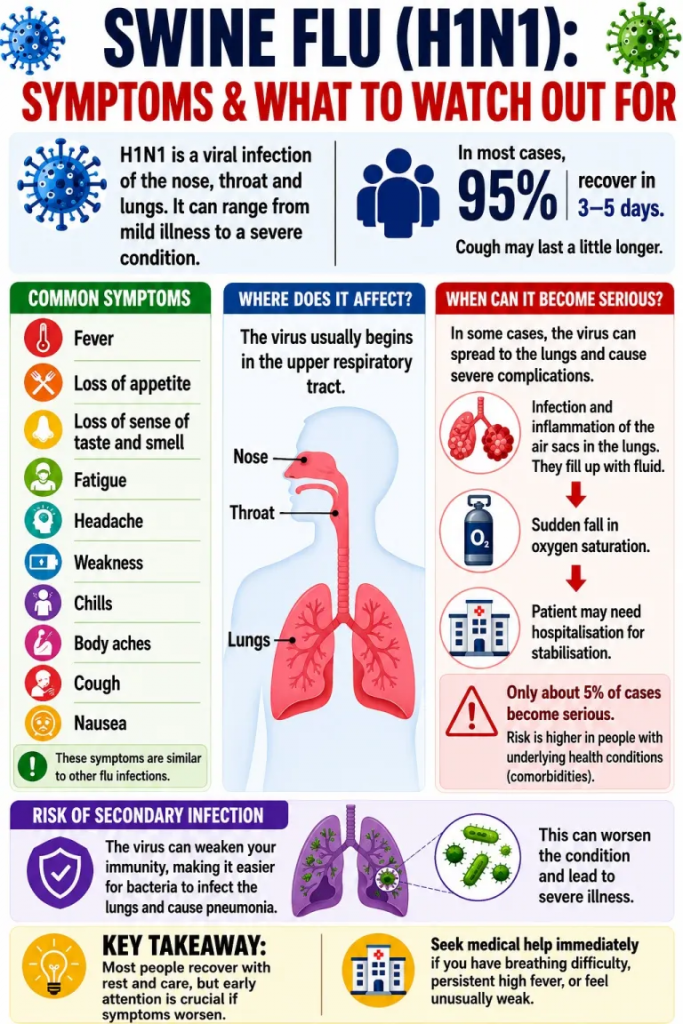
Delhi has registered 1,777 confirmed cases of swine flu, with hospitals reporting a spurt in illnesses in all age groups over the past two weeks.
Swine influenza
- Swine influenza is a respiratory disease of pigs caused by type A influenza viruses that regularly cause outbreaks of influenza in pigs.
- The most common subtypes are H1N1, H1N2 and H3N2.
- It was responsible for a pandemic in the year 2009, and since then, H1N1, H3N2, and some Influenza B strains have been the predominant strains circulating worldwide.
- Transmission in Humans: It is contagious and can spread from person to person, but the ease with which it spreads can vary.
- It spreads mostly via coughing and sneezing. It can also spread when you touch a contaminated surface and then touch your mouth or nose with your hand.
- Swine influenza is common in North and South America, Europe, and parts of Asia. It has been reported in Africa too.
Preventions and Treatement
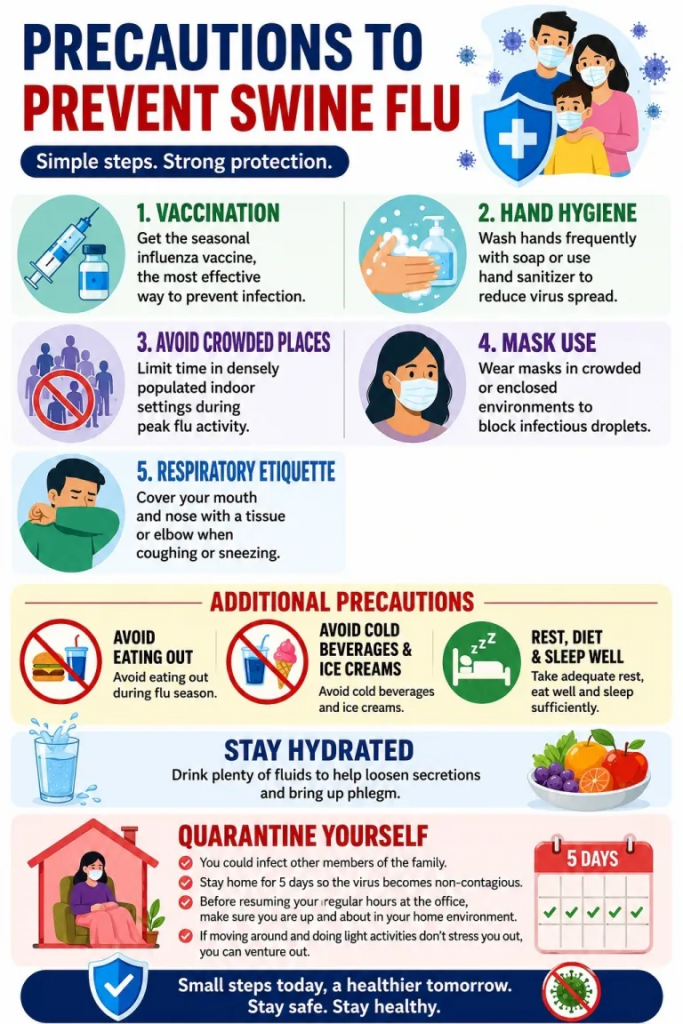
- Treatment is mostly supportive. This is a viral infection; thus, antibiotics will not work.
- If you take the antiviral drug oseltamivir early, it will reduce the severity of the sickness; thus, it is crucial to seek medical attention and get tested in a timely manner.
- Fever can be managed with paracetamol. India has a quadrivalent influenza vaccine, and annual immunisation is suggested, especially for individuals 60+ and immunocompromised, as flu strains change often and vaccines are updated accordingly.
Source:IE
Mobile Phone Manufacturing Scheme
Syllabus: GS3/Economy
Context
- The Ministry of Electronics and Information Technology (MeitY) has notified the Mobile Phone Manufacturing Scheme (MPMS), with a budgetary outlay of Rs 62,500 crore.
About Mobile Phone Manufacturing Scheme (MPMS)
- The scheme seeks to expand manufacturing scale, strengthen domestic supply chains and support Indian mobile phone brands in developing indigenous technology, intellectual property and design capabilities.
Salient Features of MPMS
- The Scheme has two Target Segments;
- Target Segment 1 (TS1): It incentivises mobile phone manufacturing and provides a differentiated incentive ranging from 2.25% to 5%.
- Target Segment 2 (TS2): It supports Indian mobile phone brands and provides an incentive @5% for Indian Brands and an additional incentive of 3% for Indian design and R&D.
- Moreover, the Scheme provides non-fiscal support to Indian Brands.
- Applicants under TS2 may be granted a gestation period of 1 year.
- Moreover, the Scheme provides non-fiscal support to Indian Brands.
- Tenure: The scheme tenure shall be 5 years, i.e., from FY 2026-27 to FY 2030-31.
- Additional incentive: Further, an additional incentive of up to 1.5% shall be provided for domestic sourcing of key components/sub-assemblies for both the target segments under the Scheme.
- Applicants under the Scheme shall be mobile phone manufacturers, including Electronics Manufacturing Services (EMS) providers, that are registered in India.
Eligibility criteria
- Under TS1, mobile phone manufacturers, including EMS companies registered in India, must have recorded a minimum turnover of ₹10,000 crore in FY 2025-26.
- Existing brands must achieve annual sales of at least ₹5,000 crore over and above their FY 2025-26 sales threshold.
- A new brand will become eligible after achieving annual sales of ₹10,000 crore in India and must thereafter meet the year-on-year threshold of ₹5,000 crore.
- Under TS2, applicants must have a minimum turnover of ₹1,000 crore in FY 2025-26 and meet the criteria prescribed for an Indian brand.
Expected outcomes
- During the scheme’s tenure, cumulative mobile phone production in India is expected to reach approximately ₹39 lakh crore.
- The MPMS is expected to generate around 60,000 direct jobs, consolidating India’s position as a global electronics manufacturing hub.
Electronics manufacturing growth
- India is currently the world’s second-largest mobile phone manufacturer by volume, with 99.2 per cent of mobile phones used in the country being manufactured domestically.
- The Production Linked Incentive Scheme for Large Scale Electronics Manufacturing (PLI-LSEM) played a key role in establishing India as a global hub for mobile phone manufacturing and exports. The scheme’s tenure ended on March 31, 2026.
Progress of VB-G RAM G and its Comparison with MGNREGA
Syllabus: GS2/Governance
Context
- The Supreme Court praised the repealed Mahatma Gandhi National Rural Employment Guarantee Act (MGNREGA), calling it a salutary scheme and examining whether the right to work can be elevated to the status of a fundamental right under Article 21.
About VB-G RAM G
- It replaced the Mahatma Gandhi National Rural Employment Guarantee Act, 2005 (MGNREGA).
- The move marked a shift from a “demand-driven framework” to a “supply-driven scheme.”
- Enhanced Livelihood Guarantee: It will enhance the statutory wage employment guarantee to 125 from 100 days per rural household in every financial year for adults who volunteer to undertake unskilled manual work.
- Centrally Sponsored Scheme: The scheme will be implemented as a Centrally Sponsored Scheme with a sharing pattern of 90:10 for North-Eastern and Himalayan States/UT and 60:40 for all other States.
- Securing peak agricultural seasons: States will be empowered to notify in advance, a period aggregating to 60 days in a financial year covering peak sowing and harvesting during which works under the Act will not be undertaken, facilitating sufficient farm labour at critical times.
- Normative Allocation to States based: States will ensure transparent and need-based intra-State distribution of funds across Districts and Gram Panchayats, taking into account the category of the Panchayats and local developmental needs.
- Unemployment allowance: If eligible applicants are not provided work within the stipulated period, State Governments will be obliged to pay unemployment allowance.
- VGPP based planning: Planning will be undertaken through Viksit Gram Panchayat Plans, prepared by Gram Panchayats and integrated with national spatial planning systems.
- Institutional Oversight: The Central Gramin Rozgar Guarantee Council and the State Gramin Rozgar Guarantee Councils shall be constituted for review, monitoring and effective implementation of the provisions of the legislation in their respective areas.
Mahatma Gandhi National Rural Employment Guarantee Act (MGNREGA)
- The Mahatma Gandhi National Rural Employment guarantee Act (MGNREGA), 2005 legally assures pay employment to rural households.
- It was created in 2006 and renamed as MGNREGA in 2009.
- The main objective is to promote the livelihood stability of the rural people by providing at least 100 days of assured wage employment in a financial year to all households in rural areas whose adult members volunteer to do unskilled manual work.
- Implementation: It is a demand driven and rights based program implemented through Gram Panchayats primarily.
- Allowances: Unemployment allowance if work is delayed more than 15 days and not less than one-third (33%) of participants are women.
Concerns with the New Framework
- Demand-driven to allocation approach: Increased central control can undermine the rights-based nature of rural employment.
- Increased cost on states: Most states would have to contribute 40% of the expenditure compared to the far higher participation of the Union under MGNREGA.
- Employment creation: Despite an increase of guarantyd days of work, employment creation under the VB-G RAM G Act has declined by 50%.
Right to Work as a Fundamental Right
- The Constitution does not make the right to work a fundamental right.
- Article 41 under Part IV of the Constitution directs the state to secure the right to work, education, and public assistance in cases of unemployment, old age, sickness, disablement, or other undeserved want, based on its economic capacity and development.
- It is part of the Directive Principles of State Policy (DPSPs) and therefore is not directly enforceable by courts.
- However, it is being argued that employment is essential for a dignified life, which forms part of the broader interpretation of Article 21.
Source: TH
GST Appellate Tribunal (GSTAT)
Syllabus: GS3/Economy
Context
- Less-than-anticipated cases were filed with the GST Appellate Tribunal (GSTAT).
About GSTAT
- It is a statutory quasi-judicial body established under the Central Goods and Services Tax (CGST) Act, 2017.
- The GSTAT e-filing portal was made operational in 2025, and the deadline for filing appeals, which were time-barred, was July 31, 2026.
- The GSTAT is the second appellate authority and provides a unified platform for resolving conflicts between taxpayers and tax authorities, while the first appellate authority is a Commissioner (Appeals) level officer whom a taxpayer can approach to appeal against an order or decision issued by a junior officer.
- The GSTAT had introduced a token system after consultations with the Department of Revenue and Ministry of Finance.
- It had allowed businesses whose cases were getting time-barred on July 31 to generate tokens on the e-filing portal.
- Once the token was generated, businesses had 60 days to file the case before the appellate tribunal.
Source: IE
Eligibility Criteria for Entry-level Judicial Service
Syllabus: GS2/Judiciary
Context
- The Supreme Court retained its 2025 decision requiring prior professional exposure before entry into the subordinate judiciary but significantly altered how that requirement would operate.
Background
- The Shetty Commission had recommended the abolition of the three-year practice requirement in 2002.
- The Commission claimed that law students are already exposed to courts through internships and clinical training and that three years of compulsory practice are thus not required.
- The Supreme Court recognised this argument and fresh law graduates were made eligible to participate in the judicial recruitment process immediately after their graduation.
- In May 2025, the Supreme Court revived the condition that candidates for Civil Judge (Junior Division) examination need to have three years of experience at the Bar before they are eligible to take the examination.
Latest Developments
- The Supreme Court continues to hold that fresh law graduates should not enter the subordinate judiciary without prior exposure to the functioning of courts.
- Rational Behind it: The underlying rationale is that Civil Judges deal with life, liberty, property and personal rights from the beginning of their careers.
- Candidates must have three years of relevant experience before appearing for the judicial service exam.
- This period would be counted from the date they enrol with the State Bar Council.
New Framework Prescribed by SC
- From April 2027 onwards, candidates must have at least one year of actual practice before appearing for examination, certified under a mechanism that is prescribed by the High Courts.
- Even then, the successful candidates must complete the same one-year academy training and one-year clerkship programme before taking up regular judicial duties.
- The court also rejected counting postgraduate education towards the requirement, saying that academic study cannot substitute for familiarity with the functioning of courts.
- It directed that the new framework will operate for five years after which its effectiveness will be reviewed.
Source: IE
Heritage Village
Syllabus: GS2/Government Initiatives
In News
- The Odisha government has announced that Gurujang village near Talcher in Angul district, the birthplace of Swami Laxmanananda Saraswati, will be developed as a heritage village.
More about the News
- Swami Laxmanananda Saraswati, the Vishwa Hindu Parishad leader, was killed by left-wing extremists in 2008 after being accused of promoting religious hatred.
What are heritage villages and how do they differ from our normal villages?
- A heritage village is a traditional settlement developed or conserved to preserve and showcase its unique cultural heritage, traditions, architecture and way of life.
- Unlike conventional villages, where development and modernisation naturally alter the settlement over time, heritage villages place greater emphasis on conservation of cultural identity.
- These villages promote cultural tourism by allowing visitors to experience the traditional lifestyle, architecture, crafts, festivals and practices of the local community.
- Heritage conservation can cover both:
- Tangible heritage: traditional houses, architecture, monuments and artefacts.
- Intangible heritage: customs, festivals, folklore, crafts, music and traditional knowledge.
- Examples: Pragpur (Himachal Pradesh) is widely recognised as India’s first heritage village.
- Other examples include Kisama (Nagaland), Reiek (Mizoram), and Khasi Heritage Village (Meghalaya).
Source: TH
Polysilicon
Syllabus: GS3/Science & Technology; Economy
Context
- The Indian government is planning a support scheme for polysilicon manufacturing, targeting 30 GW of domestic capacity by 2030, with an investment of over ₹25,000 crore to strengthen the domestic solar value chain.
About Polysilicon
- Polysilicon, also known as polycrystalline silicon or simply poly-Si is a highly purified form of silicon and the base raw material used in solar PV manufacturing.
- It is an upstream and highly electricity-intensive stage of the conventional solar manufacturing chain.
- It is converted into ingots, which are sliced into wafers. Wafers are then processed into solar cells, which are assembled into solar modules.
- China dominates global polysilicon production, accounting for around 94% of global production, followed by Germany and the US.
- India currently lacks significant commercial-scale polysilicon production capacity and relies heavily on imports for this crucial upstream input.
Source: TH
