


Syllabus: GS2/Health
Context
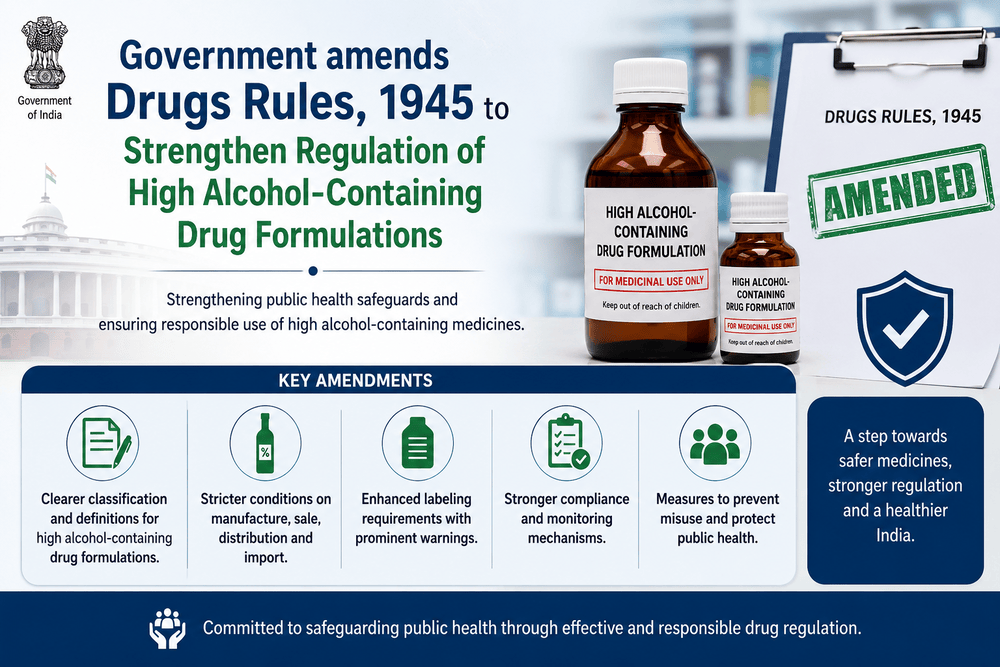
- The Central Government has amended the Drugs Rules, 1945, to strengthen the regulation of High Alcohol-Containing Drug Formulations.
Regulation of Drugs in India
- The Central Drugs Standard Control Organization (CDSCO) headed by the Drugs Controller General (India) is the Central Authority for regulating the quality of drugs marketed in the country under the Drugs and Cosmetics Act, 1940 and Rules thereunder.
- The import, manufacture, distribution and sale of Drugs, Cosmetics and Medical Devices in the country are regulated under the provisions of the Drugs and Cosmetics Act, 1940 & Rules made under the Drugs Rules, 1945, Medical Devices Rules, 2017, New Drugs & Clinical Trials Rules, 2019 and Cosmetics Rules, 2020.
- The National Pharmaceutical Pricing Authority (NPPA) is mandated to fix and revise drug prices under the provisions of the Drugs (Prices Control) Order (DPCO), 2013, while monitoring compliance, ensuring the availability of essential medicines, and advising on pharmaceutical policy.
- Indian Pharmacopoeia Commission (IPC): It oversees the periodic publication of the Indian Pharmacopoeia, the official compendium of drug standards under the Drugs and Cosmetics Act, 1940.
- The Pharmacopoeia prescribes standards of identity, purity, and strength for medicines marketed in India.
- The regulatory control over manufacturing, sale and distribution of drugs is exercised through a system of licensing and inspection by State Licensing Authorities (SLAs) appointed by State Governments, while regulatory control over drugs imported into the country is exercised by the Central Government through the Central Drugs Standard Control Organisation (CDSCO).
- State Health Regulatory Excellence Index (SHRESTH): A first-of-its-kind national initiative to benchmark and strengthen state drug regulatory systems through a transparent, data-driven framework.
Latest Developments
- The Ministry of Health and Family Welfare has removed the existing exemption (under Schedule K) from licensing requirements for formulations containing ethyl alcohol.
- All formulations containing more than 12% volume per volume ethyl alcohol, in quantities exceeding 30 millilitres, will no longer be covered under the exemption provided to them under Schedule K.
- Such products will be required to obtain the requisite licenses under the Drugs and Cosmetics Act, 1940.
- Significance: The amendment is expected to strengthen regulatory oversight over those medicinal products containing alcohol, ensuring their supply only through the regulated pharmaceutical supply chain.
Schedule K of the Drugs and Cosmetics Rules, 1945
- Schedule K contains a list of certain drugs that are exempted from some provisions of the Drugs and Cosmetics Rules, 1945, subject to specified conditions.
- It facilitates the sale and distribution of certain categories of medicines where strict licensing requirements are not necessary.
Objectives and Need of tough regulation
- Prevent Misuse and Diversion: Prior to the amendment in July 2026, some medicinal preparations containing ethyl alcohol were being actively diverted and misused as intoxicating substitutes, requiring urgent interventions flagged by state governments.
- Public health and consumer safety: The drug formulations should show strong therapeutic efficacy.
- Substandard or spurious drugs can cause treatment failure and fatal drug induced toxicities.
- Fighting Antimicrobial Resistance (AMR): Unregulated over-the-counter (OTC) dispensing of powerful antimicrobials aggravates global drug-resistance problems.
- Export Reputation Maintenance: Being a major global supplier of generic medicines, strict compliance is critical for passing international audits from agencies like USFDA
Issues with the Current System
- Manufacturing Quality Concerns: There are instances of contamination and quality lapses highlighting weaknesses in adherence to manufacturing standards.
- Fragmented Oversight: Multiple regulatory authorities and varying enforcement standards create inconsistencies in monitoring.
- Over-the-Counter Drug Culture: Widespread self-medication increases the risk of irrational and unsafe use of medicines.
- Regulatory Capacity Constraints: In India, drug regulation is a dual responsibility shared between the Union and State governments. Many State drug control departments face shortages of inspectors, laboratories, and technical personnel.
Way Ahead
- Quality assurance should be integrated throughout the manufacturing process rather than relying on end-product testing only.
- Public disclosure of inspection findings and regulatory actions is necessary to improve accountability.
- There is a need to use artificial intelligence, data analytics, and digital tracking systems for regulatory surveillance.
Source: AIR
Previous article
Centre Defends E20 Rollout
Next article
News In Short 11-07-2026
