


Methadone Maintenance Therapy
Syllabus: GS2/Health
Context
- On June 26, the International Day Against Drug Abuse and Illicit Trafficking, Punjab inaugurated six Methadone Maintenance Therapy clinics in government hospitals.
About
- Methadone Maintenance Therapy (MMT) also known as Methadone Treatment Therapy (MTT), is a medically supervised treatment for people addicted to opioids such as heroin, opium and prescription opioid painkillers.
- It uses methadone, a long-acting opioid agonist, under medical supervision to reduce cravings and prevent withdrawal symptoms without producing the intense high associated with illicit opioid use.
- An agonist is a substance (like a drug or hormone) that binds to a cell receptor and triggers a physiological response.
- The treatment is combined with counselling, psychosocial support and regular medical follow-up to help patients recover and reduce the risk of overdose, relapse and the spread of infectious diseases.
- It is recommended by the World Health Organisation (WHO) and implemented under the guidelines of the National AIDS Control Organisation (NACO) under strict medical supervision.
- Methadone Maintenance Therapy was first introduced in India in 2012 through pilot projects supported by the Ministry of Health and Family Welfare, NACO and the United Nations Office on Drugs and Crime (UNODC).
- Punjab became the first state in the country to introduce MMT in 2012.
Source: IE
Sabang Port
Syllabus: GS2/IR; GS3/Infrastructure
Context
- During PM Modi’s recent visit, India and Indonesia agreed to jointly develop Sabang Port near the Strait of Malacca.
About
- Sabang Port is located on Weh Island in Indonesia’s Aceh province, at the northern tip of Sumatra.
- Its biggest advantage is its proximity to the Strait of Malacca, one of the world’s most critical maritime chokepoints.
- Around 80% of China’s oil imports and a significant share of its trade flow through these waters.
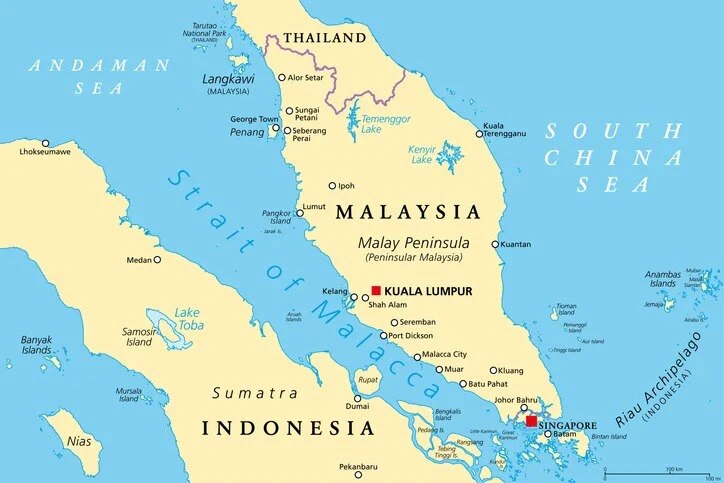
- The port is also only around 160 kilometres from India’s upcoming international transshipment terminal at Great Nicobar Island.
- Together, the two locations could create a strategic maritime corridor connecting the eastern Indian Ocean with Southeast Asia.
- Significance: Together, these facilities will allow India to keep an eye on one of the world’s busiest maritime chokepoints, enhance its surveillance capabilities, and reinforce its strategic position in the Indo-Pacific.
- Sabang is expected to strengthen India’s Act East Policy by improving maritime connectivity between the Andaman and Nicobar Islands and Indonesia’s Aceh province.
Source: BS
Navi Mumbai Airport as Port For Import of Drugs
Syllabus: GS2/Health
Context
- The Ministry of Health and Family Welfare has notified Navi Mumbai Airport as a Port for Import of Drugs under the Drugs Rules, 1945.
- The total number of notified ports of entry for drug imports, including road, rail, sea and air routes, has increased to 42.
About
- Under the Drugs and Cosmetics Act, 1940, drugs can be imported into India only through notified ports of entry.
- The move is expected to facilitate smoother movement of pharmaceutical consignments, strengthen logistics infrastructure, and provide greater flexibility to importers by adding another entry point for drug imports.
Regulation of Drugs in India
- The Central Drugs Standard Control Organization (CDSCO) headed by the Drugs Controller General (India) is the Central Authority for regulating the quality of drugs in India under the Drugs and Cosmetics Act, 1940.
- National Pharmaceutical Pricing Authority (NPPA) is mandated to fix and revise drug prices under the provisions of the Drugs (Prices Control) Order (DPCO), 2013.
- Indian Pharmacopoeia Commission (IPC): It oversees the periodic publication of the Indian Pharmacopoeia, the official compendium of drug standards under the Drugs and Cosmetics Act, 1940.
- State Health Regulatory Excellence Index (SHRESTH): A first-of-its-kind national initiative to benchmark and strengthen state drug regulatory systems through a transparent, data-driven framework.
Source: PIB
Rising Energy Storage Demand in India
Syllabus: GS3/ Energy
Context
- India’s energy storage requirement is projected to rise to 888 GWh by 2035-36 as the country prepares for rapidly increasing electricity demand and higher renewable energy integration.
Energy Storage Demand in India
- According to the India Energy Storage Alliance (IESA) and Customised Energy Solutions (CES) report, India will require:
- 321 GWh from Battery Energy Storage Systems (BESS).
- 567 GWh from Pumped Storage Projects (PSP).
- India’s current installed storage capacity is only around 1 GWh, highlighting the massive scale-up required.
Battery Energy Storage Systems (BESS)
- BESS are systems in which batteries, either individually or more often in groups, are used in order to store electricity produced by generation plants, and make it available when needed.
- In a battery energy storage system, the fundamental components are the battery blocks, along with other elements:
- An inverter, which converts the direct current from the batteries into the alternating current of the electricity grid (and vice versa);
- A transformer, which adapts the system’s voltage to that of the grid;
- Auxiliary systems.
- BESS technology is based on the use of electrochemical batteries, which can store the energy produced by renewable energy plants.
Types of batteries
- Lithium-ion batteries: These batteries typically use lithium in combination with other materials, such as iron and phosphate used in LFP (lithium ferrophosphate) batteries.
- Solid-state batteries: While conventional and flow batteries normally use liquid electrolytes, in this case they are in a solid state (e.g., ceramic or synthetic materials).
Source: DTE
Egyptian Vulture
Syllabus: GS3/Species In News
In News
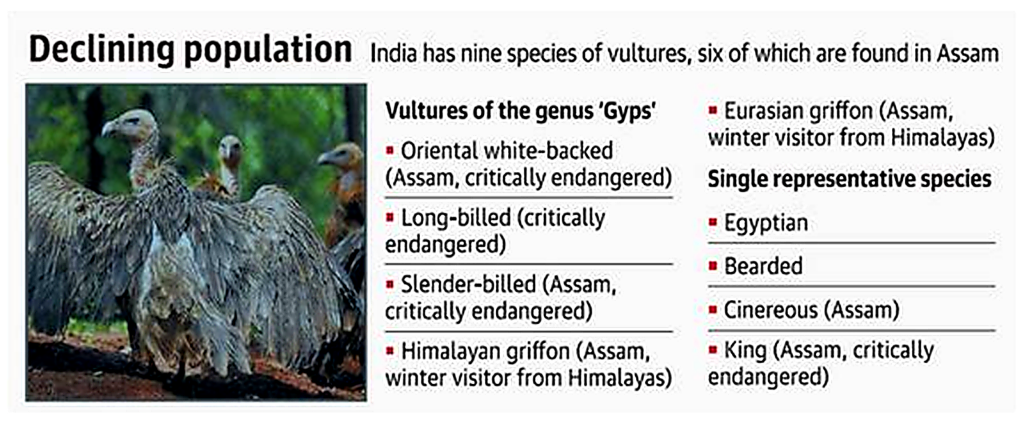
- The Egyptian Vulture has suffered a steep decline in population in India.
Egyptian Vulture
- Scientific Name: Neophron percnopterus.
- It is one of the world’s smallest vultures.
- Habitat and Distribution: It lives in open lowland and mountain areas and eats a wide variety of food including carrion, insects, organic waste, small animals, eggs and faeces.
- It is distributed across southern Europe, northern and central Africa, the Middle East, Central Asia and the Indian subcontinent.
Current situation in South India
- India is home to the resident subspecies Neophron percnopterus ginginianus, while migrant birds from Africa and the Middle East also visit the country during winter.
- There are fewer than 150 resident Egyptian vultures left in all of Karnataka and Tamil Nadu.
Threats
- Use of veterinary non-steroidal anti-inflammatory drugs (NSAIDs) harmful to vultures such as diclofenac.
- Electrocution from the growth of the power grid.
- Accidental poisonings and use of toxins.
- Destruction and disruption of nesting cliffs.
- Reduction in traditional livestock practices, resulting in less natural foods available.
Protection status
- It is globally listed as Endangered by the International Union for Conservation of Nature (IUCN).
Source :TH
Researchers Recreate Key Functions of Human Placenta on Chip
Syllabus: GS3/Science and Technology
Context
- Researchers from the ICMR-National Institute for Research on Women’s Health (formerly ICMR-NIRRCH), Mumbai, in collaboration with IIT Bombay, have developed an indigenous lab-grown ‘placenta-on-chip’ platform.
About
- Despite its name, it is not an electronic computer chip. It is a transparent plastic device containing a porous membrane on which researchers grow human placental cells alongside human endothelial cells.
- Together, these recreate the interface through which nutrients, hormones and other molecules are exchanged between mother and foetus.
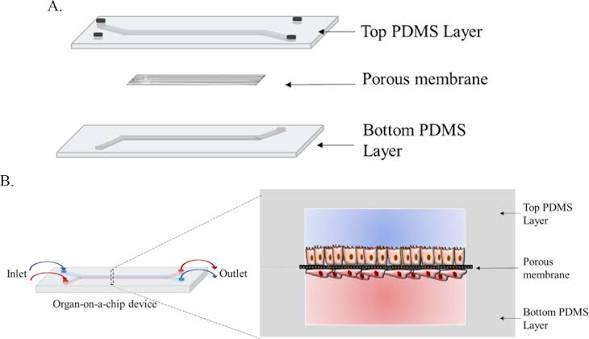
- Unlike many existing placenta-on-chip systems that require sophisticated microfluidic equipment, this model is a static two-chamber platform that can be used in a standard laboratory.
- The device reproduces several essential functions of the human placenta, including hormone production, nutrient transfer, waste exchange and selective barrier function.
- These capabilities make it a promising platform for studying placental biology, understanding pregnancy complications, and evaluating how medicines cross the placental barrier.
Placenta
- The placenta is one of the most critical organs in pregnancy.
- It supplies oxygen and nutrients to the fetus, removes waste products, produces hormones essential for sustaining pregnancy and acts as a selective barrier, determining what passes from the mother’s bloodstream to the developing baby.
- How well the placenta functions influences fetal growth, pregnancy outcomes and the safety of medicines prescribed during pregnancy.
Source: TH
GalaxEye Launches Mission Drishti
Syllabus: GS3/ Science and Technology
Context
- Mission Drishti, the world’s first OptoSAR satellite developed by space start-up GalaxEye, encountered an anomaly following a geomagnetic solar storm during the final stage of the Launch and Early Orbit Phase (LEOP).
About
- Mission Drishti is an Earth observation satellite Weighing 190 kilograms.
- It is the first satellite globally to integrate Electro-Optical (EO) and Synthetic Aperture Radar (SAR) sensors into a single operational platform, enabling all-weather, day-and-night imaging capabilities.
- The satellite carries both a multispectral camera and a SAR imager for enhanced data analysis.
- Mission Drishti provides high-resolution imaging, with future satellites aiming for sub-metre resolution.
- Significance: It is a dual-use satellite, supporting both civilian and defence applications.
- Key applications include agriculture monitoring, disaster management, maritime surveillance, and infrastructure mapping.
Source: TH
Previous article
AI Poses a Relatively Lower Risk to India’s GCC Jobs
Next article
India–Oman Bilateral Relations
