


Syllabus: GS2/ Polity and Governance; GS3/ Economy
Context
- Recently the State Finances 2024-25 Report of the Comptroller and Auditor General (CAG) has brought attention to a significant trend in India’s fiscal landscape.
Key Findings of the CAG Report
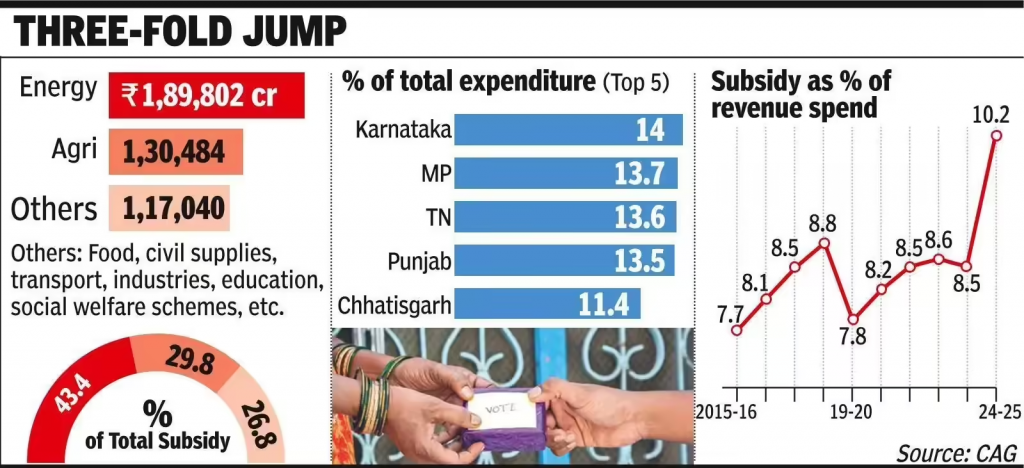
- Rise in Subsidy Expenditure: The Subsidy expenditure rose to 10.2% of States revenue expenditure in FY 2024-25, compared to the post-pandemic average of around 8.5%.
- State governments spent nearly ₹4.4 lakh crore on subsidies in FY 2024-25, almost three times the level recorded a decade ago.
- Karnataka recorded the highest subsidy burden, with subsidies accounting for 14.01% of total expenditure.
- States with Highest Subsidy Burden: Karnataka recorded the highest subsidy burden, with subsidies accounting for 14.01% of total expenditure.
- Other States with high subsidy expenditure include Madhya Pradesh, Tamil Nadu, Punjab, Chhattisgarh, and Rajasthan.
- Dominance of Revenue Expenditure: Revenue expenditure accounted for more than 83% of total State expenditure.
- Social and economic services together constituted nearly two-thirds of total expenditure, reflecting the growing emphasis on welfare spending.
- Sector-wise Distribution of Subsidies: Energy subsidies, particularly electricity subsidies, constituted the largest share of total subsidies.
- Agricultural support, including power and irrigation subsidies, remained another major component of State expenditure.
Concerns Raised by the CAG
- Shrinking Fiscal Space: A large share of revenue receipts is being absorbed by mandatory spending obligations, leaving limited resources for new developmental initiatives.
- Crowding Out Capital Expenditure: Increasing expenditure on subsidies constrain investment in infrastructure, irrigation, education, healthcare, and other productive assets.
- Sustainability Risks: Persistent expansion of subsidy programmes without corresponding growth in revenue leads to higher fiscal deficits and debt levels.
Way Ahead
- The CAG emphasized the need for States to balance welfare spending with developmental expenditure.
- The Subsidy programmes should be periodically reviewed to ensure efficiency, proper targeting, and fiscal prudence.
Source: TOI
Previous article
Is India Producing More Graduates than the Economy can Absorb?
Next article
News In Short 19-06-2026
