


Syllabus: GS2/ Health
Context
- The Union Health Ministry has removed the term syrup from Schedule K of the Drugs Rules 1945 thus requiring cough syrups to be sold only with a prescription.
Background
- The step has been taken after multiple fatalities caused by cough syrups adulterated with industrial solvents including the death of children across several countries since 2022.
- The measure has raised concerns regarding pharmaceutical regulation, public health governance, and India’s role in the global healthcare ecosystem.
Pharmaceutical Sector of India
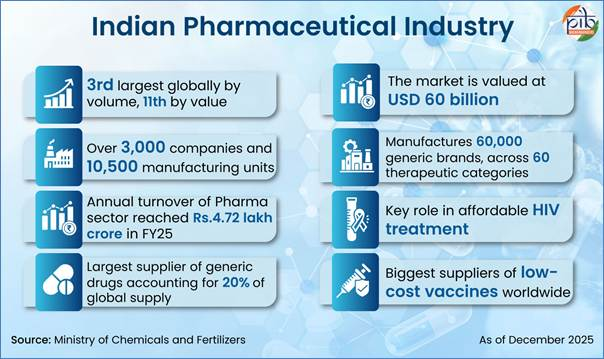
- India stands as the Pharmacy of the World due to its unique combination of affordable pricing and assured quality, which has made Indian medicines widely preferred across global markets.
- India hosts the highest number of manufacturing plants approved by the United States Food and Drug Administration (USFDA) outside the United States of America, reinforcing international confidence in the safety and quality of Indian pharmaceuticals.
- There are about 500 active pharmaceutical ingredient (API) manufacturers, accounting for nearly 8 per cent of the global API industry.
Concerns regarding India’s Pharmaceutical Regulatory Ecosystem
- Manufacturing Quality Concerns: There are instances of contamination and quality lapses highlighting weaknesses in adherence to manufacturing standards.
- Fragmented Oversight: Multiple regulatory authorities and varying enforcement standards create inconsistencies in monitoring.
- Over-the-Counter Drug Culture: Widespread self-medication increases the risk of irrational and unsafe use of medicines.
- Regulatory Capacity Constraints: In India, drug regulation is a dual responsibility shared between the Union and State governments. Many State drug control departments face shortages of inspectors, laboratories, and technical personnel.
Regulation of Drugs in India
- The Central Drugs Standard Control Organization (CDSCO) headed by the Drugs Controller General (India) is the Central Authority for regulating the quality of drugs marketed in the country under the Drugs and Cosmetics Act, 1940 and Rules thereunder.
- The import, manufacture, distribution and sale of Drugs, Cosmetics and Medical Devices in the country are regulated under the provisions of the Drugs and Cosmetics Act, 1940 & Rules made thereunder i.e. Drugs Rules, 1945, Medical Devices Rules, 2017, New Drugs & Clinical Trials Rules, 2019 and Cosmetics Rules, 2020.
- The National Pharmaceutical Pricing Authority (NPPA) is mandated to fix and revise drug prices under the provisions of the Drugs (Prices Control) Order (DPCO), 2013, while monitoring compliance, ensuring the availability of essential medicines, and advising on pharmaceutical policy.
- Indian Pharmacopoeia Commission (IPC): It oversees the periodic publication of the Indian Pharmacopoeia, the official compendium of drug standards under the Drugs and Cosmetics Act, 1940.
- The Pharmacopoeia prescribes standards of identity, purity, and strength for medicines marketed in India.
- The regulatory control over manufacturing, sale and distribution of drugs is exercised through a system of licensing and inspection by State Licensing Authorities (SLAs) appointed by State Governments, while regulatory control over drugs imported into the country is exercised by the Central Government through the Central Drugs Standard Control Organisation (CDSCO).
- State Health Regulatory Excellence Index (SHRESTH): A first-of-its-kind national initiative to benchmark and strengthen state drug regulatory systems through a transparent, data-driven framework.
Way Ahead
- Quality assurance should be integrated throughout the manufacturing process rather than relying on end-product testing only.
- Public disclosure of inspection findings and regulatory actions is necessary to improve accountability.
- There is a need to use artificial intelligence, data analytics, and digital tracking systems for regulatory surveillance.
Schedule K of the Drugs and Cosmetics Rules, 1945
- Schedule K contains a list of certain drugs that are exempted from some provisions of the Drugs and Cosmetics Rules, 1945, subject to specified conditions.
- It facilitates the sale and distribution of certain categories of medicines where strict licensing requirements are not necessary.
Source: TH
Previous article
Five Weather Systems Impacting Indian Monsoon
