

Syllabus: GS3/ Biotechnology
In News
- Recent advances in genome sequencing, gene editing, artificial intelligence, and DNA synthesis have accelerated the growth of synthetic biology.
About Synthetic Biology
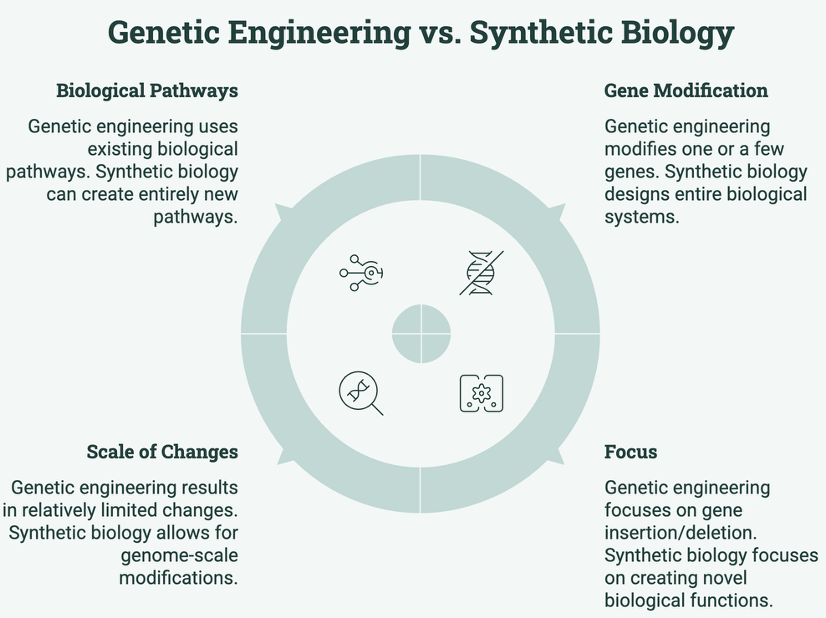
- Synthetic Biology is the application of engineering principles to biology, where biological components are designed, assembled, and modified to perform specific functions.
- It involves engineering organisms to possess new or enhanced abilities beyond those found in nature.
Applications
- Healthcare: Engineered microbes now produce artemisinin (anti-malarial) and insulin without plant or animal extraction.
- CAR-T cell therapy where immune cells are reprogrammed to attack cancers is a direct product of SynBio techniques.
- Agriculture: Nitrogen-fixing microbes are being engineered to deliver nutrients directly to plants, reducing dependence on chemical fertilisers.
- Energy and Environment: Designer microorganisms can convert greenhouse gases like methane into high-value compounds.
- Forensics and Materials: Synthetic DNA watermarking demonstrates how biological systems can carry encoded information.
Challenges and Concerns
- Biosafety and Biosecurity: Engineered organisms, if accidentally or deliberately released, could disrupt ecosystems.
- Regulatory Gaps: India currently lacks a comprehensive, standalone synthetic biology regulation. The DNA Technology (Use and Application) Regulation Bill has been pending for years (withdrawn).
- Existing frameworks under the Environment Protection Act and the Recombinant DNA Safety Guidelines are inadequate for the scale of current SynBio activity.
- Equity and Access: SynBio heavily draws on biodiversity data often from megadiverse countries like India. Yet the benefits have historically flowed to labs and corporations in the Global North. This raises Nagoya Protocol-linked questions around Access and Benefit Sharing (ABS).
- Ethical Concerns: The possibility of engineering multicellular organisms or introducing designer genomes into fertilised eggs raises deep ethical questions. The line between therapy and enhancement remains contested.
India’s Policy Response
- The BioE3 Policy (Biotechnology for Economy, Environment, and Employment), approved by the Union Cabinet in August 2024, is a central pillar. It identifies six thematic areas: bio-based chemicals, biopolymers, APIs and smart proteins, precision biotherapeutics, climate-resilient agriculture, and carbon capture.
- India’s bioeconomy, valued at just $10 billion in 2014, crossed $165 billion in 2024 and is targeting $300 billion by 2030. India is among the first countries globally to have a dedicated bioeconomy policy framework.
- Under BioE3, “Moolankur” Biofoundry Hubs were launched to give startups, academia, and SMEs access to shared biomanufacturing infrastructure.
Way Forward
- India needs a dedicated National Synthetic Biology Policy, one that consolidates regulatory frameworks, establishes clear biosafety protocols, and protects India’s biodiversity-linked data interests.
- Academic curricula must integrate computational biology and AI alongside conventional bench science.
- International engagement through forums like the Cartagena Protocol and CBD-COP must reflect India’s interests as both a biodiversity-rich nation and an emerging SynBio power.
Source: TH
Previous article
Strengthening India’s Quality Ecosystem
Next article
News In Short 02-06-2026
