


Atal Pension Yojana Crosses 9 Cr. Enrolments
Syllabus: GS2/ Governance
Context
- The Atal Pension Yojana (APY), has achieved a historic milestone by surpassing total gross enrolments of “9 crore” subscribers on 21st April, 2026.
Atal Pension Yojana
- It is a flagship social security scheme of the Government of India, administered by the Pension Fund Regulatory and Development Authority (PFRDA).
- The scheme, launched in 2015, is a voluntary, contributory pension scheme primarily focused on the poor, the underprivileged, and workers in the unorganized sector.
- It is open to all Indian citizens between the age of 18 and 40 years, except those who are or have been income tax payers.
- It guaranteed monthly pension ranging from ₹1,000 to ₹5,000 for subscribers after attaining 60 years of age.
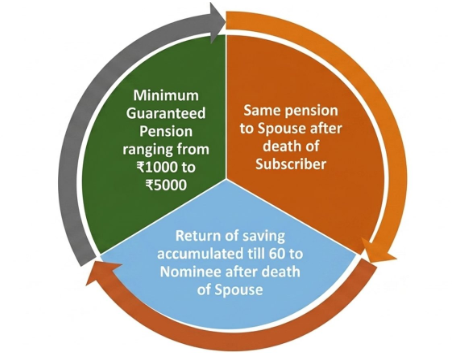
Source: DD News
The Druzhba Pipeline
Syllabus: GS2/ IR
In News
- The resumption of Russian oil flows through the Ukrainian section of the Druzhba pipeline has prompted Hungary to lift its veto on a critical €90 billion EU loan to Ukraine.
About
- The Druzhba (“Friendship”) pipeline is one of the world’s longest crude oil pipeline networks, serving as the primary overland energy artery connecting Russian oil fields to refineries across Central and Eastern Europe.
- Constructed by the Soviet Union, the pipeline became operational in 1964 with the explicit purpose of integrating the economies of Eastern Europe with Soviet energy supply, primarily serving member states of the Council for Mutual Economic Assistance (COMECON), the Soviet-era economic bloc.
- The pipeline originates in the Almetyevsk region of central Russia, where crude flows converge from Siberia, the Urals, and the Caspian Sea. It then passes through Belarus before splitting into two major branches:
- Northern Branch → Poland → Germany
- Southern Branch → Ukraine → Hungary → Slovakia → Czech Republic
Source: DD
Technology Development and Investment Promotion (TDIP) Scheme
Syllabus: GS3/ Economy
Context
- The Government of India has released the revised guidelines for the Technology Development and Investment Promotion (TDIP) Scheme.
About
- The revised scheme has been launched with a total outlay of ₹203 crore for the period 2026–31.
- Objectives: The scheme aims to enhance India’s participation and influence in global telecom standard-setting processes.
- It seeks to promote indigenous research, development, and innovation in next-generation telecom technologies such as 5G Advanced and 6G.
- The scheme provides financial support to Indian stakeholders for participation in global telecom bodies such as the International Telecommunication Union, 3rd Generation Partnership Project (3GPP), and oneM2M.
- Expanded Scope for Ecosystem Participation: The revised guidelines significantly expand the scope of the scheme to include startups, MSMEs, academia, research institutions, telecom service providers and industry players.
- Institutional Framework: The scheme will be implemented through institutions such as the Telecommunications Standards Development Society India (TSDSI), Telecom Centres of Excellence India (TCoE), and Telecommunications Consultants India Limited (TCIL).
Source: PIB
RBI Partially Eases Curbs on Rupee Derivative Trades
Syllabus: GS3/ Economy
Context
- The Reserve Bank of India partially rolled back restrictions on rupee derivative transactions that were introduced earlier to prevent excessive volatility and depreciation pressures linked to the West Asia crisis.
About Non-Deliverable Forwards (NDFs)
- NDFs are cash-settled foreign exchange derivative contracts where the underlying currency is not physically delivered at maturity.
- Settlement occurs in a convertible currency (usually US dollars) based on the difference between agreed forward and prevailing spot rates.
- These contracts are mainly traded offshore in financial centres such as Singapore, London, Hong Kong, etc.
- They are used for hedging currency risk and speculative positions in partially convertible currencies like the rupee.
Source: TH
Mumbai-Ahmedabad bullet train to get ballastless track system
Syllabus: GS3/ Railways
In News
- The Mumbai-Ahmedabad High Speed Rail (MAHSR) corridor, India’s first bullet train project, is going to deploy the J-Slab ballastless track system, adapted from Japan’s Shinkansen technology.
About
- The J-Slab is a pre-cast concrete slab track system used in high-speed rail infrastructure.
- Unlike conventional railway tracks that rest on loose gravel (ballast), J-Slab tracks are embedded on a rigid concrete base eliminating ballast entirely.
- The system is the foundational track technology of Japan’s Shinkansen (“bullet train”) network, now being transferred to India under the MAHSR project.
Maglev Technology
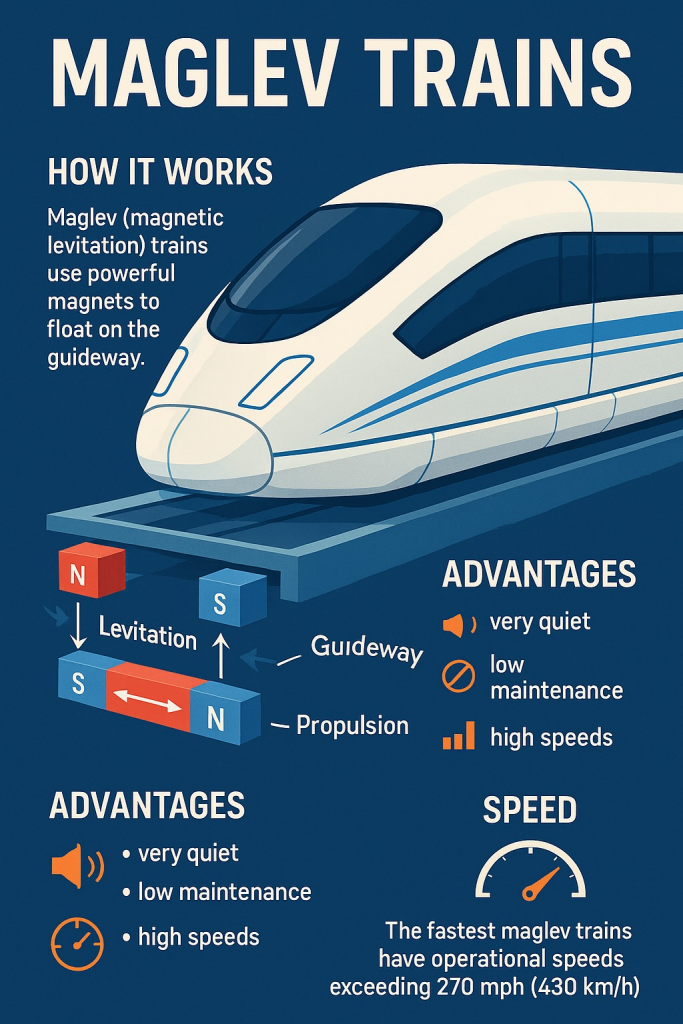
- Maglev (magnetic levitation) bullet trains use powerful electromagnets to hover and propel vehicles without touching the track, eliminating friction and enabling speeds over 600 km/h.
Source: TH
India–Sri Lanka Diving Exercise (DIVEX 2026)
Syllabus: GS3/Defence
Context
- INS Nireekshak arrived in Colombo to participate in the fourth edition of the India–Sri Lanka Diving Exercise (DIVEX 2026).
About
- DIVEX is a bilateral naval exercise focused on specialised underwater operations and submarine rescue training.
- It aims to enhance interoperability, operational coordination, and the exchange of best practices between India and Sri Lanka.
- The exercise reflects deepening maritime cooperation and supports regional stability in the Indian Ocean Region, aligned with India’s MAHASAGAR vision.
Source: TH
Methane Emissions from Landfills
Syllabus: GS3/Environment
Context
- Two of India’s waste landfills are among the top 25 global emitters of methane in the waste sector, according to a study by the University of California, Los Angeles.
Key Findings
- The Secunderabad (Telangana) site ranked 4th, while the Mumbai (Maharashtra) site ranked 12th globally.
- The highest emitter is near Buenos Aires (Argentina), releasing about 7.6 tonnes of methane per hour.
- Globally, 2,994 methane plumes were detected from 707 waste sites.
Why Landfills Emit Methane?
- Landfills release methane when organic waste decomposes in the absence of oxygen (anaerobic conditions), making unmanaged dumpsites major emission hotspots.
About Methane
- Methane is a potent greenhouse gas, responsible for nearly 30% of global warming since the Industrial Revolution.
- Over a 20-year period, it is about 86 times more effective at trapping heat than carbon dioxide.
- It remains in the atmosphere for a shorter duration (~12 years), but has a high short-term warming impact.
Source: DTE
Dolphin Friends Initiative
Syllabus: GS3/ Environment
In News
- The Forest Department, Prayagraj has launched the Dolphin Friends volunteer network to strengthen conservation of the Gangetic dolphin through community participation and river monitoring.
About Gangetic Dolphin
- The Ganges river dolphin (Platanista gangetica) is one of the world’s few obligate freshwater dolphin species, officially described in 1801.
- It inhabits the Ganga and Brahmaputra river systems and their tributaries across India, Bangladesh, and Nepal.
- They are uniquely adapted to turbid river environments, the Gangetic dolphin lacks a crystalline eye lens rendering it functionally blind. It navigates and hunts entirely through a highly developed echolocation system, emitting ultrasonic sounds to locate prey.
Ecological Significance
- The dolphin sits at the apex of the aquatic food chain, regulating fish and crustacean populations and maintaining trophic balance.
- Its presence in a river stretch is a reliable bioindicator of clean, healthy freshwater earning it the title “Tiger of the Ganges.” The Government of India declared it the National Aquatic Animal in 2009 on this basis.
Steps Taken
- Project Dolphin (2020): Launched on the lines of Project Tiger; focuses on dolphin and aquatic habitat conservation using technology — covering pollution reduction, sustainable fishery practices, and community involvement.
- National Ganga River Dolphin Day: Observed on 5 October annually — the date in 2009 when the species was declared National Aquatic Animal.
- Vikramshila Gangetic Dolphin Sanctuary (VGDS): Located in Bhagalpur, Bihar, the only dedicated dolphin sanctuary in India. Approximately half the total Gangetic dolphin population is found here.
- Conservation Action Plan (2016): Prepared by the Wildlife Institute of India; identifies key threats and maps habitat quality, prey-base depletion, and river traffic impacts.
- WPA Schedule I: Same protection tier as tigers and elephants.
Source: TH
Next article
National Panchayati Raj Day
