

Rani Chennamma
Syllabus: GS1/History
Context
- The Kittur Rani Chennamma Utsav, a three-day festival to honour the bravery of Rani Chennamma, began in Kittur, Karnataka.
About
- She was among the earliest Indian rulers to rebel against British rule — decades before the 1857 Revolt.
- Today, she is remembered as both a symbol of Karnataka’s pride and an early feminist icon.
Revolt
- To prevent British annexation, Chennamma adopted a relative’s son as heir.
- The British East India Company rejected this adoption — an early example of what later became the Doctrine of Lapse (formalised by Dalhousie).
- Faced with losing sovereignty, she chose to resist rather than submit to British control.
- Chennamma was imprisoned and died in captivity in 1829.
Legacy
- Social: A feminist and nationalist icon inspiring later generations.
- She is one of the first female freedom fighters against british rule.
- Historical: One of the earliest anti-colonial resistances in South India.
- Cultural: Embodied in Karnataka’s folklore and collective memory.
Source: IE
East Timor 11th Member of ASEAN
Syllabus: GS2/IR
Context
- The 10-member Association of Southeast Asian Nations (ASEAN) welcomed East Timor as its newest member.
About
- East Timor, also known as Timor-Leste, had long attempted to join ASEAN, given the organisation’s significance in maintaining economic, political and security coordination in the region.
- It also marked ASEAN’s first expansion in years, after Cambodia last joined it in 1999.
East Timor
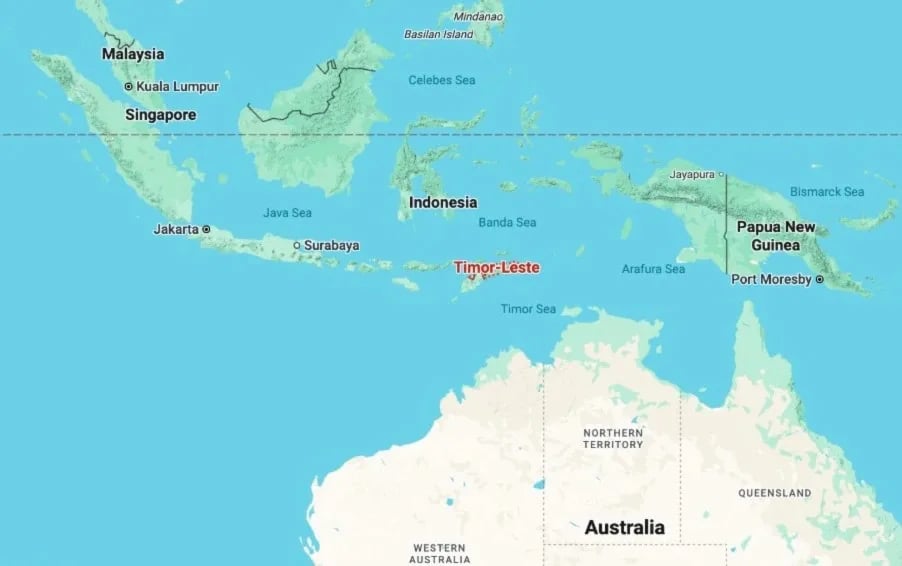
- East Timor is located in the Pacific Ocean to the north of Australia.
- It constitutes the eastern side of a larger island, while most of the western side is under Indonesian control.
- East Timor was a Portuguese colony for over four centuries before it gained independence in 1975, but was invaded by Indonesia just nine days later.
The Association of Southeast Asian Nations (ASEAN)
- It was established in 1967 in Bangkok, Thailand.
- It was founded by five countries: Indonesia, Malaysia, the Philippines, Singapore, and Thailand.
- Aim: To promote regional cooperation and stability amid Cold War tensions.
- Headquarters: Jakarta, Indonesia.
- Current Member States: ASEAN currently consists of 11 member countries: Brunei, Cambodia, Indonesia, Laos, Malaysia, Myanmar, the Philippines, Singapore, Thailand, Vietnam and East Timor.
- ASEAN maintains dialogue partnerships with multiple countries and organizations, including India, China, the USA, Japan, Australia, the EU, and others.
Source: IE
Coffee
Syllabus: GS3/ Economy
In News
- Prime Minister Narendra Modi highlighted the growing international popularity of Indian coffee.
About Coffee
- India is the seventh-largest coffee producer globally, contributing around 3% of global output.
- Nearly 70% of India’s coffee is exported, earning approximately USD 1.80 billion during 2024–25, making it an important foreign exchange earner in India’s agri-export basket.
- Major export destinations are Italy, Germany, Belgium, and Russia.
- Major Coffee-Producing States in India are Karnataka, Kerala, Tamil Nadu & Others (Andhra Pradesh, Odisha, NE States).
- Coorg, Chikmagalur, Wayanad, Araku Valley are known for GI-tagged varieties.
- Types of Coffee are Arabica (Coffea arabica) & Robusta (Coffea canephora).
Koraput Model (Odisha)
- Once degraded forest land is being revived through coffee cultivation. The coffee is now branded as “Specialty Tribal Coffee,” similar to Araku coffee.
Institutional Framework
- Coffee Board of India (1942): Under the Ministry of Commerce and Industry.
- Functions: Promotion of coffee exports, research and development, market intelligence etc.
- Headquarters: Bengaluru.
- Central Coffee Research Institute (CCRI): Established in 1925 in Chikmagalur, Karnataka.
Source: IE
Maha MedTech Mission
Syllabus: GS3/Science and Technology
In News
- Anusandhan National Research Foundation (ANRF), in collaboration with the Indian Council of Medical Research (ICMR) and the Gates Foundation, has launched the Mission for Advancement in High-Impact Areas (MAHA)-Medical Technology (महा MedTech).
About Maha MedTech Mission
- It will provide funding support to a wide range of entities including Academic and R&D institutions, Hospitals, Startups, MSMEs, MedTech industry and collaborations between entities.
- It will support projects that bring impactful MedTech solutions to market.
- It aims to accelerate innovation in India’s medical technology sector, reduce reliance on high-cost imports, and promote equitable access to affordable and high-quality medical technologies.
India’s MedTech sector
- India’s MedTech sector is a fast-growing “sunrise” industry poised to expand from roughly USD 11–14 billion today toward USD 30–50 billion by 2030.
- India is the 4th largest medical devices market in Asia, after Japan, China, and South Korea.
- Government Initiatives & Policies opted recently are PLI Scheme for Medical Devices (2020), PRIP Scheme (2023), & National Medical Device Policy (2023) & Medical Device Parks etc.
Source :PIB
Extremum-seeking (ES) Feedback System
Syllabus: GS3/Science and Technology
Context
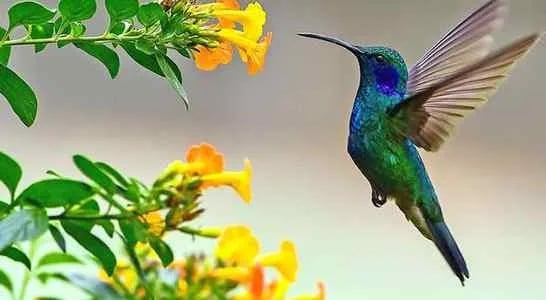
- The ability of insects and hummingbirds to hover—remaining nearly motionless in air—has long challenged scientists, as it seemed unstable and computationally intensive according to classical aerodynamics.
- A new study suggests that hovering is instead governed by an extremum-seeking (ES) feedback system.
Extremum-Seeking Feedback System
- An ES system is a real-time feedback process that allows the flyer (insect or bird) to make incremental adjustments, observe their outcomes, and gradually maintain stability by learning through trial and error, all without requiring knowledge of detailed aerodynamic equations or complex neural computation.
- Simulations using ES feedback successfully replicated hovering in species like hawkmoths, craneflies, bumblebees, hoverflies, and hummingbirds.
- Each model maintained altitude and stability purely with simple feedback, not with detailed models of flight dynamics or complex computation.
Significance
- For Biology: Demonstrates that hovering can arise from simple feedback mechanisms, not advanced neural computation.
- Enhances understanding of how insects manage real-time stability with minimal brain power.
- For Engineering: Opens scope for bio-inspired drone design with lightweight, efficient, and stable hovering using simple feedback loops rather than complex control algorithms.
Source: TH
Uttarakhand Plans ‘Green Cess’ on Outside Vehicles
Syllabus: GS2/ Governance, GS3/ Environment
Context
- Uttarakhand has announced the introduction of a ‘Green Cess’ on vehicles entering the state from other parts of India.
Key Features
- Applicability: The cess will be levied on all non-Uttarakhand vehicles entering the state.
- Exemptions: Electric, hydrogen, solar, and battery-operated vehicles will be exempted.
- The funds collected will be utilized for;
- Air pollution control measures.
- Green infrastructure and smart traffic management.
- Expansion of air quality monitoring systems.
- Road dust control and tree plantation campaigns.
- Development of green zones.
- It aligns with India’s National Clean Air Programme (NCAP), which targets a 40% reduction in particulate matter (PM10 and PM2.5) concentrations by 2026 in non-attainment cities.
| What is Cess? – A cess is a special-purpose levy imposed over and above the existing taxes (such as income tax, GST, or excise duty). – It is collected to raise funds for a particular objective or sector, such as education, health, environment, or infrastructure. – Unlike general taxes, which go into the Consolidated Fund of India or State, the proceeds from a cess are usually earmarked for a designated fund to be used only for that purpose. |
Source: IE
National Biodiversity Authority (NBA)
Syllabus: GS3/ Environment
In News
- The National Biodiversity Authority (NBA) has disbursed ₹18.3 lakh to Biodiversity Management Committees (BMCs) in Uttar Pradesh and Sikkim as part of the Access and Benefit Sharing (ABS) mechanism under the Biological Diversity Act, 2002.
- Access and Benefit Sharing (ABS) is a mechanism for equitable sharing of profits derived from biological resources.
About National Biodiversity Authority (NBA)
- The National Biodiversity Authority (NBA) is a statutory and autonomous body established under the Biological Diversity Act of 2002.
- It operates under the Ministry of Environment, Forests and Climate Change and is headquartered in Chennai, Tamil Nadu.
- Key Functions include advising the Central Government on conservation, sustainable use, and equitable sharing of benefits from biological resources, regulating access to Indian biological resources by foreign companies and individuals, and overseeing permission for commercial utilization.
Organizational Framework
- The Act provides for a three-tier system:
- National Level: National Biodiversity Authority (NBA).
- State Level: State Biodiversity Boards (SBBs).
- Local Level: Biodiversity Management Committees (BMCs).
Source: DD News
Conservation Concerns Over the Western Ghats
Syllabus: GS3/ Environment
Context
- The International Union for Conservation of Nature (IUCN), in its recent World Heritage Outlook, 2025 report, classified the Western Ghats as being of “significant concern” due to escalating threats.
Key Findings of the Report
- Nearly 40% of global sites face conservation concerns.
- Climate change remains the most prevalent threat, followed by tourism, invasive species, and infrastructure development.
- The share of sites with a positive conservation outlook has declined, from 63% (2014–2020) to 57% (2025).
- Status of India’s World Heritage sites:
- Significant Concern: Western Ghats, Manas National Park, and Sundarbans National Park.
- Good with Some Concerns: Kaziranga, Keoladeo, Nanda Devi, and Great Himalayan National Park.
- Good: Khangchendzonga National Park.
| Western Ghat – The Western Ghats are a 1,600-km long mountain chain along the west coast of India running from the river Tapi in the north to Kanyakumari in the south. – It covers six states — Gujarat, Maharashtra, Goa, Tamil Nadu, Karnataka and Kerala. About 60 percent of the mountain range is in Karnataka. – Significance:These Ghats are home to high mountain forests, which moderate the tropical climate of the region. 1. They are home to 325 globally threatened flora, fauna, bird, amphibian, reptile and fish species. 2. Western Ghats were accorded the World Heritage Status by UNESCO in 2012. |
Source: TH
Yuge Yugeen Bharat National Museum
Syllabus: Miscellaneous
In News
- The first gallery of the Yuge Yugeen Bharat National Museum is expected to open in a year, with the full concept for the world’s largest museum ready within 36 months.
Yuge Yugeen Bharat National Museum
- It is part of the Central Vista Redevelopment Project.
- It will be developed through Adaptive Reuse, in collaboration with France, renowned for its expertise in such projects, exemplified by the Louvre, Grand Palais, and Hôtel de la Marine.
- It includes the transformation of North and South Blocks of symmetrical buildings into museum spaces for the creation of a new National Museum elucidating the thousands-year-old civilizational and cultural heritage.
- It is aimed at showcasing India’s cultural heritage – a celebration of timeless & eternal India to explore our proud past, illuminate the present & imagine the bright future.
Source: IE
Rampur and Mudhol Hound Dog Breeds to be Inducted by BSF
Syllabus: Miscellaneous
In News
- The Border Security Force (BSF) has begun training 150 indigenous Rampur and Mudhol Hound dogs for border security, counterinsurgency, and special operations.
Mudhol Hounds
- History: Mudhol Hounds are believed to have been bred first by Raja Malojirao Ghorpade of the erstwhile kingdom of Mudhol (in present-day Bagalkot) after he saw the qualities of the dogs that tribal communities of his territory kept.
- The Raja is said to have presented a couple of these dogs to King George V on a visit to England, after which the breed got the name of Mudhol Hound.
- Characteristics: Mudhol Hounds, known for their speed, stamina, sharp vision, and strong guarding instincts, were sent by the Indian Army to the Remount and Veterinary Corps (RVC) training centre in Meerut in 2016—the first time an indigenous breed was trained there.
The Rampur Hound
- History: Rampur Hounds, bred 300 years ago in Uttar Pradesh by the Nawab of Rampur from Afghan and English Greyhounds, were historically used for hunting and guarding.
- The breed declined after India’s Independence, making purebreds rare today, though preservation efforts are ongoing.
- Characteristics: Rampur Hounds are fast, athletic sighthounds built for speed and endurance.
- They are loyal and obedient to their families, intelligent in hunting and running tasks, and reserved with strangers. Naturally timid, they can be protective and alert, making them effective guard dogs.
Dogs used by militaries across the globe
- Military dogs are selected for roles such as explosive detection, patrol and apprehension, search and rescue, and tracking.
- Suitability depends on traits such as intelligence, trainability, physical agility, endurance, and strong scenting abilities.
- The US military, for example, primarily breeds and trains Belgian Malinois.
Source :IE
Previous article
India-Japan Ties & QUAD
Next article
22nd India-ASEAN Summit
