


Sri Aurobindo
Syllabus :GS1/History
In News
- The Prime Minister paid homage to Sri Aurobindo, on the occasion of his birth anniversary.
Early Life and Education
- He was born in Calcutta on August 15, 1872, into a Brahmo Samaj-influenced family.
- His Father Krishna Dhun Ghose was an anglophile; sent Aurobindo and his brothers to England in 1879 to prepare for the ICS.
- He Educated in Manchester, London, and King’s College, Cambridge.
- He Cleared the ICS exam but was disqualified for missing the riding test.
Political Awakening and Activism
- He returned to India in 1893; joined the Baroda Service for 13 years, writing poetry and learning Indian languages.
- His political journey began around 1902 and intensified after the 1905 Partition of Bengal, leading to his active role in the nationalist faction of the Indian National Congress.
- He became Principal of Bengal National College in 1906.
- He Joined the “extremist” faction of the INC; prosecuted for sedition in 1907 but acquitted.
- He was arrested in 1908 for the Alipur Conspiracy Case; spiritual transformation during imprisonment.
- Post-release (1909), launched Karmayogin (English) and Dharma (Bengali) weeklies.
- He moved to Pondicherry in 1910; withdrew from active politics but remained ideologically committed.
| Do you know? – Sri Aurobindo championed passive resistance, distinct from Gandhi’s Satyagraha. – While Gandhi saw it as moral suffering rooted in soul-force, Aurobindo viewed passive resistance as an organized refusal to cooperate with colonial rule, justifiable by any means necessary for national survival — including violent ones if needed. – He criticized the Congress moderates and emphasized self-reliance and self-preservation. |
Philosophy
- In a 1908 Bombay speech, he called nationalism a “work of god” and nationalists “instruments of god”.
- He advocated passive resistance as a strategy for national survival and liberty.
- He Criticized INC moderates for their conciliatory politics.
- In New Thought (1907), emphasized self-development through self-help, even via non-peaceful means.
- He defined passive resistance as refusal to aid colonial administration, not necessarily non-violent.
- He believed any action—violent or non-violent—was justified if the nation’s survival was at stake.
- He launched an English weekly, Karmayogin, and a Bengali weekly, Dharma.
Legacy
- His legacy calls for a nuanced and critical engagement with his ideas on Swaraj, dharma, nationalism, and resistance, blending spiritual vision with political conviction.
Source :IE
Alaska
Syllabus: GS1/ Places In News
In News
- The Presidents of the United States and Russia met at Joint Base Elmendorf–Richardson in Anchorage, Alaska, to discuss the ongoing Russia-Ukraine war.
About Alaska
- Alaska is the largest and one of the most northern states in the United States.
- Alaska used to be known as “Seward’s Folly,” named after Secretary of State William H. Seward, who negotiated the purchase of Alaska from Russia in 1867 for 7.2 million dollars as per Alaska Treaty 1867.
- It is separated from the United States by Canada and is bordered by the Arctic Ocean (north), Pacific Ocean (south), Bering Strait (west), and Canada (east).
- The Aleutian Range, a volcanic mountain range, runs along the peninsula, and the region contains numerous active and dormant volcanoes.
- It is part of the Pacific Ring of Fire and is seismically active, with frequent earthquakes and volcanoes.
- Alaska’s population density is the lowest among U.S. states.
Source: TH
Operation Sadbhavana
Syllabus: GS1/ Art & Culture
In News
- In Arunachal Pradesh, under Indian Army’s Operation Sadbhavana initiative, an ‘Arogyam Health and Wellness Centre’ was inaugurated at DahJhong in Tawang district.
About Operation Sadbhavana
- Operation Sadbhavana (Goodwill) is a welfare initiative launched by the Indian Army in 1998 to win the “hearts and minds” of people affected by terrorism, insurgency, and slow development primarily in Jammu & Kashmir, Ladakh, and select parts of Northeast India.
- The programme aims to address aspirations of local people through holistic societal development: education (Army Goodwill Schools), health camps, women’s empowerment, employment generation, and infrastructure development.
Source: AIR
PM Viksit Bharat Rojgar Yojana
Syllabus :GS3/Economy
In News
- Recently, Prime Minister Shri Narendra Modi announced the Pradhan Mantri Viksit Bharat Rozgar Yojana on Independence Day with an outlay of ₹1 lakh crore.
PM Viksit Bharat Rojgar Yojana
- It will provide incentive of up to ₹15,000 in two instalments to newly employed youth and upto 3000 per month per new employee to employers for creating new job opportunities.
- Payments will be made via DBT and PAN-linked accounts
Features
- The scheme has two parts:
- Part A (Support to First-Time Employees): Targets 1.92 crore new employees registered with EPFO, offering up to ₹15,000 in two installments (after 6 and 12 months), with a portion kept in a savings account.
- Employees with salaries up to Rs 1 lakh will be eligible for the incentives.
- Part B (Incentives for Employers): It will encourage generation of additional employment in all sectors, with a special focus on the manufacturing sector.
- The employers will get incentives in respect of new employees with salaries up to Rs 1 lakh.
- The Government will incentivize employers, up to Rs 3000 per month, for two years, for each additional employment, sustained for at least six months.
- For the manufacturing sector, incentives will be extended to the 3rd and 4th years as well.
- It is expected to incentivize employers for the creation of additional employment of nearly 2.60 crore persons.
- Part A (Support to First-Time Employees): Targets 1.92 crore new employees registered with EPFO, offering up to ₹15,000 in two installments (after 6 and 12 months), with a portion kept in a savings account.
- All payments to the First Time Employees under Part A of the Scheme will be made through DBT (Direct Benefit Transfer) mode using Aadhar Bridge Payment System (ABPS).
- Payments to the Employers under Part B will be made directly into their PAN-linked Accounts.
Source :PIB
Bombax ceiba and Lagerstroemia speciosa
Syllabus: GS3/ Environment
Context
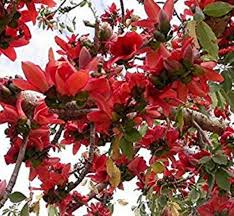
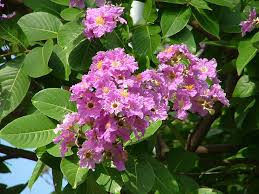
- A new study has found that two native plant species, Bombax ceiba (Simalu) and Lagerstroemia speciosa (Ajar), have emerged as “grassland invaders” in Assam’s Dibru-Saikhowa National Park (DSNP).
The Native Grassland Invaders
- Bombax ceiba: A deciduous tree with large, red, cup-shaped flowers that are rich in nectar.
- It is native to India and tropical Asia. The tree is known for its large size and the silky floss produced from its seeds.
- Traditionally native to Assam’s forests but now colonising grasslands.
- Lagerstroemia speciosa: A tree known for its beautiful, showy flowers that can be pink, purple, or white. It is also known as the “Queen Crape Myrtle”.
Other Invasive Species in Dibru-Saikhowa National Park
- Shrubs: Chromolaena odorata, Ageratum conyzoides
- Herb: Parthenium hysterophorus
- Climber: Mikania micrantha
| Dibru-Saikhowa National Park – Location: Dibrugarh and Tinsukia districts, Assam – Geography: The park is bounded by the Brahmaputra and Lohit Rivers in the north and Dibru River in the south. – Flora: The forest consists of semi-evergreen forests, deciduous, littoral and swamp forests and patches of wet evergreen forests. – Fauna: Bengal florican, Hog deer, Hoolock gibbon, Swamp grass babbler etc. 1. Only habitat of feral horses in India, descendants of WWII military horses. – Status: UNESCO Biosphere Reserve (1997), National Park (1999). |
Source: TH
India’s first sustainable aviation fuel plant
Syllabus :GS3/Economy
In News
- Indian Oil Corporation (IOC) is going to begin commercial-scale production of Sustainable Aviation Fuel (SAF) at its Panipat refinery by December 2025, after recently receiving ISCC CORSIA certification to produce SAF using used cooking oil.
Sustainable Aviation Fuel (SAF)
- It is a biofuel made from sustainable feedstocks and shares a similar chemical composition with conventional aviation turbine fuel (ATF), which is derived from crude oil.
- As a result, current aircraft engines can operate on a SAF-ATF blend without modification.
Benefits
- It offers a cleaner alternative to traditional jet fuel and plays a vital role in the global aviation sector’s push toward decarbonisation.
- Indian Oil Corporation’s production of SAF may attract interest from European airlines, especially due to existing blending mandates in the region.
- Industry and energy experts estimate that SAF alone will contribute over 60% to the aviation sector’s global decarbonisation targets.
Targets for Future
- India’s National Biofuel Coordination Committee (NBCC) has set initial SAF blending targets for international flights under the CORSIA framework: 1% in 2027 and 2% in 2028.
- SAF mandates for domestic flights are expected later, after international blending begins.
- The year 2027 marks a key global milestone, as the mandatory phase of CORSIA takes effect.
| Do you know? – The Carbon Offsetting and Reduction Scheme for International Aviation (CORSIA) is the first global market-based initiative targeting a specific sector. It supports other efforts to reduce aviation emissions—such as technological advancements, operational efficiencies, and sustainable aviation fuel use—to help achieve the International Civil Aviation Organization’s (ICAO) goal of carbon-neutral growth. 1. CORSIA applies to international flights and mandates that airlines offset any increase in carbon dioxide emissions above 2020 levels. – ISCC CORSIA is a certification system for compliance with the Carbon Offsetting and Reduction Scheme for International Aviation (CORSIA) criteria for SAF. 1. It is a prerequisite for commercial SAF production. 2. The certification also sets a benchmark for other domestic refiners and industry players to scale up SAF production. |
Source :IE
Mission Sudarshan Chakra
Syllabus: GS3/ Defence
Context
- PM Modi announced the launch of Mission Sudarshan Chakra, an ambitious indigenous air defence system to be fully developed by 2035.
About
- The mission, named after Lord Krishna’s mythological weapon, is a comprehensive air defence initiative to build a robust indigenous shield against aerial threats.
- It seeks to ensure that all public places in India are protected under a nationwide security shield by 2035.
Key Air-Defence Systems of other countries
| Country/Region | Key Systems |
| Russia | S-400 Triumph, S-300VM, S-350 Vityaz, S-500 Prometheus |
| USA | THAAD, Patriot (PAC-3 MSE), Golden Dome (in development) |
| Israel | Iron Dome, David’s Sling, Iron Beam |
| China | HQ-9, HQ-22, HQ-16 |
| European Sky Shield Initiative (ESSI) | Skyranger, IRIS-T SLM |
Source: TH
SLINEX-25
Syllabus: GS3/Defence
Context
- The 12th edition of the Sri Lanka-India Naval Exercise, SLINEX-25, saw the arrival of Indian Naval ships INS Rana (Guided Missile Destroyer) and INS Jyoti (Fleet Tanker) at Colombo.
About the Exercise
- SLINEX is a bilateral naval exercise conceptualised in 2005 to strengthen maritime cooperation between India and Sri Lanka.
- The previous edition of SLINEX was conducted at Visakhapatnam, India from 17 to 20 Dec 2024.
- Structure of SLINEX-25:
- Harbour Phase: Conducted in Colombo
- Sea Phase: Joint operations at sea
- Strategic Significance: SLINEX aligns with India’s policy of MAHASAGAR — Mutual and Holistic Advancement for Security and Growth Across Regions.
Source: PIB
Previous article
New Type of Supernova Triggered by Black Hole-Star Interaction
Next article
The India-Africa-UAE Trilateral Framework
