

Syllabus: GS3/Economy
Context
- India is working on comprehensive policy interventions to accelerate the growth of Global Capability Centers (GCCs).
What are Global Capability Centers (GCCs)?
- These are offshore units established by multinational corporations to manage a wide range of business functions like software development, data analytics, cybersecurity, cloud computing, and customer experience management.
- These are wholly owned subsidiaries of global firms, offering strategic control and alignment with corporate goals.
- GCCs have evolved from cost-saving BPO units to strategic innovation hubs driving digital transformation, AI, and R&D.
- They differ from traditional outsourcing by focusing on value creation, innovation, and digital transformation.
Why do GCCs Matter for India?
- High-Value Services: GCCs deliver advanced services in AI, cloud computing, and digital transformation.
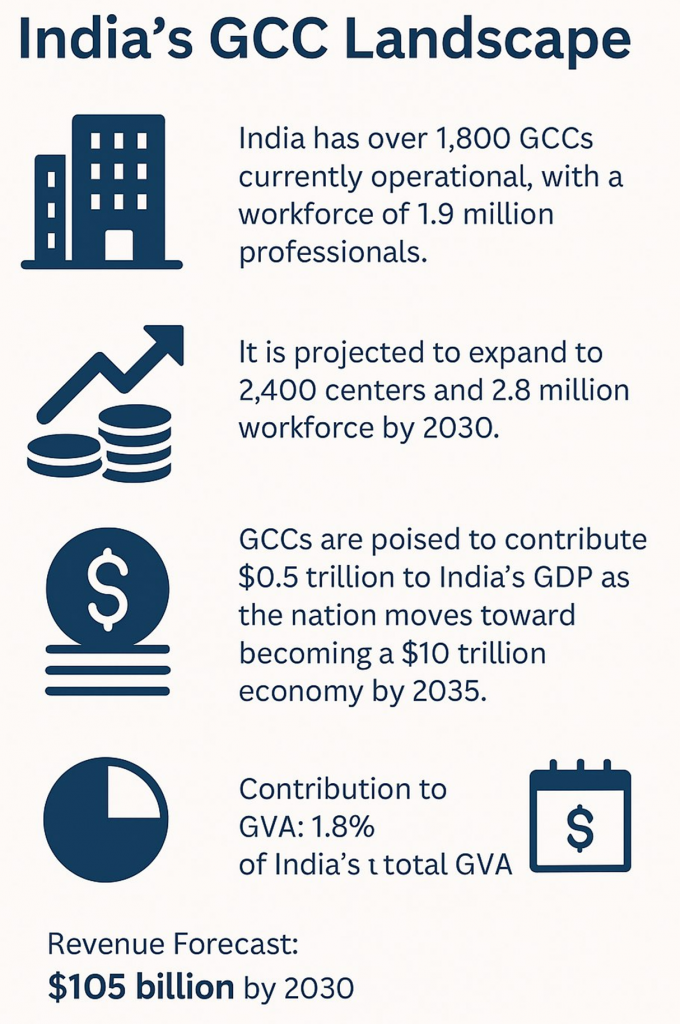
- Skill Development: Government initiatives like the PM Internship Scheme and Mutual Recognition of Skills and Standards are aligning workforce capabilities with GCC needs.
- Global Outreach: India is attracting non-US multinationals from Germany, Japan, and Nordic countries, diversifying its GCC portfolio.
India’s Advantage
- Talent Pool: 2.1 million STEM graduates annually; 35% women participation; median age of 28.
- Infrastructure: Digital India, ease of doing business reforms, and state-level policies in Karnataka, Tamil Nadu, Telangana, and Gujarat.
- Policy Support: National frameworks and state-specific GCC policies (e.g., Gujarat and Uttar Pradesh) aim to decentralize growth and promote tier-2 city expansion.
Strategic Push by the Government
- India announced a national framework to guide GCC expansion in the 2025–26 Budget.
- Focus areas include AI, engineering R&D, and emerging technologies.
- The government is encouraging industry-academia partnerships, internship programs, and global outreach to attract non-US multinationals.
Previous article
10 Years of Skill India Mission
Next article
The Periodic Labour Force Survey (PLFS)
