


Syllabus: GS2/India & Its Neighbourhood Relations
Context
- India’s renaming of the Jaffna Cultural Centre to ‘Jaffna Thiruvalluvar Cultural Centre’ reinforces its bond with Sri Lanka, addressing Tamil concerns over the initial omission of ‘Jaffna’.
Historical Context: Sri Lanka’s Ethnic Problem
- Colonial Era: British favored the Tamil minority in administrative and educational opportunities, creating resentment among the Sinhalese majority.
- Post Independence: Policies such as the Sinhala Only Act of 1956 and state-sponsored colonization of Tamil-majority areas further exacerbated tensions.
- Liberation Tigers of Tamil Eelam (LTTE): Formed in the 1970s, sought an independent Tamil state, leading to a protracted and brutal civil war that lasted until 2009.
- Sri Lanka’s Constitutions: Soulbury Constitution of 1948 and two Republican Constitutions of 1972 and 1978 were drafted, based on the British, American and French systems of government.
- The 13th Amendment to the Sri Lankan Constitution: It was introduced as part of the Indo-Sri Lankan Accord of 1987, aimed to devolve power to provincial councils, thereby granting greater autonomy to Tamil-majority areas.
- However, the full implementation of this amendment remains incomplete.
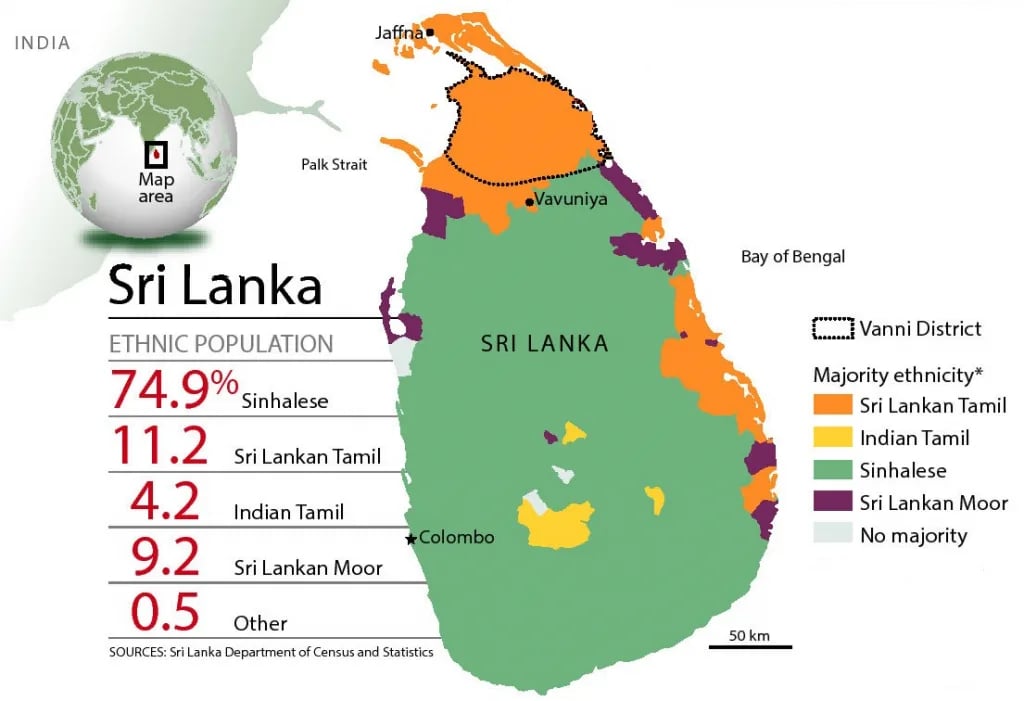
Key Issues
- Political Representation: Tamil communities have long demanded greater political autonomy and representation.
- The 13th Amendment aimed to devolve power to Provincial Councils, remains only partially implemented, leading to continued grievances.
- Land and Resources: Disputes over land rights and access to resources are central to the conflict.
- State-sponsored settlements in Tamil areas and the military’s occupation of land have fueled tensions.
- Language and Identity: Language policies and cultural rights are significant issues. The recognition and promotion of Tamil as an official language, alongside Sinhala, is vital for preserving Tamil identity.
Pathways to Resolution
- Full Implementation of the 13th Amendment: India has consistently urged Sri Lanka to take ‘immediate and credible action’ for the full implementation of the 13th Amendment and to conduct Provincial Council elections promptly that can provide Tamil communities with greater autonomy and political voice.
- Land Reforms: Addressing land disputes and ensuring the return of occupied lands to rightful owners can help rebuild trust and foster reconciliation.
- Inclusive Governance: Promoting inclusive governance that respects the rights and aspirations of all ethnic groups is essential. This includes meaningful participation of Tamils in national decision-making processes.
- Economic Development: Equitable economic development that benefits all communities can reduce grievances and promote social cohesion. Investment in education, healthcare, and infrastructure in Tamil-majority areas is crucial.
- Cultural Recognition: Promoting cultural and linguistic rights, including the use of Tamil in official communication and education, can help preserve Tamil identity and foster a sense of belonging.
International Support
- The international community, including India, has a role to play in supporting Sri Lanka’s reconciliation efforts.
- Diplomatic engagement, development assistance, and support for transitional justice mechanisms can contribute to lasting peace.
Conclusion
- Settling Sri Lanka’s ethnic problem requires a multi-faceted approach that addresses historical grievances, ensures political representation, promotes inclusive governance, and fosters economic development.
- However, the path to resolving Sri Lanka’s ethnic problem remains complex and requires continued dialogue and cooperation.
- India’s role as a mediator and advocate for the implementation of the 13th Amendment is crucial in fostering peace and stability in the region.
For India-Sri Lanka Relation in detail, please follow the link: https://www.nextias.com/ca/current-affairs/17-12-2024/india-sri-lankan-take-up-regional-security-issues
| Daily Mains Practice Question [Q] What strategies should India and Sri Lanka employ to effectively address and resolve the longstanding ethnic problem, considering historical context, political dynamics, and the aspirations of the Tamil community? |
Previous article
Bridge the Milk Divide for a Nutritionally Secure India
Next article
Realistic Assessment of Economic Survey 2024-25
