


Suez Canal & Its Economic Importance
Syllabus: GS1/ Geography
Context
- The Suez Canal is one of the busiest waterways in the world through which 12% of global commerce passes.
About
- The Suez Canal is a 193-km artificial waterway that connects the Mediterranean Sea to the Red Sea, making it the shortest maritime route between Europe and Asia.
- It was officially opened to ships in 1869.
- The Canal does not have locks and it is essentially a sea-level waterway.
- This characteristic allows for a smoother, more efficient passage of vessels, thus supporting a high volume of maritime traffic.
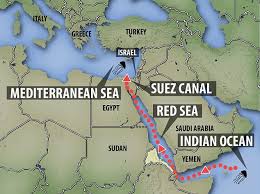
Importance of Suez Canal
- Reduced Transit Time: The Suez Canal reduces the maritime distance between Europe and Asia by approximately 7,000 kilometers.
- World trade: It’s a major factor in the world’s economy, with roughly 12% of global trade, 7% of the world’s oil, and 30% of daily container traffic passing through it.
- Revenue Generation: The Suez Canal is one of Egypt’s primary sources of revenue.
- Global Supply Chain Impacts: The canal’s uninterrupted functioning is crucial for the global supply chain.
- The blockage of the Suez Canal in 2021 caused a major loss to international trade. The blockage cost an estimated US$90 million in the first week.
Source: IE
PM Visit to Nigeria
Syllabus: GS2/IR
Context
- Prime Minister Narendra Modi is on a State Visit to Nigeria.
About
- This visit is the first by an Indian prime minister to Nigeria in 17 years.
- PM Modi was also conferred with Nigeria’s second highest national honour, the ‘Grand Commander of the Order of the Niger’.
- He is the second foreign dignitary to receive the distinction.
- Queen Elizabeth is the only foreign dignitary who has been awarded with GCON in 1969.
- The two leaders also agreed to work together to meet the development aspirations of the Global South.
- Additionally, India announced it would send 20 tons of humanitarian aid to support Nigeria’s flood relief efforts.
Source: PIB
Māori Group
Syllabus: GS2/IR
In News
- New Zealand’s parliament was briefly suspended after a protest haka by Māori Party legislators against the Treaty Principles Bill.
About Māori
- Arrival and Early Life: Māori ancestors arrived from Pacific islands before 1300 CE, settling on coasts and forests.
- They hunted seals and moas, cultivated food, lived in tribal groups, and valued oral traditions, natural gods, and warfare.
- European Arrival: Europeans arrived in the early 1800s, introducing Christianity, literacy, and trade (e.g., pigs and potatoes).
- The 1840 Treaty of Waitangi: Signed in 1840 between the British Crown and Māori chiefs, the Treaty of Waitangi is New Zealand’s foundational document.
- It promises Māori rights to their lands and interests while ceding governance to the British.
- Over decades, courts and governments have developed principles from the treaty focusing on participation, partnership, protection, and redress.
- Cultural Revival: Early 20th-century leaders like Apirana Ngata and Te Puea Hērangi worked to improve Māori life and revive traditions, language, carving, and weaving.
- Protests in the 1970s and 1980s emphasized land rights, language preservation, and cultural promotion, including key events like the 1975 North Island march and Bastion Point occupation.
The Haka
- The haka is a Māori ceremonial dance symbolizing cultural pride, strength, and unity.
- It is performed during battles, greetings, funerals, and other significant events.
- The Ka Mate haka, composed by Te Rauparaha in the 19th century, celebrates life over death and was performed during the protest.
- The All Blacks rugby team also performs the haka before matches to showcase strength and unity.
Source : IE
Commemorative Postage Stamp on Sickle Cell Eradication – 2047
Syllabus: GS2/Health
Context
- Governor of Madhya Pradesh has unveiled a commemorative postage stamp dedicated to “Sickle Cell Eradication – 2047”.
About
- This commemorative stamp honors the State’s initiative to combat the high prevalence of sickle cell anemia in tribal regions and highlights the commitment to eradicate this hereditary disease by 2047.
Sickle Cell Anemia
- Sickle cell disease (SCD) is a group of inherited (genetic) red blood cell disorders.
- It is transmitted by parents carrying a defective ‘beta globin’ gene (HBB).
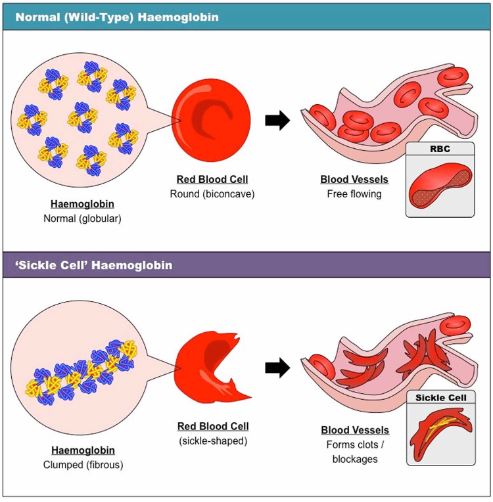
- In SCD, the hemoglobin is abnormal, which causes the RBCs to become hard and sticky and look like a C-shaped farm tool called a “sickle.”
- When they travel through small blood vessels, they get stuck and clog the blood flow.
- The sickle cells die early, which causes a constant shortage of RBCs.
- Treatment: SCA is a genetic disorder, making complete “elimination” a challenge that requires a major scientific breakthrough.
- The only cure comes in the form of gene therapy and stem cell transplants — both costly and still in developmental stages.
Source: PIB
Ayushman Vay Vandana Card
Syllabus: GS2/ Health
Context
- More than 10 lakh senior citizens have enrolled for the newly launched Ayushman Vay Vandana Card.
Ayushman Vay Vandana Card
- It enables all senior citizens aged 70 and above to access free healthcare benefits under the Ayushman Bharat Pradhan Mantri Jan Arogya Yojana (AB PM-JAY).
- Eligible beneficiaries covered under Private health insurance policies or Employees’ State Insurance Corporation (ESIC) scheme will also be eligible to avail benefits under PMJAY.
- Those already availing benefits of Central Government Health Scheme (CGHS) and Ex-Servicemen Contributory Health Scheme (ECHS) may have to either choose their existing scheme or opt for PMJAY.
| Ayushman Bharat Scheme – It was launched in 2018, by the Government of India with the aim of achieving universal health coverage. It has two key components; 1. Ayushman Bharat Pradhan Mantri- Jan Arogya Yojana (AB PM-JAY) 2. Ayushman Arogya Mandir Ayushman Bharat Pradhan Mantri- Jan Arogya Yojana (AB PM-JAY) – AB PM-JAY is the largest publicly funded health assurance scheme in the world which provides health cover of Rs. 5 lakhs per family per year for secondary and tertiary care hospitalization. – Coverage: It covers up to 3 days of pre-hospitalization and 15 days of post – hospitalization expenses such as diagnostics and medicines. 1. The beneficiary can visit any empanelled public or private hospital in India to avail cashless treatment. 2. There is no restriction on the family size, age or gender. – Eligibility: The inclusion of households is based on the deprivation and occupational criteria of the Socio-Economic Caste Census 2011 (SECC 2011) for rural and urban areas, respectively. – This number also includes families that were covered in the Rashtriya Swasthya Bima Yojana (RSBY) but were not present in the SECC 2011 database. – Funding: The funding for the scheme is shared by the Centre and the state in a 60:40 ratio. 1. However, for North-Eastern states, Himalayan states (such as Uttarakhand, Himachal Pradesh), and Union Territories, the ratio is 90:10. |
Source: PIB
SpaceX to launch India’s GSAT-20
Syllabus: GS 3/Space
Context
- SpaceX’s Falcon-9 is set to launch GSAT-20, one of India’s heaviest communication satellites, from Cape Canaveral in the United States.
About: GSAT-20
- Owned and operated by New Space India Ltd (ISRO’s commercial arm), GSAT-20 is also known as GSAT N-2.
- Weighing 4,700 kg, GSAT-20 is too heavy for India’s own rocket, LVM-3—popularly known as ‘Bahubali’—which can carry satellites weighing up to four tonnes to the geostationary transfer orbit (GTO).
- The satellite has a mission life of 14 years and will provide vital services across India, including internet connectivity for remote areas.
| Do you know? – NewSpace India Limited (NSIL), established on March 6, 2019, under the Companies Act, 2013, is a wholly-owned Government of India company operating under the administrative control of the Department of Space (DoS). – As the commercial arm of the Indian Space Research Organisation (ISRO), NSIL’s primary responsibilities include: 1. Enabling Indian Industries: Facilitating Indian industries to undertake high-technology space-related activities, thereby enhancing the nation’s space capabilities. 2. Commercial Exploitation: Promoting and commercially exploiting products and services derived from India’s space programs, contributing to the global space market. |
Source: AIR
Previous article
Civil Servants and Social Media: Ethics and Implications
Next article
States’Share in Divisible Pool of Taxes
