


Syllabus: GS3/Economy
Context
- The global shift of semiconductor manufacturers toward AI-oriented chips has created a shortage of memory chips used in consumer electronics. It has increased prices of smartphones, laptops, refrigerators, air conditioners, televisions, and other devices, contributing to retail inflation in India.
About Memory Chips and Their Key Applications
- Memory chips are semiconductor devices that store and process data in electronic systems. They are a critical component of modern digital infrastructure.
- Major Types:
- Dynamic Random Access Memory (DRAM): Used for temporary data storage in smartphones, laptops, computers, and consumer electronics.
- NAND Flash Memory: Used in pen drives, SSDs, hard disks, and mobile storage.
- High Bandwidth Memory (HBM): Advanced memory used in AI servers, data centres, and high-performance computing.
- Key Applications: Memory chips are essential in smartphones and tablets; laptops and computers; refrigerators and washing machines; air conditioners and smart appliances; televisions and entertainment systems; electric vehicle batteries and control systems; earphones, wearables, and storage devices
- The growing adoption of Artificial Intelligence (AI), cloud computing, and data centres has sharply increased demand for advanced memory chips, particularly HBM.
Memory Chips in India and Their CPI Basket
- India’s Consumer Price Index (CPI) measures retail inflation across goods and services.
- CPI Significance:
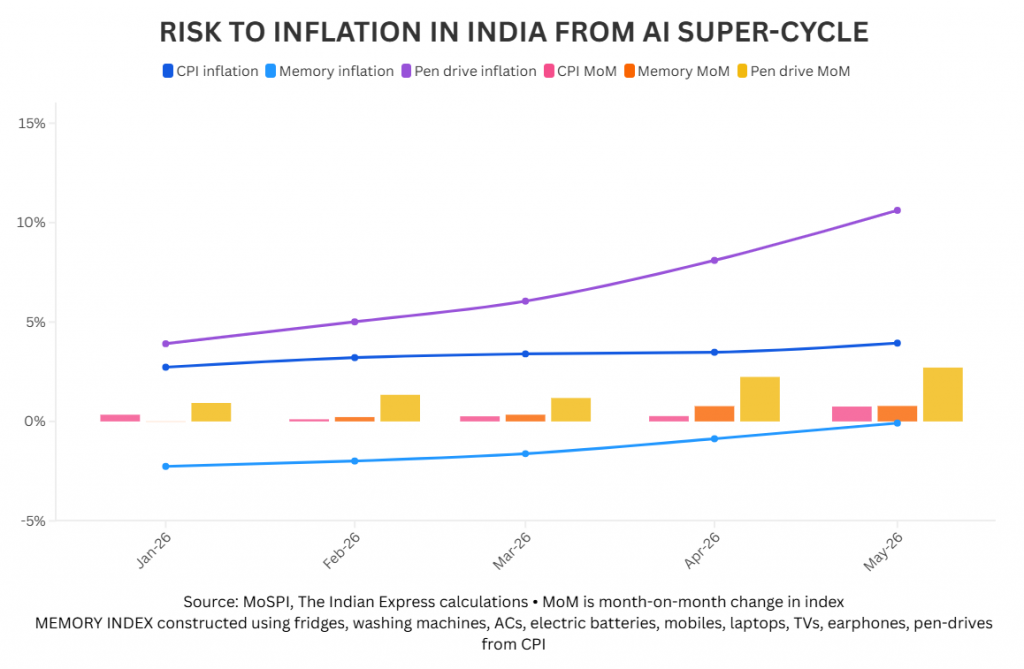
- Electronics products dependent on memory chips collectively account for around 1% of the CPI basket.
- Though their weight is relatively small, persistent price increases are creating an upward pressure on headline inflation.
- Recent Trends: According to recent inflation data:
- Laptop, computer, and tablet prices have risen continuously for several months.
- Mobile phone prices have shown sustained month-on-month increases.
- Refrigerators, washing machines, televisions, and air conditioners have also witnessed sequential price increases.
- Pen drives and hard disks, which are pure memory-storage products, have recorded some of the sharpest increases.
- As manufacturers pass on higher semiconductor costs to consumers, inflationary effects are becoming visible in retail price indices.
What are the Issues and Concerns Related to Memory Chips?
- AI-Driven Supply Diversion: Leading semiconductor firms are prioritising production of AI-focused chips and High Bandwidth Memory (HBM) due to higher profitability and demand.
- It has reduced manufacturing capacity for conventional DRAM and NAND memory used in consumer products.
- Structural Supply Shortage: Demand may exceed supply for the next 3–5 years; capacity expansion requires enormous investments and long gestation periods; and long-term contracts by major global buyers further tighten supply availability.
- Rising Consumer Prices: Higher memory chip costs are increasing smartphone prices, laptop and computer prices, appliance prices, and storage device prices.
- It reduces affordability and affects digital inclusion efforts.
- Impact on Core Inflation: Electronics inflation affects core inflation (non-food, non-fuel inflation), making it more persistent and difficult to manage through conventional monetary measures, unlike food inflation.
- Slowing Consumer Demand: Higher prices can reduce sales volumes. It could affect digital penetration in developing economies. Market forecasts indicate:
- Weakening smartphone shipments globally.
- Greater impact on low-cost devices, especially entry-level smartphones.
India Specific Challenges
- Dependence on Imports: India imports a substantial portion of semiconductors, memory chips, and electronic components. It exposes domestic manufacturers to global supply disruptions and price shocks.
- Lack of Long-Term Procurement Commitments: Global memory manufacturers have highlighted that Indian buyers often place short-term orders, and avoid long-duration purchase agreements.
- It weakens India’s bargaining position in an environment of constrained supply.
- Limited Domestic Semiconductor Ecosystem: India has strengths in semiconductor design, and electronics assembly.
- However, it still lacks large-scale fabrication facilities (fabs) for advanced memory chips.
- Inflationary Risks: The Reserve Bank of India (RBI) remains cautious about inflation management.
- Persistent increases in electronics prices can raise household expenditure, increase imported inflation, and complicate monetary policy decisions.
- Digital Divide Concerns: Rising prices of low-cost smartphones and computers may hinder digital literacy initiatives, online education, financial inclusion, and digital public infrastructure adoption.
Key Related Efforts and Initiatives
- India Semiconductor Mission (ISM): It aims to create a comprehensive semiconductor and display manufacturing ecosystem in India.
- Semicon India Programme: It provides fiscal support for semiconductor fabs, display fabs, packaging and testing facilities, and design-linked incentives.
- Production Linked Incentive (PLI) Scheme: It supports large-scale electronics manufacturing, mobile phone production, and component ecosystem development.
- Design Linked Incentive (DLI) Scheme: It promotes domestic semiconductor design capabilities and innovation.
- Approved Semiconductor Projects: The Government has approved multiple semiconductor and related manufacturing projects aimed at strengthening India’s semiconductor value chain and reducing import dependence.
- National Policy on Electronics (NPE), 2019: It targets enhanced domestic value addition and global competitiveness in electronics manufacturing.
Way Forward: Strengthening Measures
- Diversify Supply Sources: Reduce dependence on a few global suppliers, and develop strategic partnerships with semiconductor-producing nations.
- Promote Long-Term Procurement Contracts: Encourage Indian electronics firms to enter multi-year agreements for critical components, and improve supply security and price stability.
- Accelerate Domestic Manufacturing: Fast-track semiconductor fabrication and packaging projects, and strengthen indigenous component manufacturing.
- Build Strategic Semiconductor Reserves: Explore stockpiling of critical chips for essential sectors.
- Enhance R&D and Skill Development: Invest in semiconductor research, chip design, and advanced manufacturing technologies, and strengthen academia-industry collaboration.
- Integrate Semiconductors into Industrial Policy: Align semiconductor development with Digital India, Make in India, and Atmanirbhar Bharat initiatives.
| Daily Mains Practice Question [Q] Examine the implications of memory chip shortages for India’s economy and inflation management. Discuss the challenges faced by India and suggest measures to strengthen its semiconductor ecosystem. |
Previous article
India–France Partnership 2.0
Next article
Sustaining Solar Energy Growth Without Curtailments
