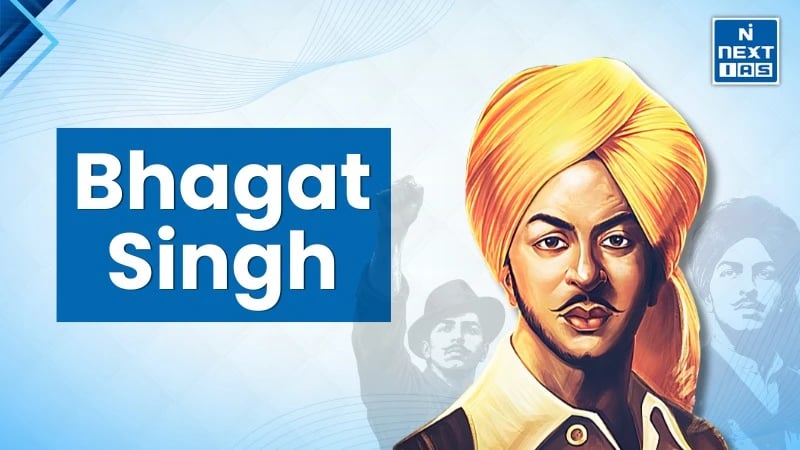
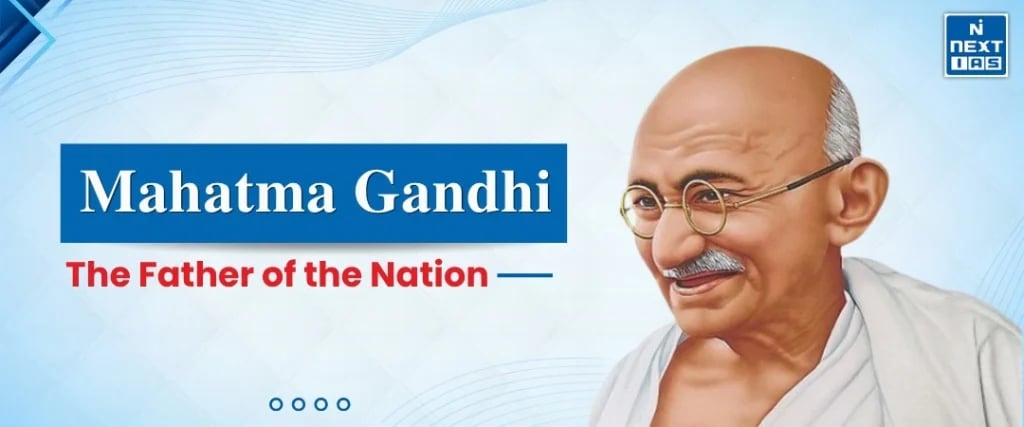
Mahatma Gandhi’s actual name was Mohandas Karamchand Gandhi. He was born in 1869 at Porbandar in Gujarat, India & is famously regarded as the Father of the Nation. He was a lawyer from London & a social activist who became the primary leader of India’s freedom struggle against British rule. He is globally revered for his philosophy of Satyagraha. His method of peaceful protests revolutionized the 20th century & inspired a generation.
Additionally, beginning with the South Africa activism (1893–1914) to Champaran (1917) & Dandi (1930) in India to finally achieve Indian Independence, Gandhiji will always be known as a Forward thinker, a Mass leader & a Great freedom fighter.
Core Philosophy of Mahatma Gandhi
- The core philosophy of Mahatma Gandhi was Truth (Satya) and Non-Violence (Ahimsa).
- Satyagraha (Peaceful Protest): This is a form of non-violent protest founded on the belief that the force of truth will ultimately prevail against an adversary through patience and sympathy.
- Nonviolence (Ahimsa): Not only the lack of violence but a form of positivity, which Gandhiji saw as a condition of love and kindness towards all living things.
- Trusteeship and Economic Justice: Gandhiji’s Trusteeship principle stressed that wealth should never serve private luxury alone, but should be utilized for the welfare of society, thereby ensuring justice and preventing exploitation.
- Sarvodaya (Welfare of All): Sarvodaya signified Gandhiji’s idea of upliftment where every section of society, especially the weakest, will enjoy development and justice.
- Swadeshi, Khadi, and Self-Reliance: Gandhiji urged the people of India to use local produce to the extent possible, wear Khadi and promote village industries.
Key Historical Milestones of Mahatma Gandhi
| S.No. | Event | Year | Significance |
|---|---|---|---|
| 1 | South Africa Activism | 1893–1914 | Developed his first nonviolent protests against racial discrimination. |
| 2 | Champaran Satyagraha | 1917 | His first major success in India, fighting for the rights of indigo farmers. |
| 3 | Dandi Salt March | 1930 | A march to protest against the British salt tax. |
| 4 | Quit India Movement | 1942 | A mass civil disobedience movement demanding an orderly British withdrawal. |
| 5 | Indian Independence | 1947 | India gained independence, though Gandhi was saddened by the Partition. |
First Resistance Movements of Gandhiji
| S. No. | Event | Description |
|---|---|---|
| 1 | First Civil Disobedience | Champaran Satyagraha against indigo planters (1917). |
| 2 | First Hunger Strike | Ahmedabad Mill Strike (1918) Gandhiji fasted to support textile workers demanding plague bonus wages. |
| 3 | First Non-Cooperation | Kheda Satyagraha (1918) Gandhiji urged peasants to refuse to pay tax to the British amid crop failure. |
| 4 | First Mass Strike | Rowlatt Satyagraha (1919) Nationwide hartal (strike) against repressive Rowlatt Act. |
Key Information about Mohandas Karamchand Gandhi
| Category | Details |
|---|---|
| Full Name | Mohandas Karamchand Gandhi |
| Known As | Mahatma Gandhi, “Father of the Nation” |
| Date of Birth | 2 October 1869 |
| Place of Birth | Porbandar, Gujarat, India |
| Father | Karamchand (Kaba) Gandhi |
| Mother | Putlibai Gandhi |
| Spouse | Kasturba (Kasturbai) Kapadia (married in 1883) |
| Children | Four sons: Harilal, Manilal, Ramdas, Devdas |
| Education | Samaldas College (Bhavnagar), Law studies at Inner Temple, London (1888–1891) |
| Major Influences | Raichand Bhai (spiritual), Gopal Krishna Gokhale (political), Leo Tolstoy, John Ruskin, Bible, Bhagavad Gita |
| Early Career | Lawyer in Bombay and Rajkot (1891–1893) |
| Time in South Africa | 1893–1914: Law practice, Indian rights activism, Natal Indian Congress, Indian Opinion (weekly journal founded in 1904) |
| Return to India | January 1915 |
| Major Movements | Champaran Satyagraha (1917), Ahmedabad Mill Strike (1918), Kheda Satyagraha (1918), Non-Cooperation (1920), Dandi March/Salt Satyagraha (1930), Quit India Movement (1942) |
| Satyagraha Concept | Principle of nonviolent resistance and civil disobedience |
| Imprisonments | Multiple terms both in South Africa and India |
| Associations | Indian National Congress (President, 1924), All India Home Rule League |
| Literary Works | Hind Swaraj (1909), Autobiography: “The Story of My Experiments with Truth”, Young India, Navjivan (editor) |
| Revival Efforts | Village industries, Khadi movement, removal of untouchability |
| Death | 30 January 1948, assassinated by Nathuram Godse at Birla House, Delhi |
| Legacy & Memorial | Gandhi Jayanti – India’s national holiday (2 October), International Day of Non-Violence (UN) |
| Referred As | Bapu (Father), Mahatma (“Great Soul”), “Father of the Nation” |
Gandhi’s Role in India’s Freedom Struggle
- Mahatma Gandhi shaped the entire history of India under a system in which Indian freedom itself became a mass movement for truth and non-violence.
- His first important intervention was the Champaran Satyagraha (1917) to redress the grievances of indigo cultivators, followed by the Kheda Satyagraha (1918) to support peasants against unjust taxation, and the Ahmedabad Mill Strike (1918) to stand with industrial workers.
- Through these struggles, the methods of satyagraha were established & thereafter, Gandhiji started the Non-Cooperation Movement (1920–22) to boycott British goods and institutions.
- The Civil Disobedience Movement (1930), first began in the form of historic Dandi March, broke the British salt laws directly & the Quit India Movement (1942) offered the unwavering resolve of “Do or Die,” demanding immediate British withdrawal.
- Gandhiji united the whole of rural and urban India, peasants, and elites, converting freedom into a common national aspiration.
- His role shaped the moral and political foundation of India’s independence movement.
Read our detailed article on Rise of Gandhi.
Contemporary Relevance of Gandhiji, the Father of the Nation
- All in all, the relevancy of Mahatma Gandhi today is attributed to his timeless principles that continue to instruct peaceful existence, social justice, and an environment that sustains life.
- The doctrine of non-violence (Ahimsa) is a powerful method to resolve conflicts, uphold human rights, and encourage diplomacy in a turbulent world.
- The Gandhian concepts of truth and moral bravery demand transparency and principled governance.
- With an environmental crisis on its way, Gandhi’s principles about simple living, self-reliance, and less consumption could well serve the purpose of sustainable development.
- Trusteeship, in turn, resonates with calls for CSR, wherein the corporation uses its wealth and resources for the greater good.
- Also, Gandhi’s concept of Sarvodaya understands inclusive growth, social equity, and the upliftment of socially marginalized communities as urgently necessary in today’s context as the pursuit of justice and harmony.
- On Gandhi Jayanti, a reflection on these will compel both individuals and nations to embrace non-violence, ethical leadership, and social responsibility as keys to a peaceful and just society.
96th Anniversary of Dandi March
- This year will be observed as the 96th anniversary of the Dandi march that took place from March 12 to April 6 in 1930.
- This march is significant as it marked the 240 miles journey undertaken by Mahatma Gandhi from Sabarmati Ashram to Dandi, Gujarat as a resistance move against the British monopoly on salt production.
- This march involving 78 satyagrahis became the symbol of making salt, leading to Civil Disobedience with millions joining in various forms of protest and struggle.
Initiatives on Mahatma Gandhi by India and World
Government of India Initiatives
- Mahatma Gandhi National Rural Employment Guarantee Scheme (MGNREGS): It is a social-security scheme to provide 100 days of wage employment to ensure economic justice for rural households through the framework linking it to Gandhian trusteeship.
- Swachh Bharat Abhiyan: Initiated in 2014, this nationwide cleanliness campaign stands for Gandhi’s vision of sanitation and hygiene as pillars of nation-building.
- Gandhi Smriti and Darshan Samiti (GSDS): Running cultural programs, exhibitions, and awareness campaigns to propagate Gandhian ideals. Government-launched Gandhi statues and Gandhi Vatika aim to inspire the populace.
- Commemorative Events and Campaigns: Mass Swachhata pledge drives and awareness campaigns are conducted to provide an annual social-interface during Gandhi Jayanti and various other noteworthy occasions, bridging the lack of exposure among people regarding Gandhian philosophy.
Global and International Initiatives
- UN International Day of Non-Violence: The entire world pays homage to Gandhi on Gandhi Jayanti to remember his teachings and to spread the message of peace and non-violence through discussions and panels at the UN and elsewhere.
- Global Gandhi Network: From worldwide Gandhian institutes and activists connected under one platform together for trust, non-violence, justice, and peace through coordination.
- Cultural and Educational Programs: Various NGOs, educational institutions, and governments around the world celebrate Gandhi’s memory through conferences, exhibitions, and peace initiatives predicated on his principles.
- Influence on Global Leaders: The principles of Gandhi still inspire many leaders and movements in defense of human rights, conflict resolutions, and sustainable developments.
Jointly, these initiatives promote the vision of Gandhi toward social justice, ethical leadership, non-violence, and the expansion of inclusive growth in India and the world over.
Conclusion
The teachings of Mahatma Gandhi on non-violence, truth, and self-reliance continue to shine as a light for justice around the world. The Satyagraha movement freed India and set an example for all other nations, showing that virtue can defeat tyranny. In today’s world, Gandhiji’s teaching on simplicity and service guides us toward equality, harmony, and development.
FAQs on Mohandas Karamchand Gandhi
What is the Mahatma Gandhi Gram Swaraj Scheme?
Mahatma Gandhi Gram Swaraj Scheme (MGGS) is an umbrella program that seeks to implement the Gandhian concept of gram swaraj by enhancing Panchayati Raj institutions. MGGS combines the benefits from the 14th Finance Commission, RGSA, and incentives for khadi, handloom, and rural infrastructure.
What is the difference between MGNREGA and VB-G RAM G Bill?
The VB-G RAM G Bill, introduced in 2025, is intended to replace MGNREGA (2005). From a 100 days in MGNREGA, the bill assures a 125 days of employment guarantee. The bill is aligned with the Viksit Bharat 2047 vision.
What is Sabarmati Ashram Redevelopment Project 2026?
Sabarmati Ashram Redevelopment Project 2026 will develop the Sabarmati Ashram in Ahmedabad from its current size of 5 to 55 acres while preserving 36 original buildings dating back to the 1930s, including Hriday Kunj.
What is Martyrs’ Day 2026 (Shaheed Diwas)?
Martyrs’ Day (Shaheed Diwas) is celebrated on January 30 as Mahatma Gandhi’s death anniversary.
What is Gandhi and Health: ICMR 2026 Conclave?
The Conclave focuses on applying Gandhi’s holistic health beliefs such as Naturopathy, dietetics, yoga, and hygienics in the present context. Conducted against the backdrop of increasing cases of Non Communicable Diseases (NCDs), this conclave draws attention to connecting the principles of Gandhiji such as simplicity and stress-free lifestyle to preventive measures.
How was Gandhi’s view different from that of Ambedkar on caste and reform?
Gandhiji proposed to uplift the Harijans through voluntarism, improvement of sanitary conditions in villages, and praying for the eradication of untouchability among Hindus. On the other hand, Ambedkar advocated structural transformation in the form of separate electorates and constitutionally abolishing the caste system.
How does Satyagraha play an important role in the civil rights movement in America?
Martin Luther King applied the idea of Satyagraha in the US civil rights movement by adopting it as a method of non-violent civil disobedience. The satyagraha was used in cases such as the Montgomery Bus Boycott (1955), Birmingham Campaign, and March on Washington, 1963.
What was Gandhiji’s message behind “Earth can provide enough to satisfy every person’s need, but not every person’s greed”?
Gandhiji was concerned about consumerism & exploitation and encouraged simplicity in life (aparigraha) for equal sharing of resources. According to him, nature will always fulfill our basic necessities through self-sufficiency, whereas greed leads to scarcity, injustice, and ecological degradation.
What is Sarvodaya according to Gandhian ideology?
Sarvodaya denotes ‘well-being for all’, where the poorest are raised first by practicing non-violent service, self-sufficiency, and ethical government.
How does Gram Swaraj differ from global bureaucracy?
Gram Swaraj provides village self-governance based on self-reliance, whereas global bureaucracy involves centralized governance, which diminishes autonomy through stringent rules.
What are Gandhiji’s Seven Social Sins?
Gandhiji’s seven social sins include Wealth without work, Pleasure without conscience, Knowledge without character, Commerce without morality, Science without humanity, Religion without sacrifice, and Politics without principles.