80813-00200
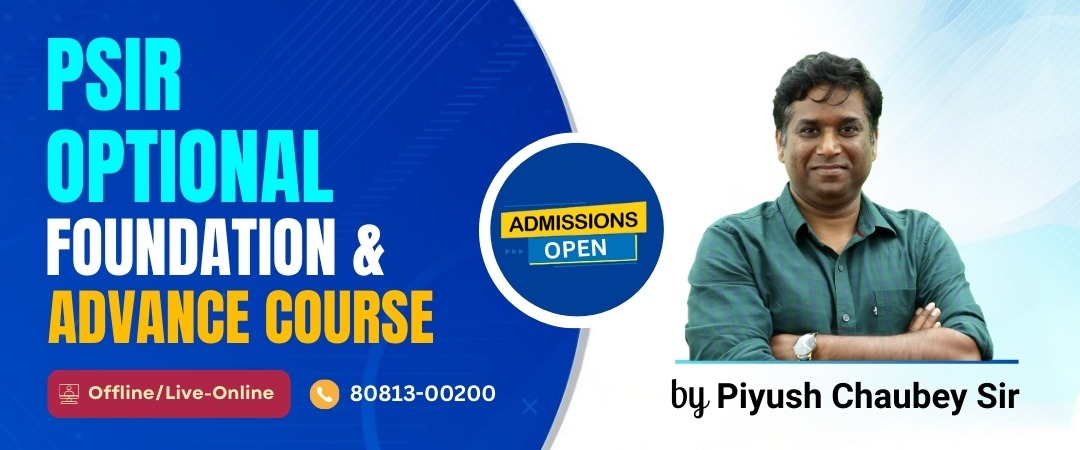



Advanced PSIR Q&A Program for CSE 2026
A compact, mains-focused programme designed to strengthen concepts, update dynamic areas of the syllabus, and convert preparation into relevant, structured, and analytical answers to secure 300+ mark in PSIR.
What we Promise: Clear concepts, scholar-backed content, contemporary examples, stronger structure, and better presentation for mains answers.
Why this Course?
PSIR is an optional with many topics that are dynamic in nature. This course helps aspirants revise core concepts, update important areas of Paper I and Paper II, and turn knowledge into exam-relevant answer writing for UPSC CSE Mains 2026.
- Quick revision of highly probable topics for Mains 2026.
- 200 mains-relevant questions based on PYQs with live classroom discussion.
- 100 additional PYQ-pattern questions with standard model answers. (Soft Copy)
- Questions curated after analysis of: UPSC Trends, Previous Year Questions (PYQs), Recurring Themes, Emerging Developments, and High-Yield Areas of the Syllabus
- Systematic coverage of the complete syllabus with value addition.
- Special emphasis on International Relations and Indian Foreign Policy
- Latest developments and updates for Paper I-B, II-A, and II-B.
- Answer structuring and re-structuring techniques aimed at securing 300+ marks.
- Personalised mentorship by Dr. Piyush Kumar Chaubey.
Batch Details for Advanced PSIR Q&A Program for CSE 2026
| Mode | Start Date | Timing | Fee | Brochure | |
|---|---|---|---|---|---|
|
Live-Online
without Test Series | 15th June, 2026 | 11:30 AM - 2:00 PM | Rs. 13,500 + GST | View Brochure | Admission Closed |
|
Live-Online
with Test Series | 15th June, 2026 | 11:30 AM - 2:00 PM | Rs. 15,500 + GST | View Brochure | Admission Closed |