80813-00200
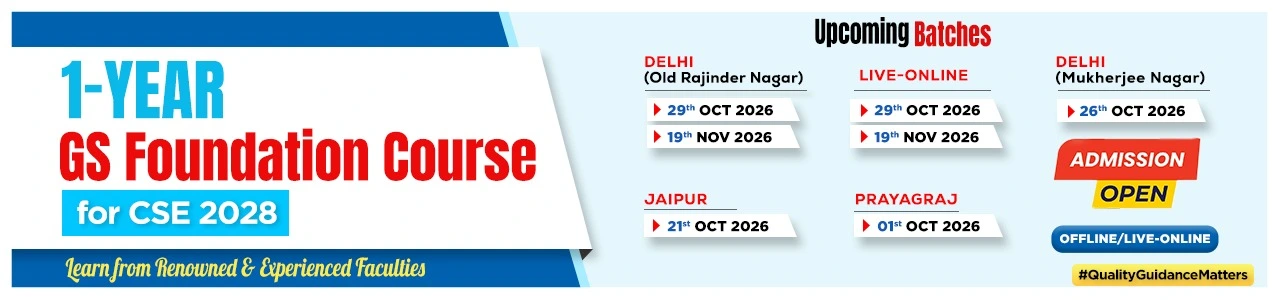
1-Year GS Foundation Course
Duration: 12 Months | CSE 2028Our classroom course holistically covers the General Studies syllabus of CSE with Current Affairs integration. It assists students in building concepts, developing analytical skills and forming a solid foundation for the Civil Services Examination.
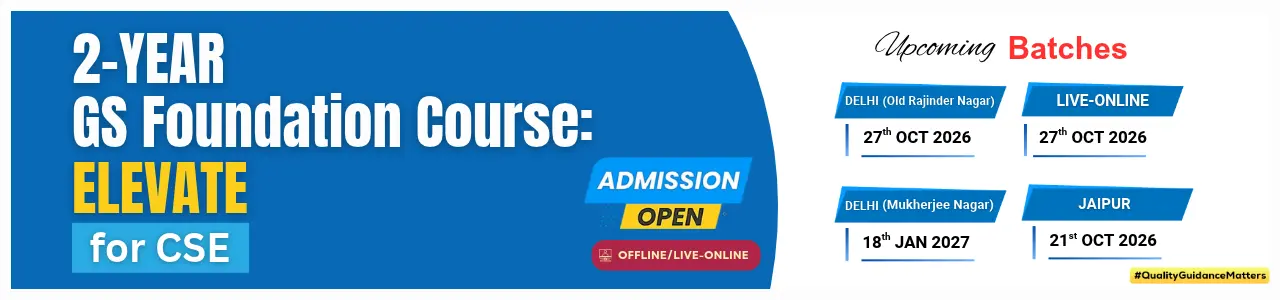
2-Year GS Foundation Course: ELEVATE
Duration: 23–24 MonthsThe course is an interactive and progressive course which helps students in building core basics (Year-1) to comprehensive syllabus coverage (Year-2), along with developing analytical skills, leadership skills, communication skills and building a solid foundation for all stages of the Civil Services Examination.

3-Year GS Foundation Course: PINNACLE
Duration: 36–39 MonthsThe course advances step by step to help students be exam-prepared. The first year of the course focuses on building the foundations and ensure that students understand the concepts clearly. The second year covers the General Studies syllabus in a thorough way. It also integrates current affairs to help students prepare for the Prelims, Mains and Interview stages. The third year provides advanced preparation, value-addition and mentorship through programs like AIM i.e. Advanced Integrated Mentorship and CA-VA i.e. Current Affairs-Value Addition. This is a stage that gives students extra edge over the others.


We are here to guide you!
Raise your enquiry and
get callback.
Batch Details
Select your preferred 1-Year, 2-Year or 3-Year GS Foundation Course from the dropdown.
Offline Batches
Live-Online Batches
1-Year GS Foundation Course Curriculum
Comprehensive UPSC GS preparation in a structured one year cycle for aspirants.
Complete GS · Essay · Weekly Current Affairs · Answer Writing · Objective and Subjective Tests
Comprehensive coverage of General Studies Prelims and Mains syllabus. Static subjects, Current Affairs, Answer Writing, Weekly and Monthly Class Tests, academic support run in parallel rather than sequentially.
Consider This Course If...
You are a graduate, final-year and pre-final year student, your intended attempt is relatively close, and you are ready to begin complete GS preparation.
- Graduates, final-year and pre-final year students targeting CSE 2028
- Working professionals with a structured study window
- Students who need Prelims + Mains + Interview preparation in one year cycle
Compare Another Course If ...more
You are early in college with two or more useful academic years — ELEVATE (2-Year Course) or PINNACLE (3-Year Course) would let you build foundations with complete GS syllabus preparation.
A student still exploring Civil Services who cannot yet commit should first seek counselling rather than default to the longest course.

Comprehensive Classroom Learning
1100+ hours of in-depth classroom teaching, delivered by renowned and experienced faculty, to build strong fundamentals and exam-ready understanding.
This includes:
- Module-wise lectures by Faculty
- Weekly Current Affairs classes
- Dedicated answer-writing sessions
- Essay writing sessions
- Strategy sessions and more to help you plan effectively across all stages

Testing & Assessment Framework
A structured, exam-simulated testing and assessment framework designed to build accuracy, speed and confidence. It enables continuous improvement across all stages of the UPSC examination.
- 40+ Weekly / Monthly Classroom Tests
- 50+ Prelims Booster Test Series
- 12 GS Mains Tests (MTS)
- 4 Essay Tests

Study Material & Content Support
Well-structured, exam-focused quality study material designed to eliminate source confusion and complement classroom learning.
- 19 comprehensive books for General Studies
- 12 monthly Current Affairs magazines (CRUX)
- Class handouts & PDFs
- Dedicated study material for CAP (Current Affairs for Prelims), MAC (Mains Advance Course) & Ethics Enhancer and Essay Guidance programs
- Daily digital current affairs via the NEXT IAS App

Doubt Resolution & Personalised Support
- Real-time doubt resolution by faculty during and after classes, with continued support during the course tenure.
- Dedicated support by an Academic Coach for personalised strategy planning and academic guidance
- Student Care Cell dedicated to students’ overall well-being

Digital & Flexible Learning Access
- Access to online recorded classes till the Prelims of the Examination Year (as per course validity)
- Online access for missed classes in other ongoing offline batches.
- Up to 100 hours of offline/live-online class access in the next year’s batch for revision or repetition purpose
- Seamless access to digital study content via the NEXT IAS App

Post-Course Completion Support
The Foundation Course provides additional 150+ hours of specialised post-course completion support, ensuring continuous guidance across all three stages of the UPSC Civil Services Examination—Prelims, Mains, and Interview.
- CAP (Current Affairs for Prelims)
- MAC (Mains Advance Course)
- Ethics Enhancer Program
- Essay Guidance Course
- Interview Guidance Programme
100+ Tests (Objective + Subjective)
Weekly & Monthly Class Tests
Objective MCQ solving and Subjective answer writing after every module, to build Prelims and Mains skills simultaneously.
Prelims Test Series
Prelims Booster Test Series replicates the UPSC experience with carefully designed test papers across the entire GS and CSAT syllabus. It also includes Anubhav All India Open Mock Tests that assess your preparation with actual competition.
GS Mains Tests
Sectional and full-length GS Mains papers with detailed model answers and personalised feedback. Anubhav All India Mock Tests to give you a real feel of the exam and prepare you for the Mains examination.
Essay Tests
Structured Essay guidance course with comprehensive evaluation of structure, argumentation, balance, examples and expression.
2-Year GS Foundation Course Curriculum
A balanced two-year early-start course. Year-1 develop the students' concepts, aptitude, reading abilities and personality. Year-2 develops complete, examination-oriented UPSC competence.
ELEVATE course gives students time to build foundational knowledge base before moving into comprehensive, examination-oriented GS preparation.
Year-1: First Step
Concepts · Awareness · Aptitude · Habits · Leadership · Communication
Build conceptual clarity, curiosity, reading discipline, aptitude and self-confidence before complete GS syllabus preparation.
Year-2: GS Foundation
Complete GS · Essay · Weekly Current Affairs · Answer Writing · Objective and Subjective Tests
Comprehensive coverage of General Studies Prelims and Mains syllabus. Static subjects, Current Affairs, Answer Writing, Weekly and Monthly Class Tests, academic support run in parallel rather than sequentially.
Consider ELEVATE Course If…
You are in the first, second, third / final year of college with roughly two useful academic years, are beginning from fundamentals, and want a structured head start that runs alongside with your degree.
- Undergraduates in first, second, third / final year with ~2 useful years
- Students who want a structured head start but not a three-stage journey
- Beginners who need concept building, reading habits and a gradual transition
- Students who can sustain a balanced workload alongside college
Compare Another Course If ...more
Your attempt is near and you are ready for GS syllabus preparation now (1-Year), or you are starting early enough to benefit from a dedicated third-year GS Advance cycle (PINNACLE).
A student still exploring Civil Services who cannot yet commit should first seek counselling rather than default to the longest course.
Core Concepts
Understand foundational ideas before entering into the examination calendar.
Study Habits
Build reading, note-making and study discipline gradually.
Writing Skills
Learn structure and develop clarity in a supportive learning environment.
Active Revision
Revisit important themes with deeper purpose instead of repeating content mechanically.
Course Correction
Identify weaknesses in comprehension, aptitude, expression or consistency while time remains to improve.
College Compatibility
Use a deliberately progressive workload that respects undergraduate academics.
Year-1: First Step
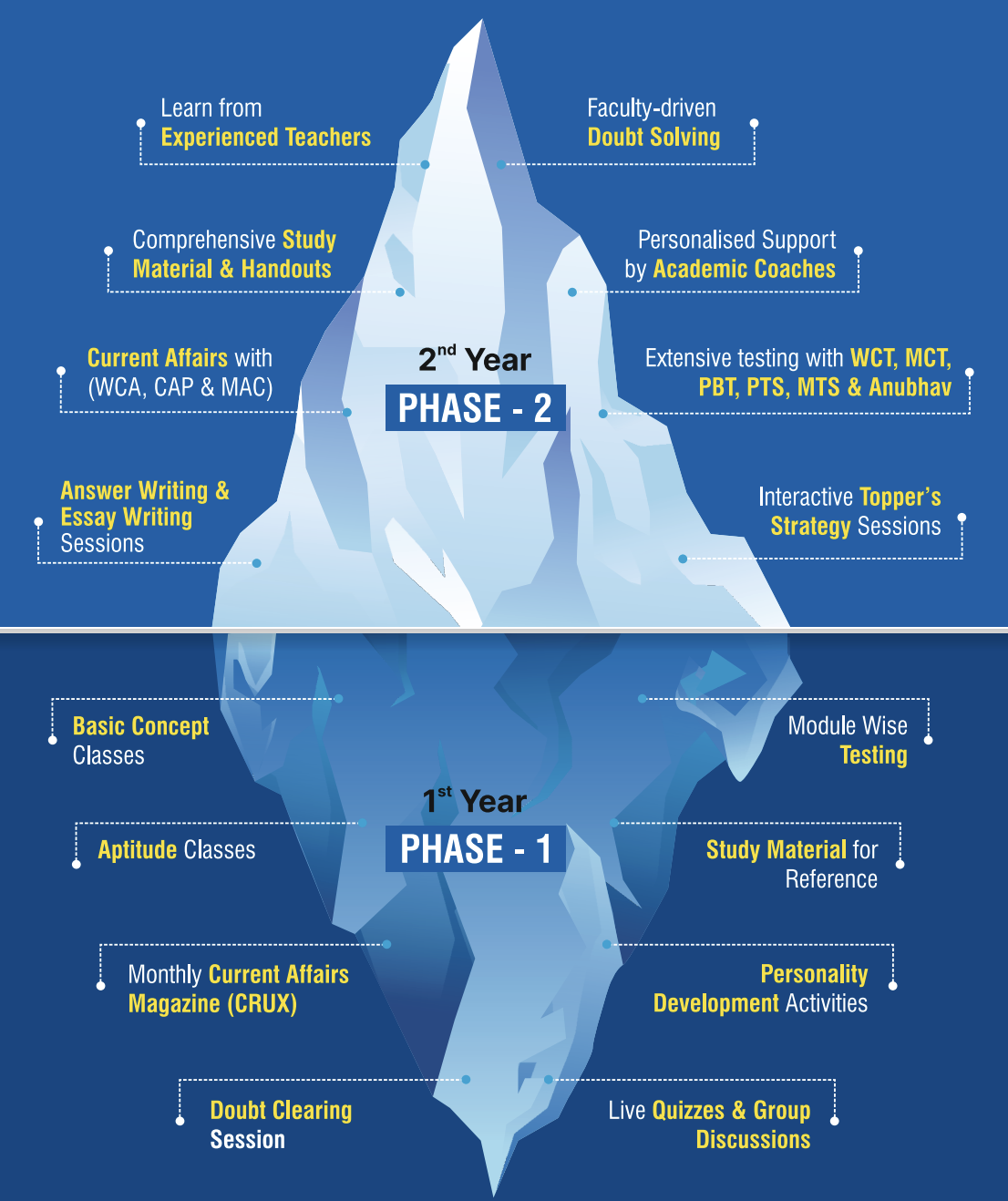
Every great journey begins with a first step. Year-1 creates the student who can later handle the demands of comprehensive UPSC preparation.
Basic Concept Building
NCERT and NIOS based learning (Class 6–12 level) across core General Studies areas. In-depth knowledge in simple language to build one's base.
Current Affairs & Aptitude
Weekly Current Affairs classes (Live-Online), the monthly CRUX magazine, and basic concepts of Quantitative Aptitude and Reasoning.
Personalised Support & Guidance
A dedicated Academic Coach throughout the course, guiding on preparation approach, and doubt-clearing support for every query.
Study Material & Tests
High-quality material for all GS subjects (6 books), module-wise tests in objective and subjective format, and a monthly Current Affairs magazine.
Personality & Communication
Toppers' interaction, personality development and confidence-building, public speaking and teamwork sessions, and support for hobbies and interview orientation.
Digital Access & Revision Support
Online access to lectures for offline students, recorded backup for missed classes, and a 90-day revision backup after completion.
| Subject | Hours |
|---|---|
| Indian History | 70-75 Hours |
| Geography | 70-75 Hours |
| Indian Economy | 75-80 Hours |
| Indian Polity | 55-60 Hours |
| General Science & S&T | 45-50 Hours |
| Environment | 20-25 Hours |
| Basic Aptitude & Reasoning | 55-60 Hours |
| Weekly Current Affairs (WCA) - Additional | 100-105 Hours |
| Personality & Special Sessions | 10-15 Hours |
- Concepts: Foundational clarity across core GS subjects.
- Current Affairs: Issue awareness, context and basic subject linkage.
- Reading: Better comprehension, newspaper reading and filtering content as per UPSC syllabus.
- Answer Writing: Decoding questions and structuring your answers.
- Aptitude: Greater comfort with logic, basic quantitative reasoning and problem solving.
- Habits: Consistency, note-making, self-evaluation and academic discipline.
Year-2: GS Foundation
Like an iceberg, visible success in the exam is just the tip - what lies beneath is far greater. Year-1 forms the massive, unseen foundation deep below the waterline, while Year-2 uses that strong foundation to lift you to success. This stage is about building strong depth by mastering the GS syllabus, improving answer writing, practicing for Prelims and Mains, and building exam confidence.
Comprehensive Classroom Learning
1100+ hours of in-depth classroom teaching, delivered by renowned and experienced faculty, to build strong fundamentals and exam-ready understanding.
This includes:
- Module-wise lectures by Faculty
- Weekly Current Affairs classes
- Dedicated answer-writing sessions
- Essay writing sessions
- Strategy sessions and more to help you plan effectively across all stages
Testing & Assessment Framework
A structured, exam-simulated testing and assessment framework designed to build accuracy, speed and confidence. It enables continuous improvement across all stages of the UPSC examination.
- 40+ Weekly / Monthly Classroom Tests
- 50+ Prelims Booster Test Series
- 12 GS Mains Tests (MTS)
- 4 Essay Tests
Study Material & Content Support
Well-structured, exam-focused quality study material designed to eliminate source confusion and complement classroom learning.
- 19 comprehensive books for General Studies
- 12 monthly Current Affairs magazines (CRUX)
- Class handouts & PDFs
- Dedicated study material for CAP (Current Affairs for Prelims), MAC (Mains Advance Course) & Ethics Enhancer and Essay Guidance programs
- Daily digital current affairs via the NEXT IAS App
Doubt Resolution & Personalised Support
- Real-time doubt resolution by faculty during and after classes, with continued support during the course tenure.
- Dedicated support by an Academic Coach for personalised strategy planning and academic guidance
- Student Care Cell dedicated to students’ overall well-being
Digital & Flexible Learning Access
- Access to online recorded classes till the Prelims of the Examination Year (as per course validity)
- Online access for missed classes in other ongoing offline batches.
- Up to 100 hours of offline/live-online class access in the next year’s batch for revision or repetition purpose
- Seamless access to digital study content via the NEXT IAS App
Post-Course Completion Support
The Foundation Course provides additional 150+ hours of specialised post-course completion support, ensuring continuous guidance across all three stages of the UPSC Civil Services Examination—Prelims, Mains, and Interview.
- CAP (Current Affairs for Prelims)
- MAC (Mains Advance Course)
- Ethics Enhancer Program
- Essay Guidance Course
- Interview Guidance Programme
100+ Tests (Objective + Subjective)
Weekly & Monthly Class Tests
Objective MCQ solving and Subjective answer writing after every module, to build Prelims and Mains skills simultaneously.
Prelims Test Series
Prelims Booster Test Series replicates the UPSC experience with carefully designed test papers across the entire GS and CSAT syllabus. It also includes Anubhav All India Open Mock Tests that assess your preparation with actual competition.
GS Mains Tests
Sectional and full-length GS Mains papers with detailed model answers and personalised feedback. Anubhav All India Mock Tests to give you a real feel of the exam and prepare you for the Mains examination.
Essay Tests
Structured Essay guidance course with comprehensive evaluation of structure, argumentation, balance, examples and expression.
Long-term Current Affairs preparation is not about memorising years of news. Its purpose changes as the student progresses.
Year-1 · Understand
Awareness, context and newspaper comprehension.
Year-2 · Connect
Static–current linkage, syllabus relevance and analytical dimensions.
Why the years are not repetitive
The same academic theme can be encountered more than once because the purpose changes each time.
INDIAN POLITY
What are Parliament, the Constitution and Fundamental Rights?
How do institutions, constitutional provisions and current governance issues interact?
INDIAN ECONOMY
Inflation, GDP, banking and fiscal policy.
Connect concepts with policy, Current Affairs and UPSC PYQs.
3-Year GS Foundation Course Curriculum
A progressive early-start course that builds academic foundations first, UPSC competence in the second year, and a dedicated value-addition and mentorship stage in the third year.
Starting early should not mean studying the same syllabus for three years. It should mean using time intelligently to build a strong foundation, develop UPSC competence and then convert knowledge into examination performance.
Year-1: First Step
Concepts · Awareness · Aptitude · Habits · Leadership · Communication
Build conceptual clarity, curiosity, reading discipline, aptitude and self-confidence before complete GS syllabus preparation.
Year-2: GS Foundation
Complete GS · Essay · Weekly Current Affairs · Answer Writing · Objective and Subjective Tests
Comprehensive coverage of General Studies Prelims and Mains syllabus. Static subjects, Current Affairs, Answer Writing, Weekly and Monthly Class Tests, academic support run in parallel rather than sequentially.
Year-3: GS Advance with Mentorship (AIM + CA-VA)
Value Addition · Practice · Feedback · Performance
Convert knowledge into performance through Advanced Integrated Mentorship (AIM) and Current Affairs-Value Addition (CA-VA).
Consider PINNACLE Course If…
You are in class 12th, have just finished class 12th or are in the first / second year of college and need a gradual developmental foundation with complete GS in Year-2 and GS Advance cycle closer to your attempt, then this course is for you.
- Class 12th, class 12th pass-outs and first / second year undergraduates
- Students with a serious interest in Civil Services and adequate time before their attempt
- Students who need progressive development in reading, writing, analysis and discipline
- Students seeking structured guidance that coexists with college
Compare Another Course If ...more
Your intended attempt is much closer, you already possess strong academic foundations, or you do not need a separate GS Advance cycle.
A student still exploring Civil Services who cannot yet commit should first seek counselling rather than default to the longest course.
Core Concepts
Understand foundational ideas before entering into the examination calendar.
Study Habits
Build reading, note-making and study discipline gradually.
Writing Skills
Learn structure and develop clarity in a supportive learning environment.
Active Revision
Revisit important themes with deeper purpose instead of repeating content mechanically.
Course Correction
Identify weaknesses in comprehension, aptitude, expression or consistency while time remains to improve.
College Compatibility
Use a deliberately progressive workload that respects undergraduate academics.
Year-1: First Step
Every great journey begins with a first step. Year-1 creates the student who can later handle the demands of comprehensive UPSC preparation.
Basic Concept Building
NCERT and NIOS based learning (Class 6–12 level) across core General Studies areas. In-depth knowledge in simple language to build one's base.
Current Affairs & Aptitude
Weekly Current Affairs classes (Live-Online), the monthly CRUX magazine, and basic concepts of Quantitative Aptitude and Reasoning.
Personalised Support & Guidance
A dedicated Academic Coach throughout the course, guiding on preparation approach, and doubt-clearing support for every query.
Study Material & Tests
High-quality material for all GS subjects (6 books), module-wise tests in objective and subjective format, and a monthly Current Affairs magazine.
Personality & Communication
Toppers' interaction, personality development and confidence-building, public speaking and teamwork sessions, and support for hobbies and interview orientation.
Digital Access & Revision Support
Online access to lectures for offline students, recorded backup for missed classes, and a 90-day revision backup after completion.
| Subject | Hours |
|---|---|
| Indian History | 70-75 Hours |
| Geography | 70-75 Hours |
| Indian Economy | 75-80 Hours |
| Indian Polity | 55-60 Hours |
| General Science & S&T | 45-50 Hours |
| Environment | 20-25 Hours |
| Basic Aptitude & Reasoning | 55-60 Hours |
| Weekly Current Affairs (WCA) - Additional | 100-105 Hours |
| Personality & Special Sessions | 10-15 Hours |
- Concepts: Foundational clarity across core GS subjects.
- Current Affairs: Issue awareness, context and basic subject linkage.
- Reading: Better comprehension, newspaper reading and filtering content as per UPSC syllabus.
- Answer Writing: Decoding questions and structuring your answers.
- Aptitude: Greater comfort with logic, basic quantitative reasoning and problem solving.
- Habits: Consistency, note-making, self-evaluation and academic discipline.
Year-2: GS Foundation
Like an iceberg, visible success in the exam is just the tip - what lies beneath is far greater. Year-1 forms the massive, unseen foundation deep below the waterline, while Year-2 uses that strong foundation to lift you to success. This stage is about building strong depth by mastering the GS syllabus, improving answer writing, practicing for Prelims and Mains, and building exam confidence.
Comprehensive Classroom Learning
1100+ hours of in-depth classroom teaching, delivered by renowned and experienced faculty, to build strong fundamentals and exam-ready understanding.
This includes:
- Module-wise lectures by Faculty
- Weekly Current Affairs classes
- Dedicated answer-writing sessions
- Essay writing sessions
- Strategy sessions and more to help you plan effectively across all stages
Testing & Assessment Framework
A structured, exam-simulated testing and assessment framework designed to build accuracy, speed and confidence. It enables continuous improvement across all stages of the UPSC examination.
- 40+ Weekly / Monthly Classroom Tests
- 50+ Prelims Booster Test Series
- 12 GS Mains Tests (MTS)
- 4 Essay Tests
Study Material & Content Support
Well-structured, exam-focused quality study material designed to eliminate source confusion and complement classroom learning.
- 19 comprehensive books for General Studies
- 12 monthly Current Affairs magazines (CRUX)
- Class handouts & PDFs
- Dedicated study material for CAP (Current Affairs for Prelims), MAC (Mains Advance Course) & Ethics Enhancer and Essay Guidance programs
- Daily digital current affairs via the NEXT IAS App
Doubt Resolution & Personalised Support
- Real-time doubt resolution by faculty during and after classes, with continued support during the course tenure.
- Dedicated support by an Academic Coach for personalised strategy planning and academic guidance
- Student Care Cell dedicated to students’ overall well-being
Digital & Flexible Learning Access
- Access to online recorded classes till the Prelims of the Examination Year (as per course validity)
- Online access for missed classes in other ongoing offline batches.
- Up to 100 hours of offline/live-online class access in the next year’s batch for revision or repetition purpose
- Seamless access to digital study content via the NEXT IAS App
Post-Course Completion Support
The Foundation Course provides additional 150+ hours of specialised post-course completion support, ensuring continuous guidance across all three stages of the UPSC Civil Services Examination—Prelims, Mains, and Interview.
- CAP (Current Affairs for Prelims)
- MAC (Mains Advance Course)
- Ethics Enhancer Program
- Essay Guidance Course
- Interview Guidance Programme
100+ Tests (Objective + Subjective)
Weekly & Monthly Class Tests
Objective MCQ solving and Subjective answer writing after every module, to build Prelims and Mains skills simultaneously.
Prelims Test Series
Prelims Booster Test Series replicates the UPSC experience with carefully designed test papers across the entire GS and CSAT syllabus. It also includes Anubhav All India Open Mock Tests that assess your preparation with actual competition.
GS Mains Tests
Sectional and full-length GS Mains papers with detailed model answers and personalised feedback. Anubhav All India Mock Tests to give you a real feel of the exam and prepare you for the Mains examination.
Essay Tests
Structured Essay guidance course with comprehensive evaluation of structure, argumentation, balance, examples and expression.
Year-3: GS Advance Course with Mentorship
(AIM + CA-VA)
Year-3 is not another round of syllabus teaching. It is the stage in which knowledge is converted into examination performance through a process-led system and dynamic value addition. AIM guides you throughout the process i.e. notes, assignments, testing, mentoring and accountability. CA-VA provides current-affairs depth, static-current linkage, value addition and integrated Prelims-Mains-Interview orientation.
How AIM Works
Subject-wise notebook has daily assignments with space to brainstorm, summarise and build understanding one topic at a time.
Mains-style questions on the topics covered. Write it, compare with model answers, and discuss gaps with a mentor.
A weekly test on the subject covered. Write under time pressure, receive an evaluated paper with mentor feedback.
An All India Open Mock Test that compares your preparation with the actual competition pool across the country.
Theme-by-theme revision of workbook assignments.
Distinct phases of the AIM journey each having its own focus and role in your preparation.
What CA-VA Includes
A 10-month programme comprehensively covering issues of national and global importance essential for CSE.
Coverage across all stages of exam preparation with value-addition at every step.
Curriculum structured around key themes and syllabus keywords.
Diagrams, flowcharts, graphs, maps and tables to organise content and deepen analysis.
Useful across General Studies, Essay and even certain Optional papers.
Concise handouts built around syllabus keywords.
In PINNACLE course the GS Foundation entitlements are aligned with GS Advance. It is designed such that Year-2 content are not repeated.
| Current Affairs for Prelims (CAP) | Aligned with the Prelims-layer of CA-VA to avoid duplication. |
| Mains Advance Course (MAC) | GS component aligned with the CA-VA / Mains value-addition layer. |
| Ethics Enhancer | Post-prelims after core Ethics learning in Year-2. |
| Essay Development | Introduced in Foundation and continued through application and testing in GS Advance. |
| Prelims and Mains Testing | Tests are scheduled as per the examination cycle. It is provided alongside the AIM program. |
| Interview Guidance (IGP) | Available under the applicable eligibility rules after the written examination stage. |
Long-term Current Affairs preparation is not about memorising years of news. Its purpose changes as the student progresses.
Understand issues, build context, learn what to read and how to connect it.
Connect current issues with the syllabus, PYQs, MCQs and Mains answers.
Convert recent issues into exam-ready notes, examples, arguments, visuals and practice.
Why the years are not repetitive
The same academic theme can be repeated more than once because the focus shifts from basic understanding to advanced learning and application.
INDIAN POLITY
What is Parliament?
How does it link to governance and current issues?
Can I answer a UPSC question on it under time pressure?
INDIAN ECONOMY
Understand inflation, GDP and banking.
Connect concepts to policy and PYQs.
Apply, revise and retrieve in tests.

Reflections

Reflections
| Decision Parameter | 1-Year GS Foundation Course | 2-Year GS Foundation Course: ELEVATE | 3-Year GS Foundation Course: PINNACLE |
|---|---|---|---|
| Course Approach | Exam focused 1-Year cycle | Balanced and progressive 2-year cycle | Step-by-step progressive 3-year cycle |
| Suited For | Graduates, final-year and pre-final year students | First, second, third / final year undergraduates | Class 12th, class 12th pass-outs and first-year undergraduates onwards |
| Duration | About 12 months | About 23–24 months | About 36–39 months |
| Prior Readiness | Ready for comprehensive GS | Needs pre-foundation | Needs pre-foundation |
| Year-1 Focus | Complete GS syllabus | Build strong fundamentals | Build strong fundamentals |
| Year-2 Focus | — | Complete GS syllabus | Complete GS syllabus |
| Year-3 Focus | — | — | GS Advance Course with Mentorship |
| Current Affairs | Exam-oriented | Awareness → Integration | Awareness → Integration → Advanced Value-Addition |
| Answer Writing | Accelerated Mains Style Writing | Introduction to answer frameworks and habit building → Precision writing & timed practice |
Introduction to answer frameworks and habit building → Precision writing & timed practice → Extensive Practice |
| Mock Tests | Exam-oriented | Developmental → Exam-oriented | Developmental → Exam-oriented → Performance-oriented |
| College Compatibility | Depends on college workload | Compatible with college | Compatible with college |
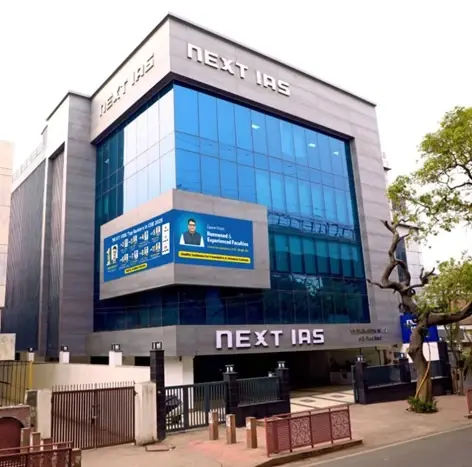
NEXT IAS Infrastructure
NEXT IAS Vivekananda House
(Head Office)
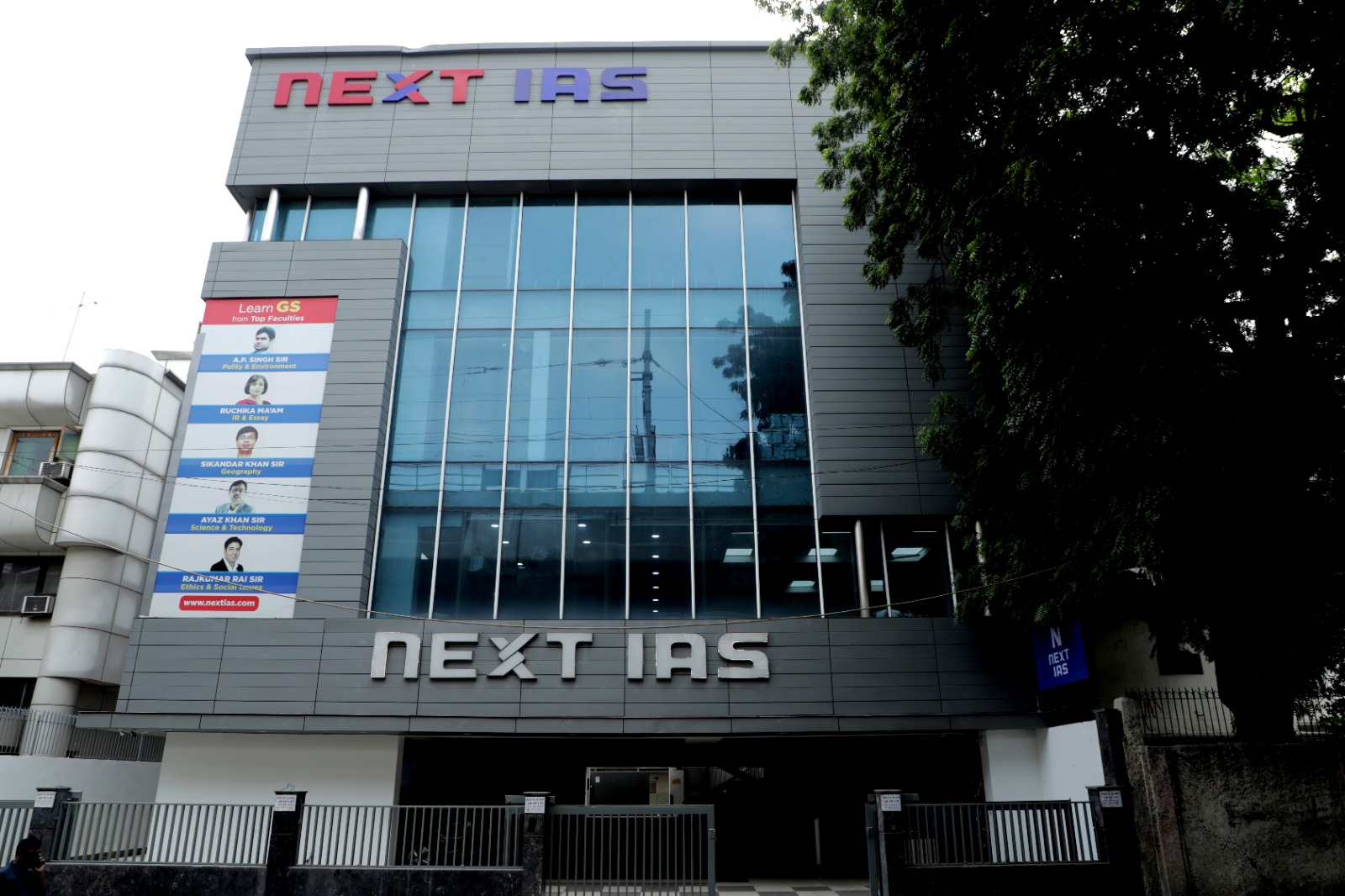
NEXT IAS Tagore House
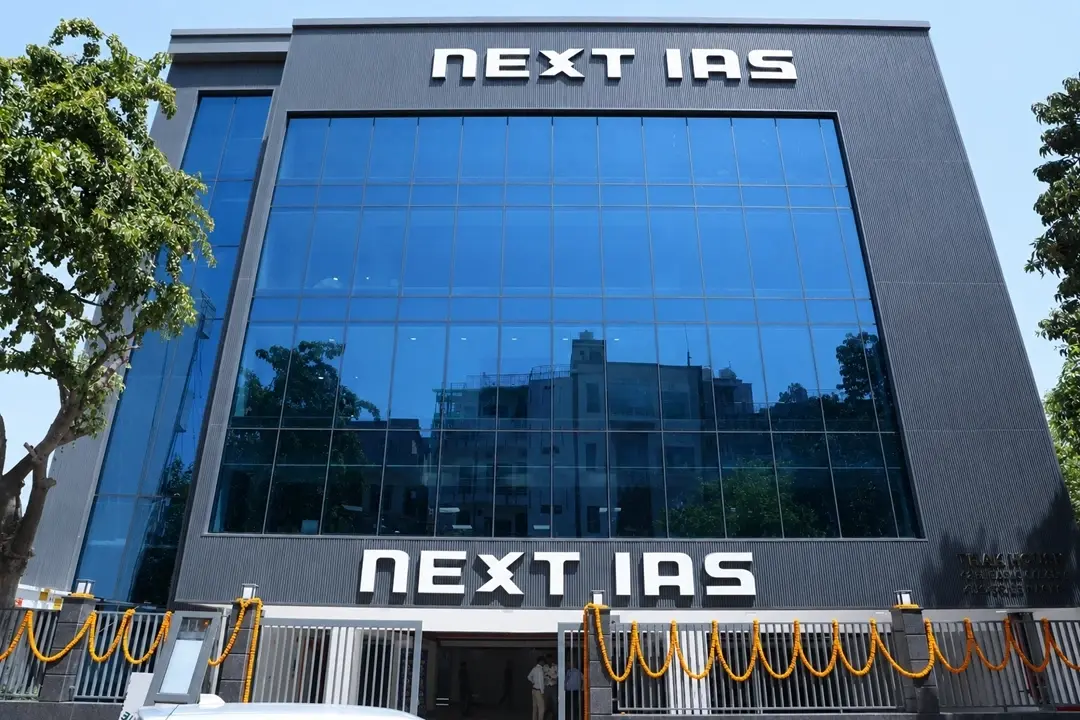
NEXT IAS Tilak House
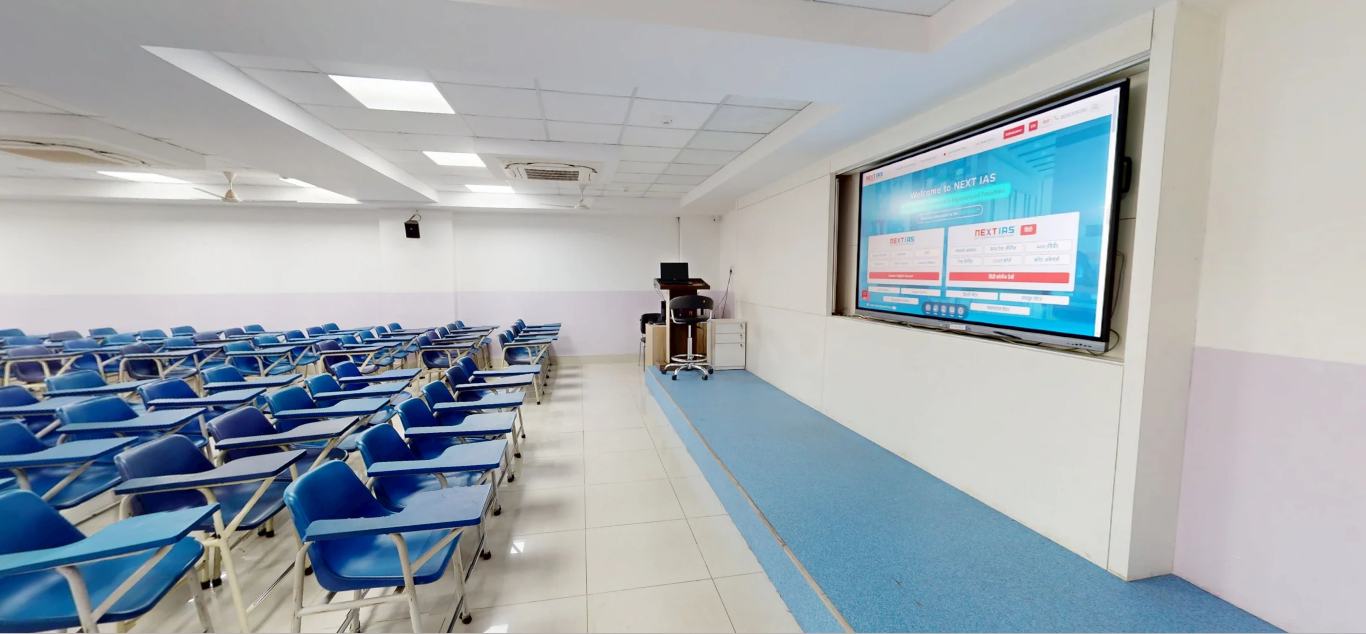
Class Room
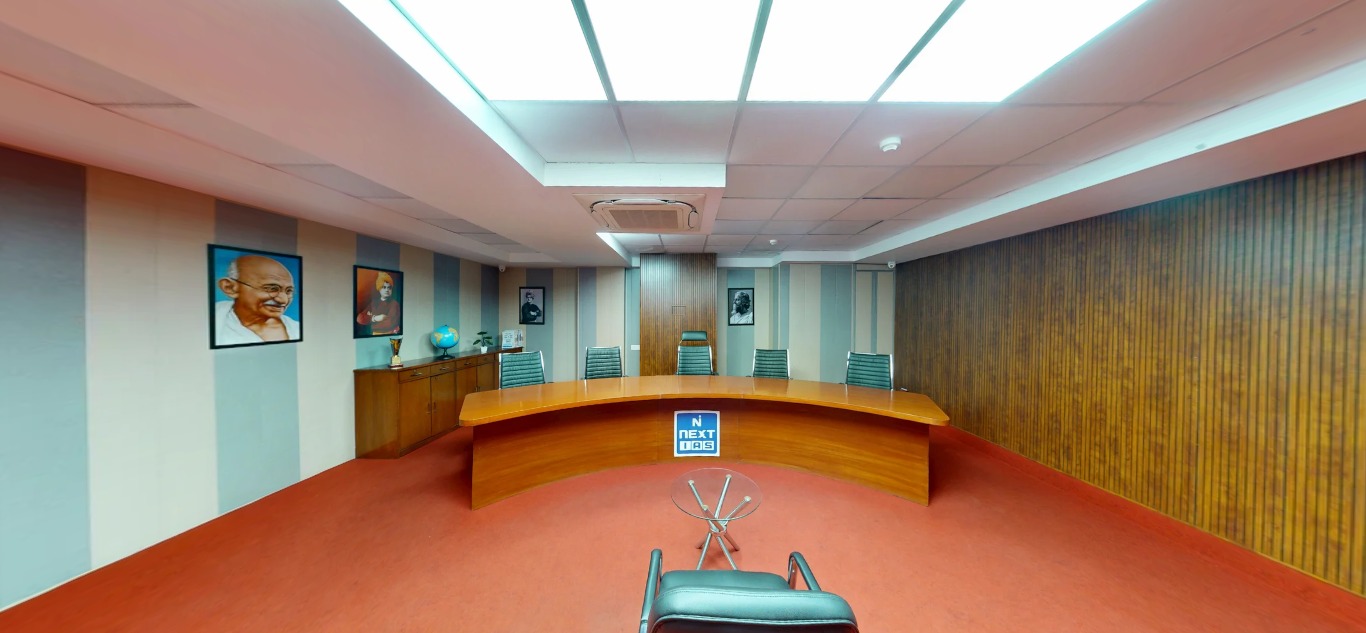
Interview Room
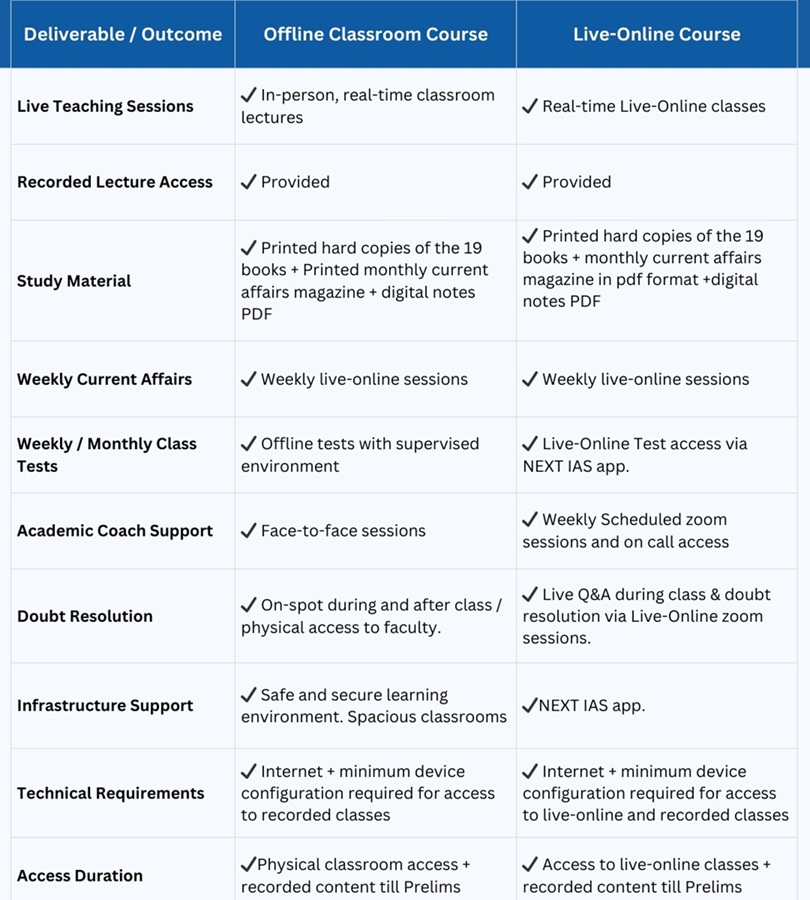
Modes of Learning

Offline
Offline Course is best for students who value in-person interaction, peer motivation, and a physical classroom environment with scheduled routines.

Live-Online
Live-Online Course is suited to aspirants who need flexibility, remote access, and digital convenience without geographical constraints.
Access and Usage Policy
- 1. Recording of each video lecture is available with a playback time of two times the lecture duration. (The recorded lecture will be available for access till Prelims). It can be viewed multiple times within this limit.
- 2. Two-Device Limit: You are permitted to use a maximum of two devices to access the course. However, you may only be logged in on one device at a time.
- 3. Access Restrictions: Any attempt to register or use more than two devices will lead to your access being restricted.
- 4. Students have the flexibility to change their mode of learning i.e. offline to Live/Online or vice-versa within 60 days of batch commencement. Terms and conditions apply.
- 5. The minimum Android version required is 8.1 and above.
- 6. The minimum iOS version required is 12.0 and above.
- 7. Live/Online courses are available on Windows 8.1 and above, Android phones, Apple iOS, Apple MacBook, and iPad.
Classroom Toppers Strategy Sessions
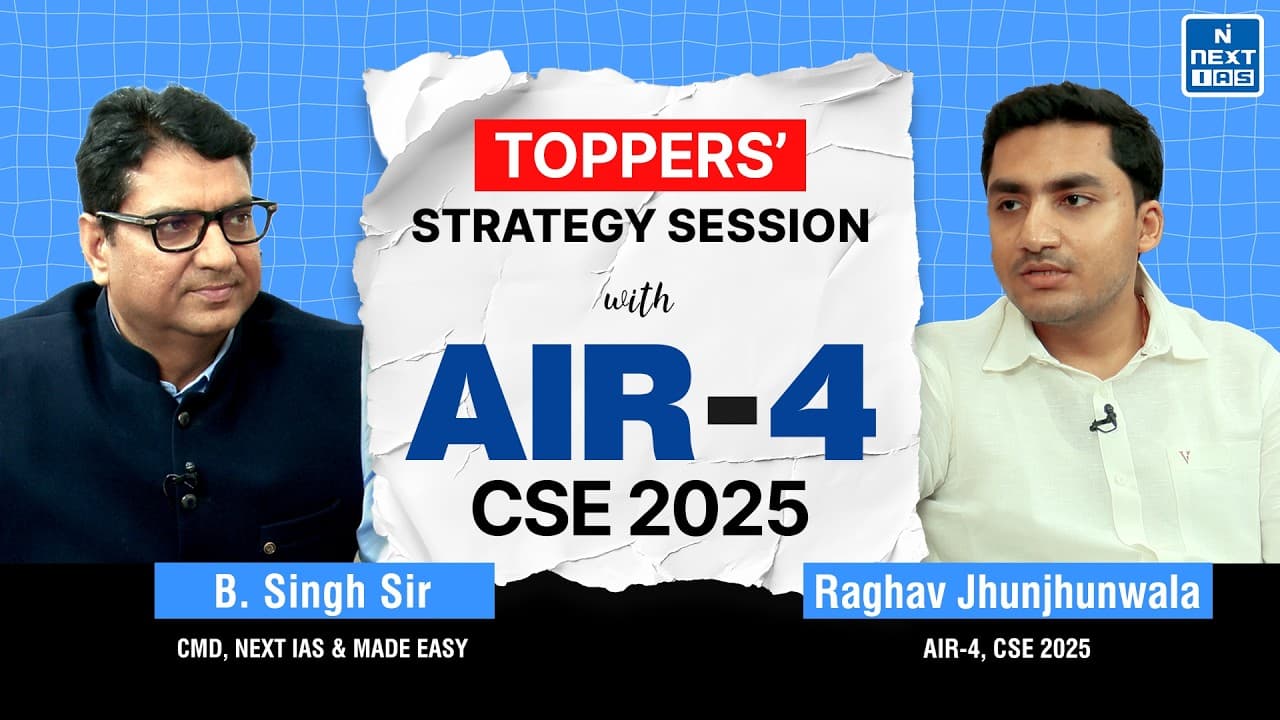
Raghav Jhunjhunwala (AIR 4) | Classroom Student | Economics Optional Foundation Course & GS Mains Advance Course
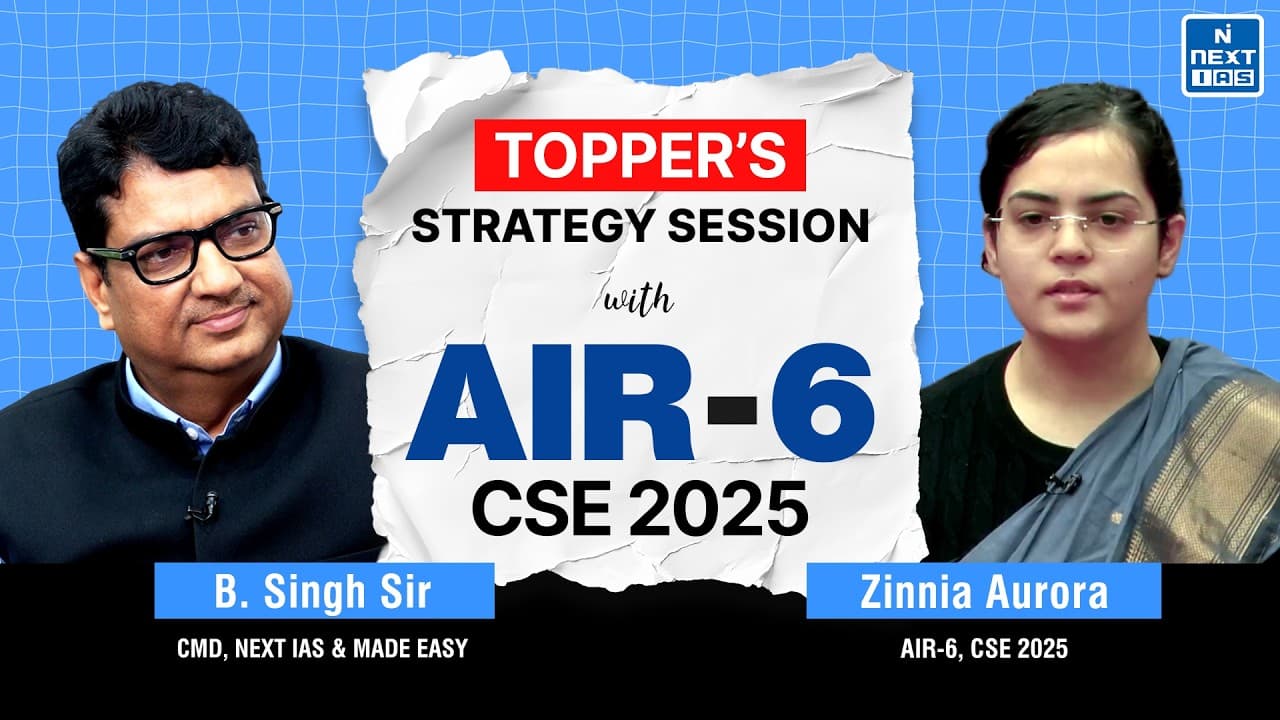
Zinnia Aurora (AIR 6) | Classroom Student | PSIR Optional Foundation Course & Current Affairs Program (CA-VA)
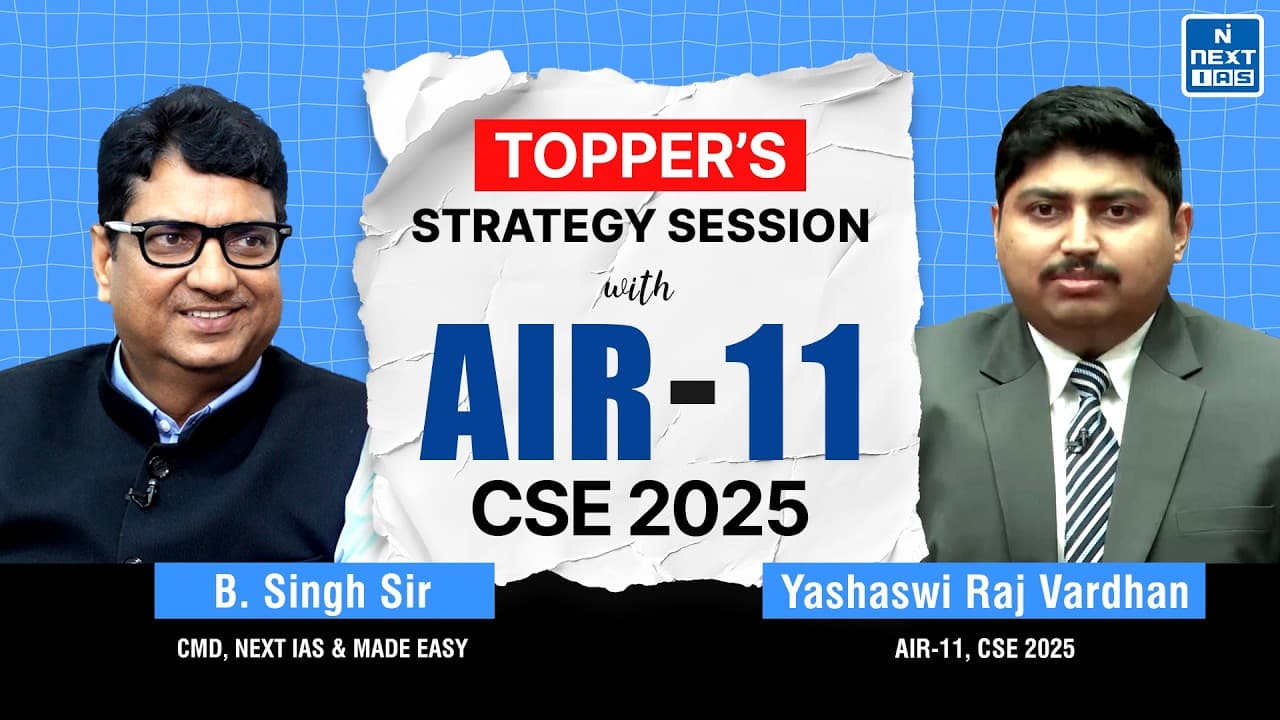
Yashaswi Raj Vardhan (AIR 11) | Classroom Student | GS Foundation Course & Current Affairs Program (CA-VA)
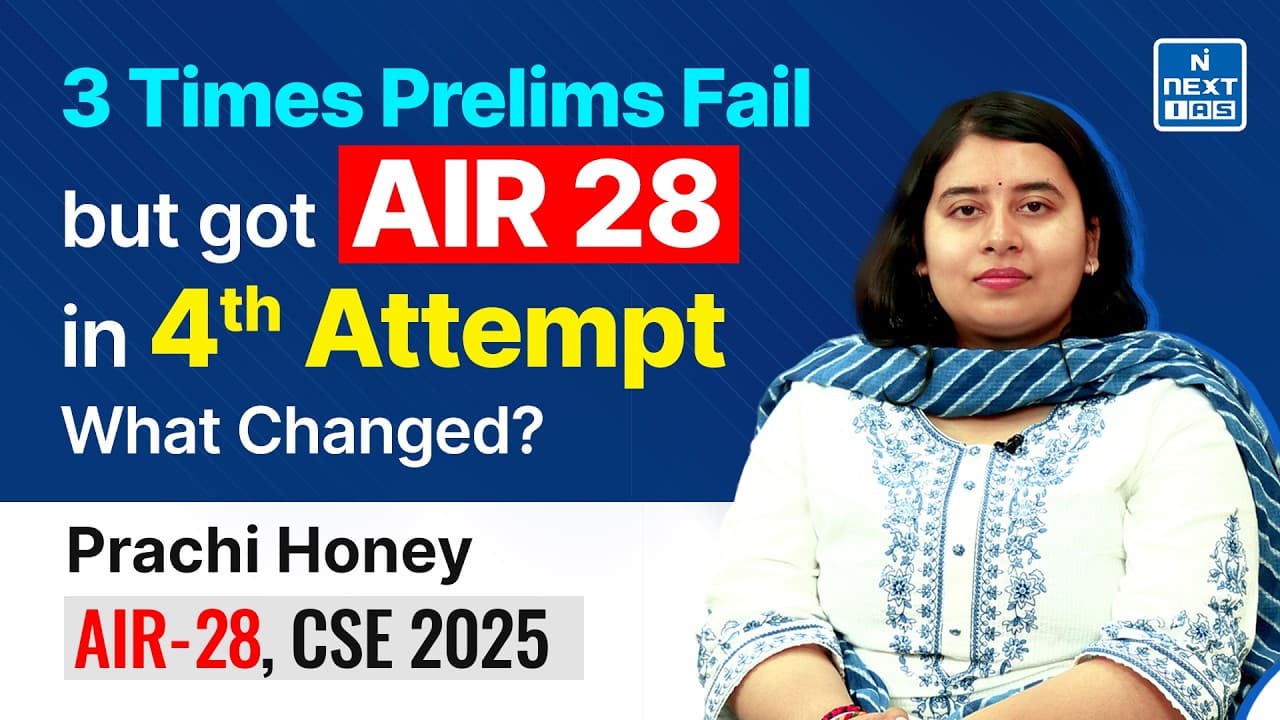
Prachi Honey (AIR 28) | Classroom Student | GS Foundation Course & Current Affairs Program (CA-VA)
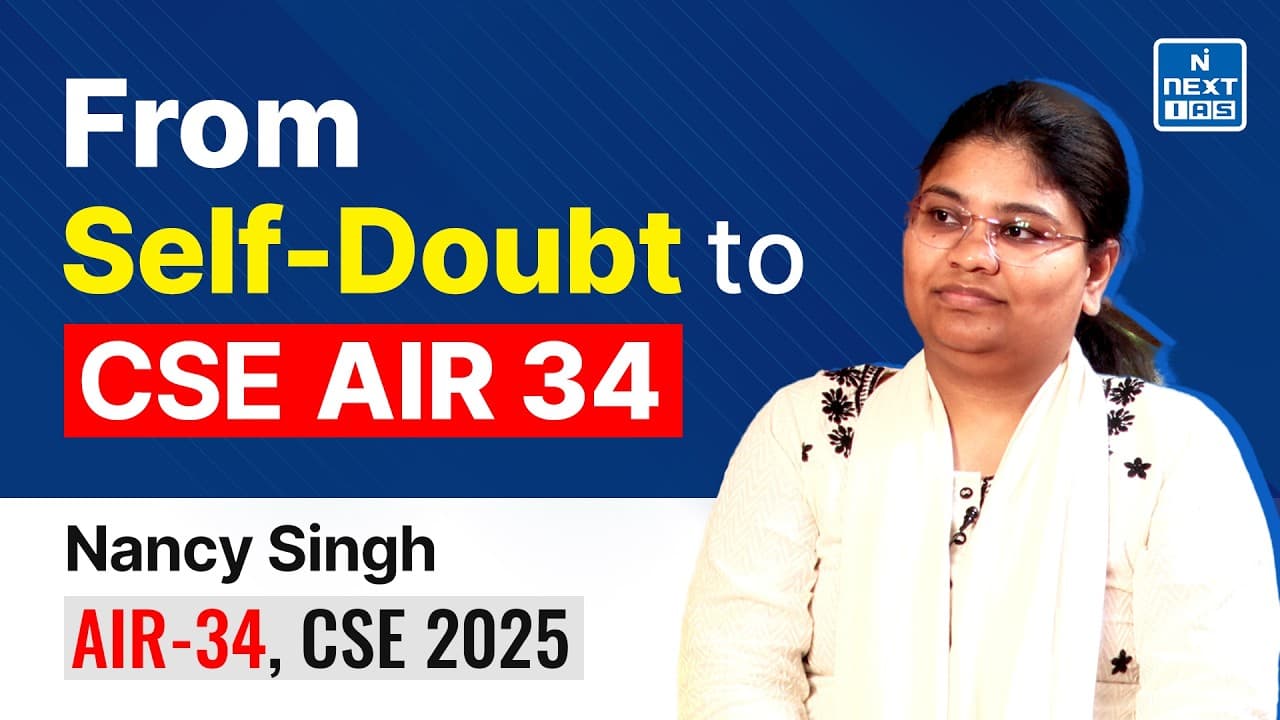
Nancy Singh (AIR 34) | Classroom Student | GS Foundation Course & Current Affairs Program (CA-VA)
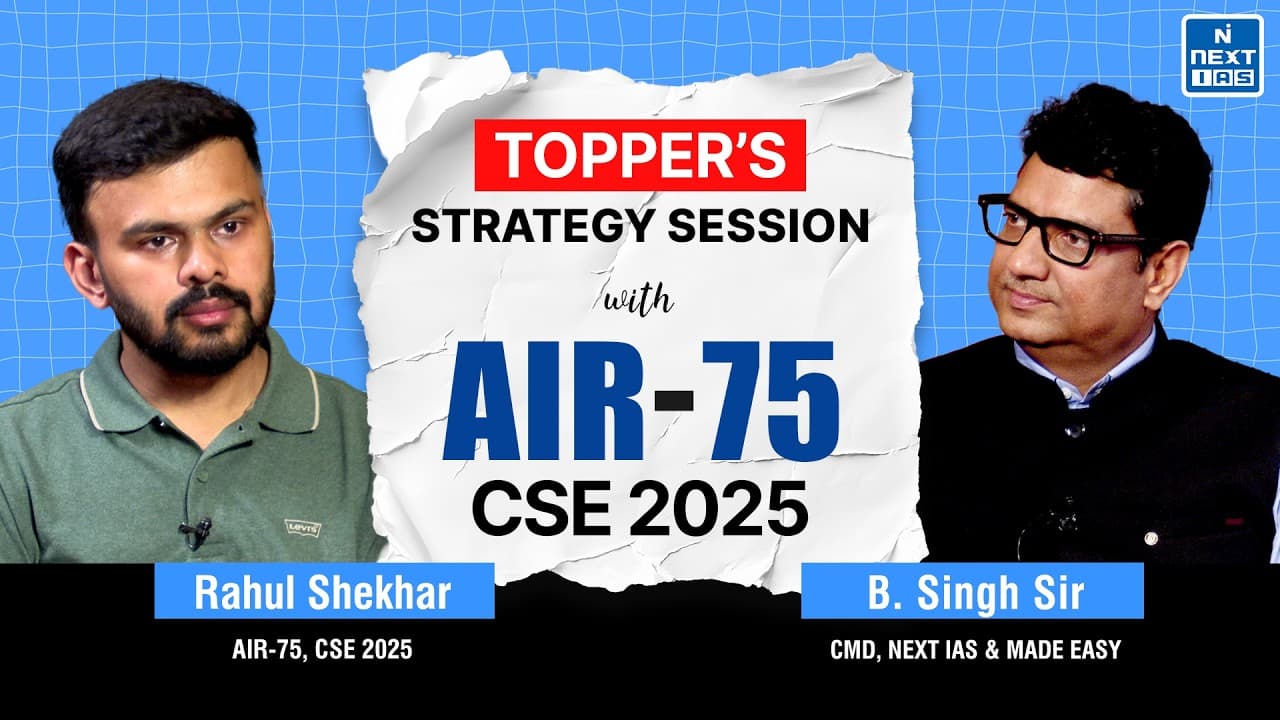
Rahul Shekhar (AIR 75) | Classroom Student | GS Foundation Course & Current Affairs Program (CA-VA)
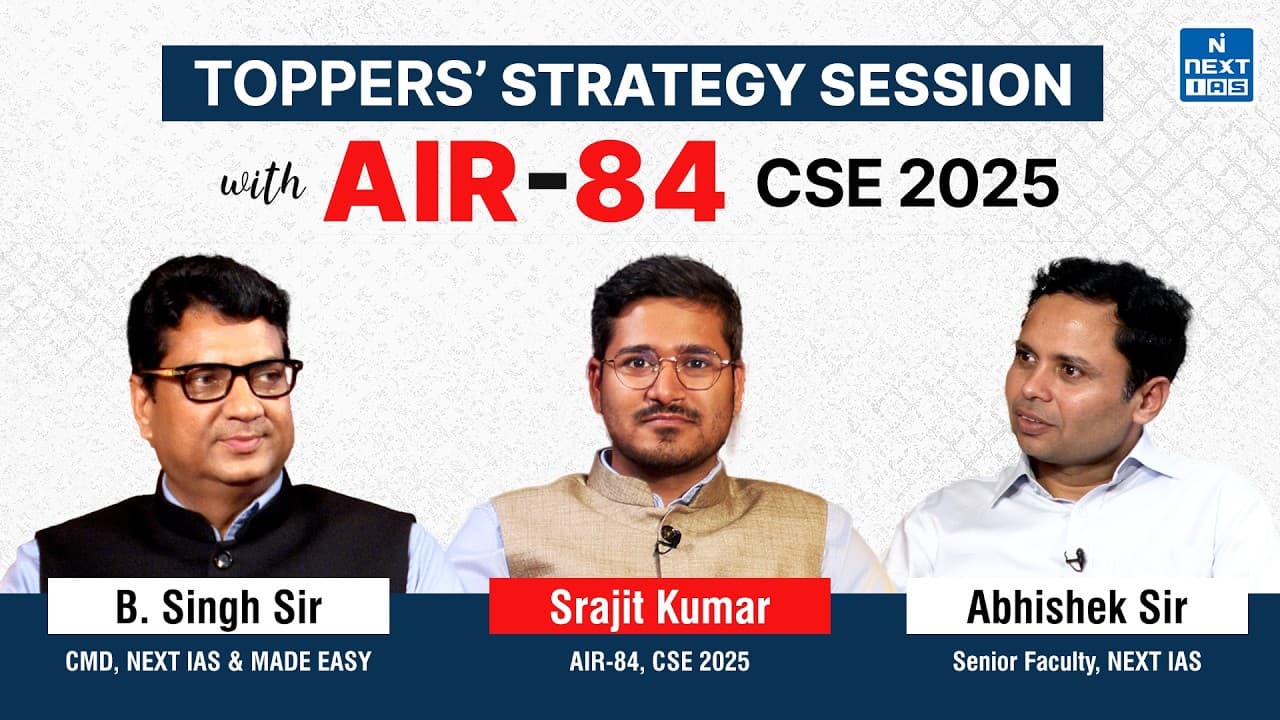
Srajit Kumar (AIR 84) | Classroom Student | GS Foundation Course & AIM Mentorship Program
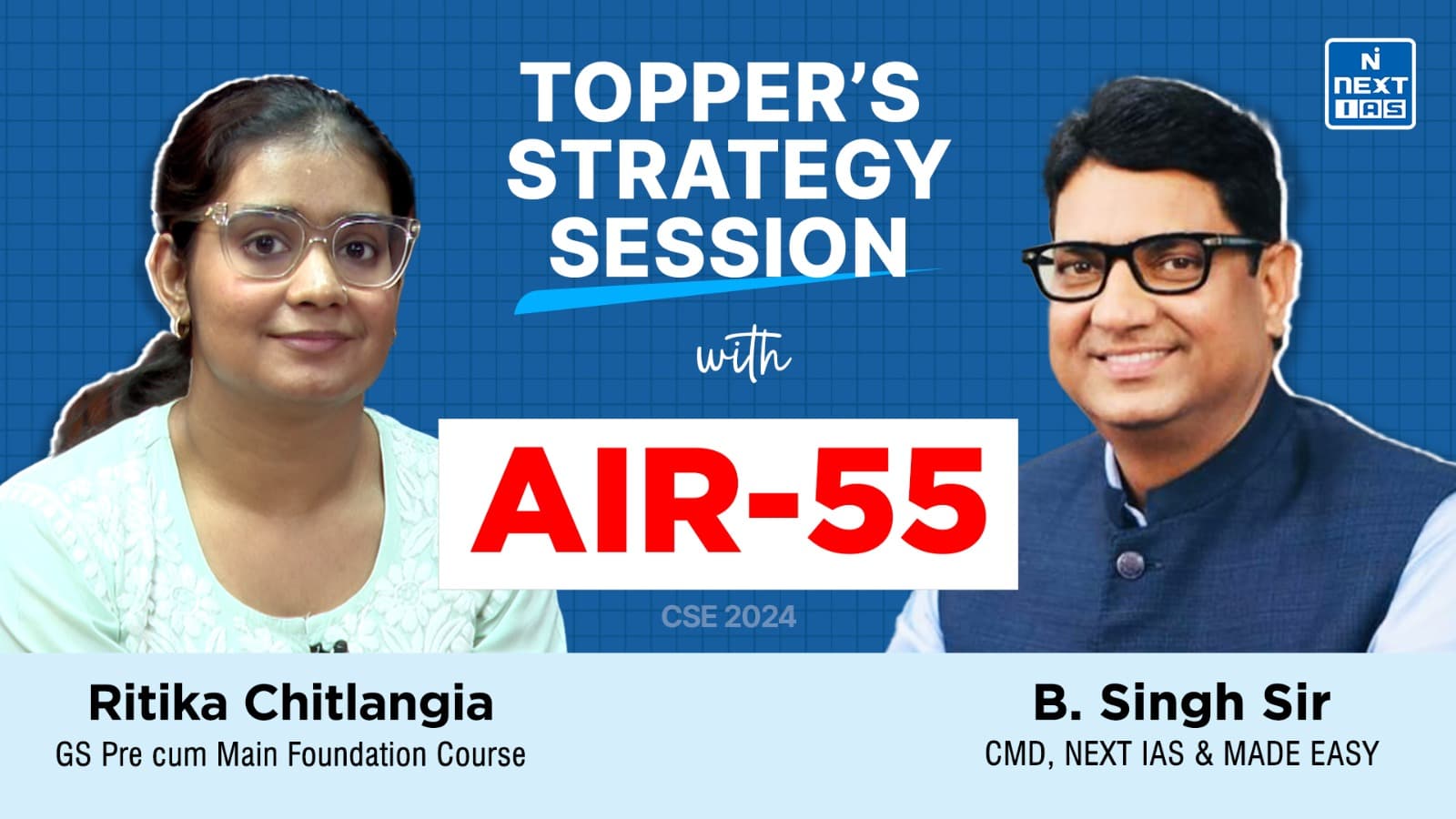
Ritika Chitlangia (AIR 55) | Classroom Student | GS Foundation Course & Geography Optional Foundation Course
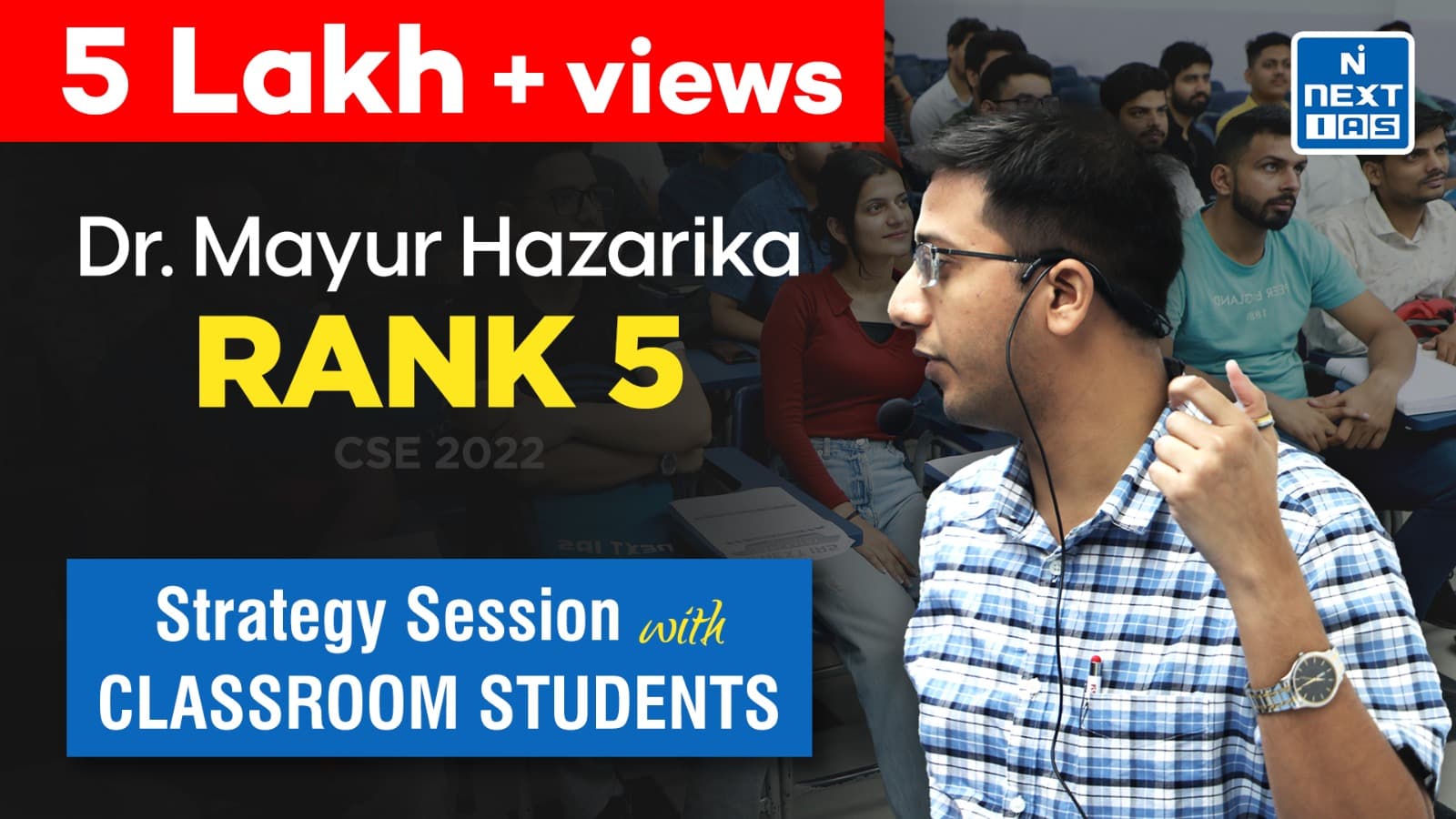
Mayur Hazarika (AIR 5) | Classroom Student | GS Foundation Course
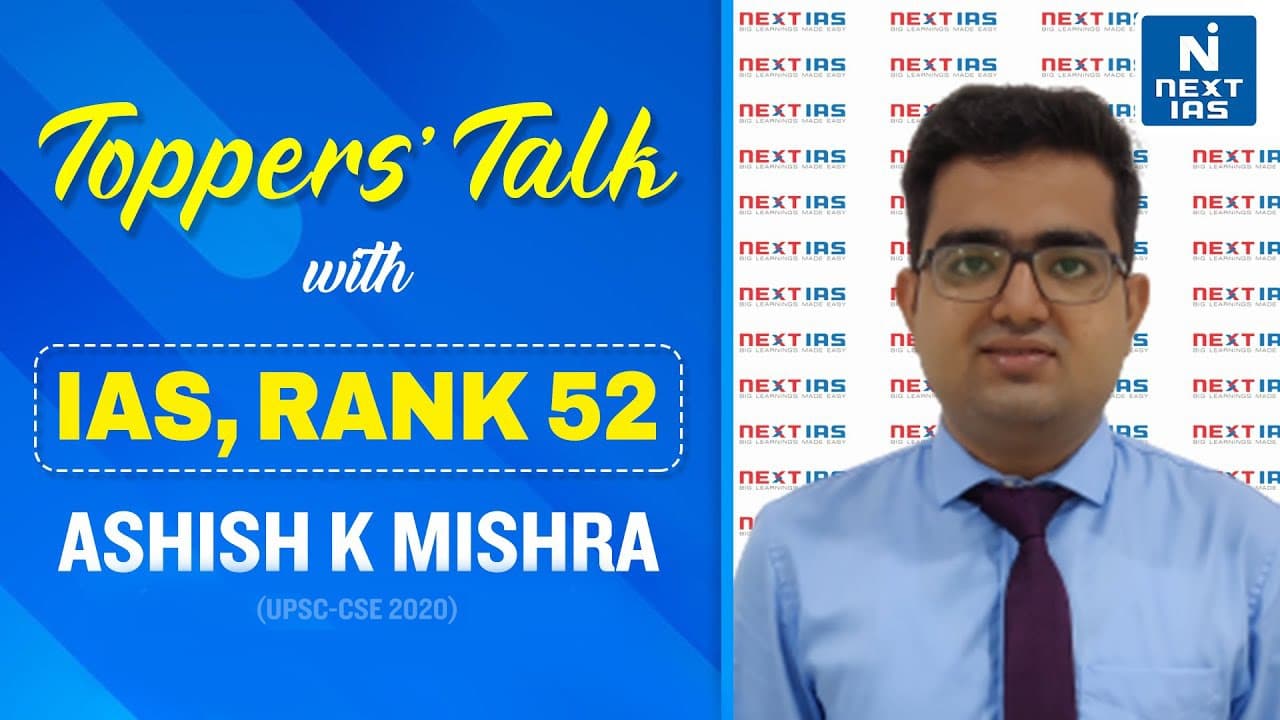
Ashish Kumar Mishra (AIR 52)
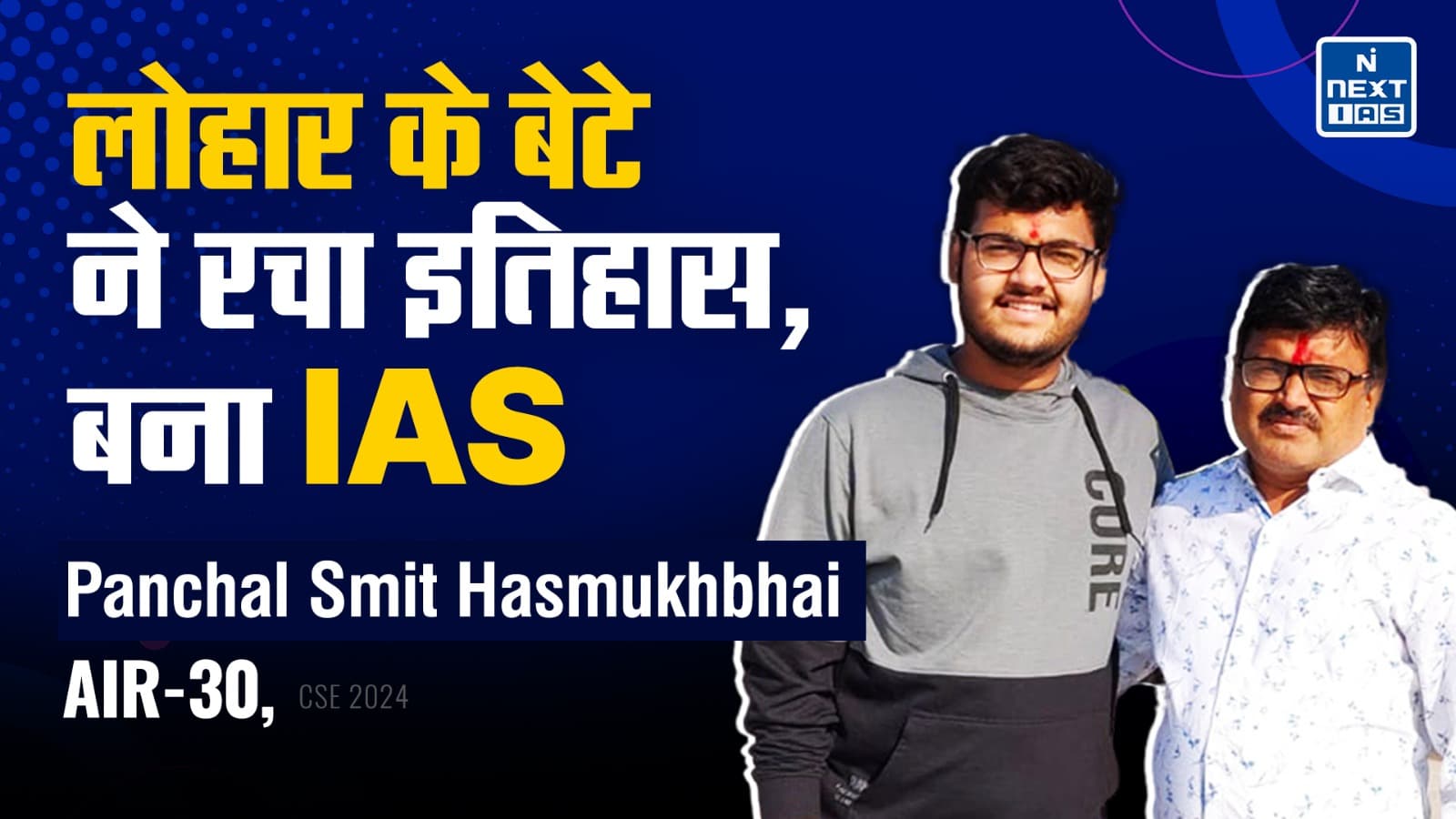
Panchal Smit Hasmukhbhai (AIR 30) | Classroom Student | GS Foundation Course
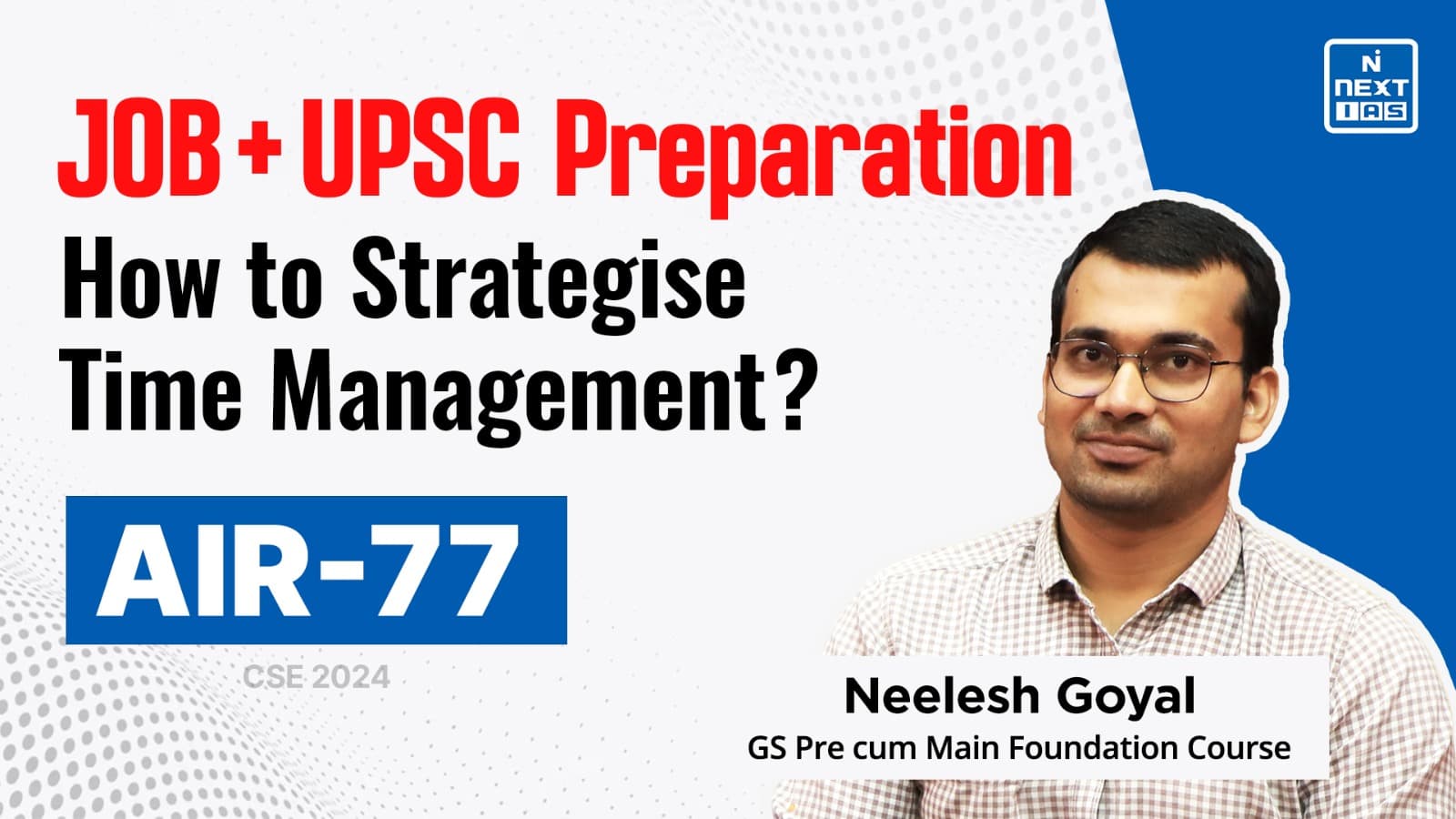
Neelesh Goyal (AIR 77) | Classroom Student | GS Foundation Course
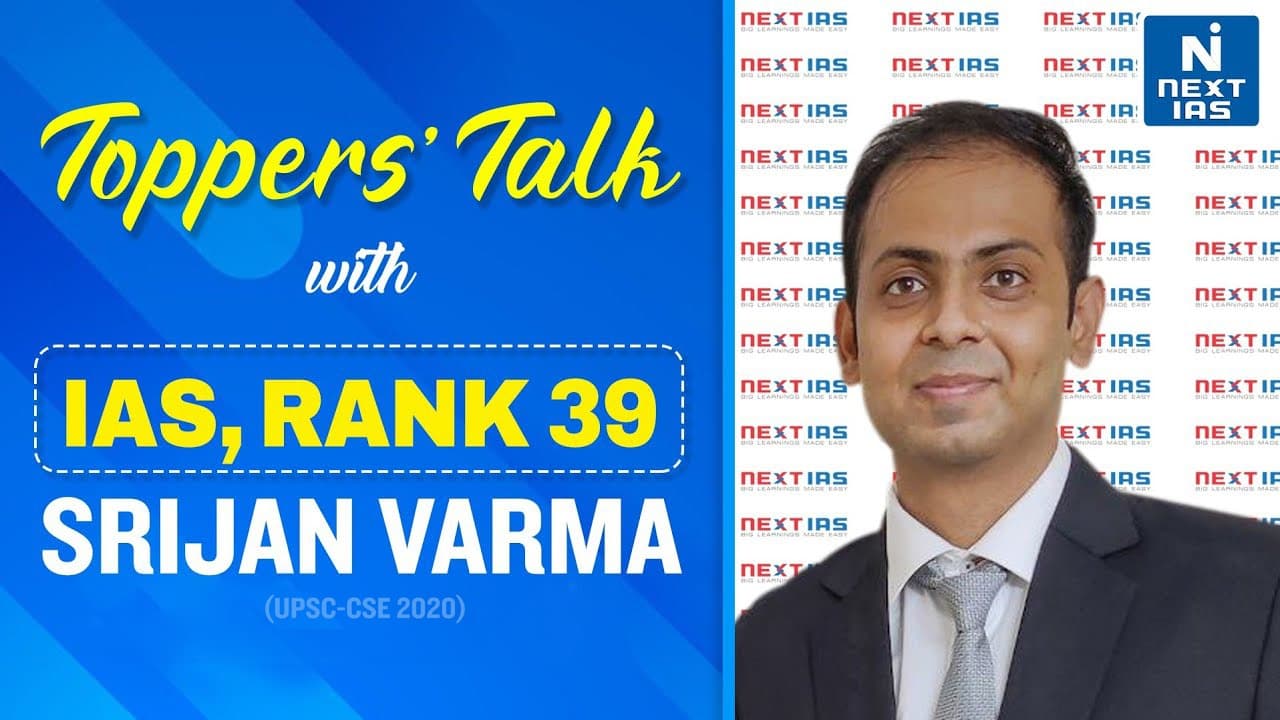
Srijan Varma (AIR 39)
 View Sample