
 80813-00200



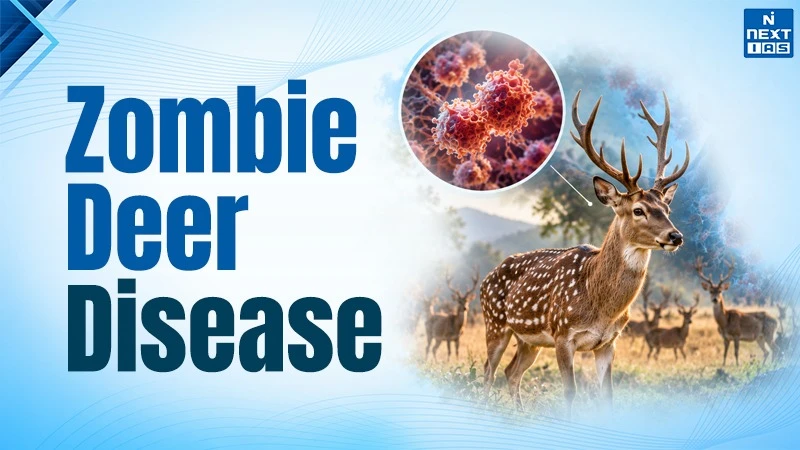
Zombie Deer Disease is a neurological disorder among deer, elk, moose, and reindeer that goes by the name of Chronic Wasting Disease (CWD). This condition was 1st detected among captive deer in Colorado in 1967. It is caused by infectious proteins, prions, which destroy the brain and the nervous system.
The symptoms include rapid weight loss, drooling, stumbling, lack of coordination, increased thirst and strange behavior, which makes one understand the scary name of the disease. It is transmitted through contact with infected individuals or contaminated soil, feed, or water and prions remain active in the environment for a very long period of time. By May 2026, it had been found in 37 states of the United States. Unfortunately, there is no vaccine or cure against the disease.
About the Zombie Deer Disease
- The Zombie Deer Disease is scientifically known as Chronic Wasting Disease (CWD).
- The ZDD primarily affects the central nervous system of the affected animals like elk, deer etc.
- Symptoms in affected animals show disorientation, excessive salivation and a loss of fear toward humans.
- As of now the disease has no known cure, vaccine or treatment.
- Researchers warn of a possible transmission to humans, especially through the consumption of infected meat.
Causes of Chronic Wasting Disease
- Chronic wasting disease is a type of "prion disease."
- Prions are a type of the proteins (misfold protein) which are naturally found in the body.
- The protein misfold takes place in a very rare case, causing serious symptoms in the affected animals.
- Once an animal is infected, the disease spreads to the brain and then spinal cord and eventually leads to death.
- Scientists believe that CWD proteins (prions) spread from animals to animals through body fluids like feces, saliva, blood or urine.
- This may occur either through direct contact or indirectly through contamination of soil, food or water.
Prions
- "Prions" are abnormal, transmissible pathogenic agents that are difficult to destroy.
- They have demonstrated the quality to remain activated in soils for many years.
- This led to infecting animals that come in contact with contaminated areas where they have been shed via urination, defecation, saliva and decomposition when an animal dies.
- This makes the disease extremely difficult to treat, control, or eradicate.
How Does It Spread: Chronic Wasting Disease
- Zombie Deer Disease is a highly contagious disease, transmission through body fluids like saliva, blood or urine, coming in contact either directly or indirectly.
- Once present at a place, the prions may remain infectious for years in soil, water and even in plants, making it long term risks to animals.
- Study shows that even cooking of infected meat does not destroy prions, and particularly those whole foods are at higher risks.
Symptoms
- Its incubation period extended about 18-24 months, from infection to noticeable signs. During this period animals act normally.
- The most obvious sign is progressive weight loss.
- Behavioral changes include loss of awareness, loss of fear of humans and decreased social interaction.
- Diseased animals may exhibit increased urination and excessive salivation.
- Gradually animals become debilitated and ultimately die.
- Progress of CWD depends on the species and the animal's genetics.
Global Spread and Current Status
- The case of CWD was first identified in 1967 in Colorado, America.
- Till now more than 30 states of the USA have been affected. Apart from it spread to several Canadian provinces, and parts of Norway, Sweden, Finland and South Korea.
- The concerns of its spreading grew in 2024 after cases of Creutzfeldt-Jakob Disease (CJD), which raised fears of a potential link to CWD.
- However, the CDC (Centers for Disease Control and Prevention) has clarified that no confirmed cases of CWD have been reported in humans so far.
Economic and Environmental Implications of CWD
- The implications of CWD are not limited to the immediate health concerns, but as the spread of CWD also poses significant and economic risks.
- Deer hunting is a popular recreational activity for many communities and it forms a vital source of livelihood for them.
- The proliferation of CWD may lead to disrupt the ecological balance, potentially decimating deer populations.
- Due to reduced herbivores, lead to imbalance in the forest ecosystem.
- It can threaten tourism, meat exports and local livelihoods.
- The disease has several environmental concerns as it spreads through urination, defecation, saliva etc of the affected animals.
Way Forward
- To expand diagnostic capacity for prion diseases.
- To follow strict screening of imported animals, antlers, and wildlife products
- To give Training to the forest officials to recognize neurological symptoms in wild animals.
- Launching Public campaigns for areas close to national parks and habitats to spread awareness.
FAQ about Zombie Deer Disease
What is Zombie deer disease?
Zombie Deer Disease is also known as Chronic Wasting Disease (CWD), affects deer, elk, moose, reindeer and other animals, causing severe neurological symptoms.
What are prions?
Prions are the proteins that are found normally in the body. They are abnormal, transmissible pathogenic agents that are difficult to destroy.
