
 80813-00200


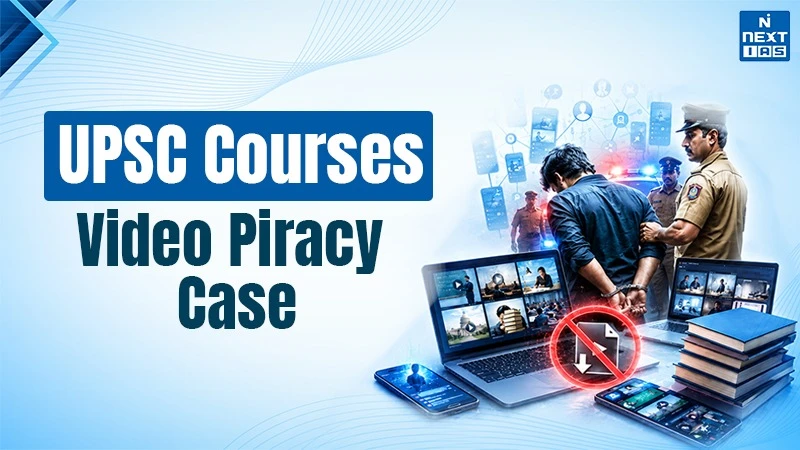
Recently, Delhi police arrested 3 men who were involved in stealing and selling UPSC coaching videos on Telegram. This case exposed a wider piracy network using bots, fake identities, and foreign virtual numbers.
Video Piracy is the copying, sharing, or sharing of unauthorised copyrighted video content. This includes content like movies, TV shows, UPSC Coaching video lectures without the permission of the owner. The major sources of video piracy are illicit streaming websites or subscription services and account sharing such as Telegram and other social media platforms.
The Delhi Police have arrested a piracy racket involving the illegal acquisition and sale of copyrighted UPSC video material through Telegram. This action followed a complaint made by Sunil Kumar, the head of a UPSC coaching platform regarding over 2,400 videos being leaked from the app. In order to avoid the police investigation, the racket had employed fake identities, anonymous digital wallets, fake Telegram handles, and virtual numbers of foreign countries like Ethiopia and Bangladesh. Through their technical investigation, the police were able to arrest Yuvraj Singh, aged 21, who confessed to selling the copyrighted material using Telegram channels. The investigation then led to the arrest of Niranjan Kumar Mandal, aged 23, who is accused of having developed the bot used to extract the videos and Shubham Kumar Pandey, aged 28, who provided logistical and Internet support. Investigations have traced transactions totalling ₹35 lakh in several bank accounts.
Why does Video Piracy Matter?
The major impact of video piracy is at the global and local levels in economic terms and security concerns. It also impacts the job opportunities of these sectors at a wider level and direct impact on future projects.
Regulatory Frameworks for Video Piracy
There are several regulatory frameworks in India for combating video piracy as follows:
1. Core Laws: It includes the Copyright Act, 1957, protecting digital creators, and the Cinematograph (Amendment) Act, 2023, which prohibits theater camera recording.
2. Digital Platform Regulation: The IT Act 2000 and Social Media Intermediary Rules 2021 regulate digital platforms.
3. Enforcement of laws: DPIIT administers IPR policies, CBFC regulates exhibition, and MeitY blocks illegal piracy websites.
4. Global Practices: Our acts and regulations are aligned with global practices such as WTO-TRIPS and WIPO Treaties (WCT/WPPT) to secure cross-border digital intellectual property.
Challenges of Laws and Regulations Related to Video Piracy
Problems of Jurisdiction and Anonymity: Pirate sites usually employ bulletproof hosting services, proxies, and decentralised domains from offshore jurisdictions, making the pirates immune from national jurisdictions.
The Whack-A-Mole Problem: Whenever the authorities shut down a pirate website, Mirror and Clone sites will immediately appear using modified URLs, thus defeating the purpose of the court-ordered domain blacklisting.
Differential Use of Technology: Pirates quickly utilise cutting-edge technology such as P2P torrent file transfers, Telegram private encrypted chats, and CDNs. The law enforcement agencies usually do not have the necessary technology needed to trace such decentralised networks in a fast and efficient manner.
Delayed Enforcement: Backlogs in high courts slow down IPR cases, while local policing agencies may not have the capability to undertake immediate action against cyber piracy acts.
Way Forward
In order to tackle the menace of video piracy in India, it needs to shift focus from reactive laws to a proactive technology-based approach, which includes:
Use of Advanced Technology: Employ AI-based automated scanners to detect and remove the illegal stream in real time. Also, use forensic watermarking to identify the source of the leak.
Flexibility of Legal & Judicial Process: Use dynamic injunctions to automatically extend the previous block orders to new sites, which may be mirror/clone sites of the same site, without any further litigation. Formulate cyber IPR police cells at the state level.
Utilising International Networks: Exploit international networks as well as MLATs for seizing offshore servers operating in safe havens.
Shifting Focus towards Consumers: Run campaigns for educating the consumers about how piracy is responsible for identity theft and malware attacks. On the other hand, the entertainment industry can deal with the issue of subscription fatigue with aggregated cheap content.
