
 80813-00200


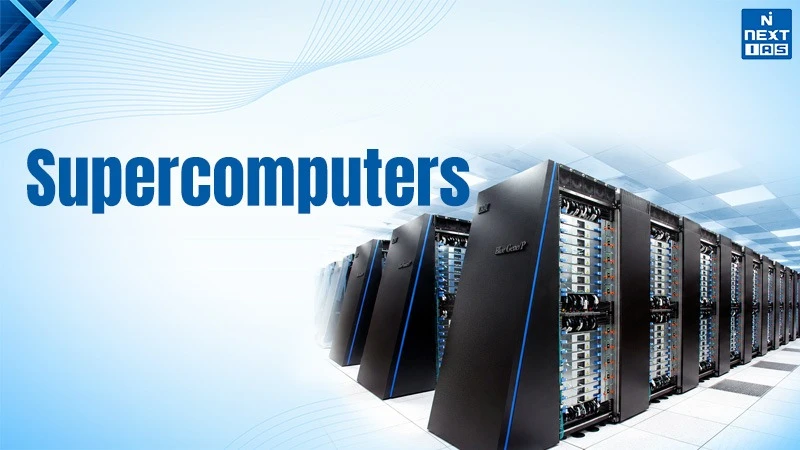
AI Research Analytics and Knowledge Assimilation Platform(AIRAWAT) is the fastest supercomputer in India. With a rank of 188 globally, speed of 13,170 teraflops and among TOP500, pioneering AI research in climate, drugs, and genomics under National Supercomputing Mission.
About AIRAWAT: India's Fastest Supercomputer
- India's AI supercomputer ‘AIRAWAT’ is known as the fastest supercomputer in India currently.
- It has been ranked at No. 75 in the world at the International Supercomputing Conference, Germany in 2023.
- The AI supercomputer ‘AIRAWAT’ is installed at Center for Development of Advanced Computing (C-DAC), Pune.
- Airawat PSAI, stands as India’s largest and fastest AI supercomputing system, with a remarkable speed of 13,170 teraflops.
- The company named Netweb Technologies is the manufacturer of AIRAWAT. The name of its operating system is Ubuntu 20.04.2 LTS.
- The supercomputer runs on AMD EPYC 7742 64C 2.25GHz processor with 81,344 cores.
Center for Development of Advanced Computing (C-DAC)
C-DAC is the premier R&D institution under the Ministry of Electronics and Information Technology (MeitY), Government of India, driving innovation in HPC, Information Technology and Electronics. C-DAC was established in 1988 with the mission to build indigenous supercomputing capabilities. This led to the creation of PARAM 8000, India’s first supercomputer. Overall, C-DAC has expanded into crucial domains such as health informatics, cybersecurity, quantum computing, and AI, creating a vibrant innovation ecosystem aligned with national priorities. It plays a vital role in capacity building through its nationwide education and training programs, addressing the evolving needs of India’s technology workforce.
Basics or Fundamentals of Supercomputer
- Supercomputers are high-performance computing systems designed for large-scale parallel processing, with exceptional superiority over regular computers. The key fundamentals include:
- Architecture: Thousands of compute nodes with multi-core CPUs/GPUs each, interconnected through high-speed networks like InfiniBand or torus topologies to communicate at low latency.
- Components: The processors ranging from general-purpose CPUs to parallel workload GPUs. They use very high RAM-terabytes per node, high-capacity storage, petabytes, via Lustre or parallel file systems, and advanced cooling, such as liquid or air.
- Performance metrics: Measured in FLOPS: example, petaflops or exaflops. Rmax - achieved vs. Rpeak - theoretical. Rmax is the maximal achieved performance measured using a real-world benchmark, while Rpeak is the theoretical peak performance based purely on hardware specifications.
- Supercomputer applications include weather forecasting, simulation, AI training, and drug discovery among others
| Global Rank | Site | Name | Rmax (PFlop/s) | Rpeak (PFlop/s) |
|---|---|---|---|---|
| 188 | C-DAC Pune | AIRAWAT – PSAI | 8.50 | 13.17 |
| 196 | Indian Institute of Tropical Meteorology | Arka | 5.94 | 7.40 |
| 251 | National Centre for Medium Range Weather Forecasting | Arunika | 5.94 | 7.40 |
| 338 | Indian Institute of Tropical Meteorology | Pratyush (Cray XC40) | 3.76 | 4.01 |
| 469 | Indian Institute of Tropical Meteorology | Arka AI/ML | 2.70 | 3.75 |
National Supercomputing Mission (NSM)
This is a flagship initiative by the Government of India to empower the country with high-performance computing (HPC) capabilities. Launched in 2015, the mission aims to enhance India’s technological prowess in supercomputing, foster research and development (R&D), and support scientific advancements across academia, industry, and government sectors. The Mission envisages empowering our national academic and R&D institutions spread over the country by installing supercomputers of various capacities. Access to these supercomputers is provided through the National Knowledge Network (NKN). The NKN is another program of the government which connects academic institutions and R&D labs over a high-speed network.
Supercomputer Applications and Future Impact
Imagine supercomputers racing to solve tomorrow's biggest challenges at unbelievable speed. For example, supercomputers will forecast disasters like typhoons with a high precision in climate simulations, thus saving thousands of lives by 2030. For pharmaceutical research, supercomputers will model molecules in days, not years. This is essential in aiding the fight against pandemics.
- Personalized medicine advances rapidly by analyzing massive amounts of DNA information, and decisions are already being made by self-driving cars and drones in fractions of a second.
- The optimizations for the fusion energy and smart power grids are going green.
- In 2025, it's going to be exciting because AI-quantum hybrids are poised to bring revolutionary advances in new materials and invincible codes that are currently unsolvable by today's computers.
Artificial Intelligence (AI) is the most promising technology in the digital age. India has a strong ecosystem and competitive advantage for AI due to its massive data availability, strong digital economy and skilled workforce. India has been working in the Applied AI with a special attention on Natural Language Processing, Image Procession, Pattern Recognition, Agriculture, Medical Imaging, Education, Health Care, Audio assistance, Robotics and developing solutions for the strategic sectors. India uses AI to empower citizens in order to resolve the most pressing issues of society and economy.
India's Supercomputers in Global Top 500 List
- The Top 500 lists the 500 fastest computer systems being used at the present time.
- Long back, in 1993 the collection was started and has been updated every 6 months since then.
- The report lists the sites that have the 500 most powerful computer systems installed across the world.
- The best Linpack benchmark performance achieved is used as a performance measure in ranking the computers.
- The Linpack Benchmark is defined as a measure of floating-point rate of execution of a computer. It is determined by running a computer program that solves a dense system of linear equations.
- Over the time period, the characteristics of the benchmark have changed a little bit.
There are three other supercomputers in the Top 500 list. These include:
PARAM Siddhi AI Supercomputer
- PARAM Siddhi-AI system, at C-DAC is aimed to serve as AI specific Cloud Computing Infrastructure for India subsuming academics, R&D institutes and start-ups.
- The system is a centralized facility to ensure increased accessibility and utilization.
- It has the ability to support large scale and more diverse Research & Development projects in the AI and HPC domains and is dedicated to address India Specific Real-Life Problems.
- PARAM Siddhi-AI system has been used in the field of Big Data Analytics to AI / HPC(High Performance Computing) solutions.
- It has other applications across multiple domains such as Healthcare (precision diagnostics, non-invasive diagnostics etc.), Agriculture (precision agriculture, crop infestations, advanced agronomic advisory etc.), weather forecasting, security and surveillance, financial inclusion and fraud detection etc.
- This supercomputer is also installed at Center for Development of Advanced Computing (C-DAC), Pune.
Pratyush Supercomputer
- The supercomputer is dedicated for weather and climate research.
- Pratyush supercomputer has a speed of 4.0 petaflops and can deliver a peak power of 6.8 petaflops.
- One petaflop is a million billion floating point operations per second.
- It is installed at the Indian Institute of Tropical Meteorology, Pune
Mihir Supercomputer
- The Mihir supercomputer has a speed of 2.8 petaflops.
- It is installed at the National Centre for Medium Range Weather Forecasting, Noida.
Top 5 Supercomputers in the World
The latest TOP500 (Nov 2025) ranks El Capitan, Frontier, Aurora, Fugaku and LUMI as the world’s five fastest supercomputers. These exascale and near‑exascale systems power cutting‑edge research in climate modeling, nuclear simulations, AI, big data analytics and advanced materials science across the USA, Japan and Europe.
| Rank | Name | Rmax (PFlop/s) | Country |
|---|---|---|---|
| 1 | El Capitan | 1,809.00 | USA |
| 2 | Frontier | 1,353.00 | USA |
| 3 | Aurora | 1,012.00 | USA |
| 4 | Fugaku | 442.01 | Japan |
| 5 | LUMI | 379.70 | Finland |
Way Forward
This is an important step toward self-reliance in high-performance computing for advanced research, national security, and digital growth. Hence, future directions may lie in investing in indigenous chip design, green data centers, skilled manpower, and better academia–industry cooperation to stay globally competitive in supercomputing innovation.
Conclusion
India's fastest supercomputer represents the country's rising strength in the areas of high-performance computing and AI-driven research. It speeds up scientific discovery, underpins strategic sectors, and assists in digital self-reliance. Continued investment in homegrown technology, qualified talent, and green infrastructure will be critical to maintaining momentum and placing India securely on the supercomputing global map.
FAQs about Super Computers
What is India's fastest supercomputer as of 2025?
AIRAWAT at C-DAC Pune holds the top spot with 13,170 teraflops (Rpeak), ranking 188th globally in TOP500 (Nov 2025).
Where is AIRAWAT located ?
AIRAWAT is installed at C-DAC Pune under National Supercomputing Mission.
What are AIRAWAT's key applications?
Climate modeling, drug discovery, genomics, weather forecasting, and national security simulations for 10,000+ researchers.
