
 80813-00200



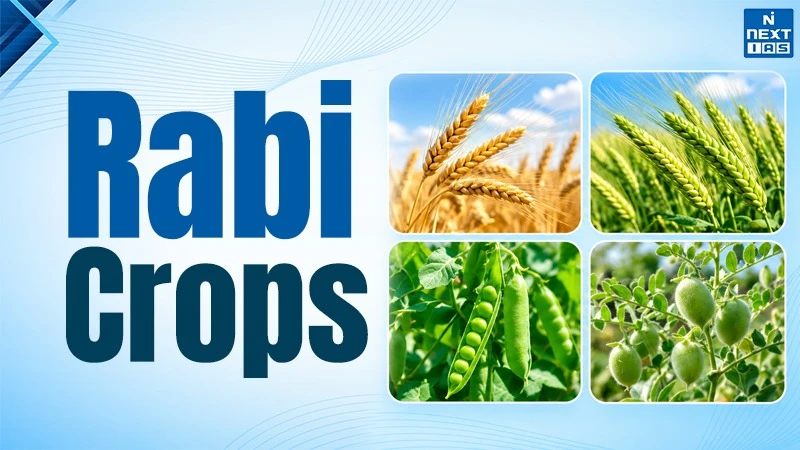
Rabi crops are the crops that are cultivated in the winter season from October to December and harvested from March to May in India. The term "Rabi" has been derived from Arabic language which means "spring". These crops thrive mostly in the cold season and mature during hot season. Some of the prominent rabi crops include wheat, barley, mustard, gram (chickpea), pulses and legumes.
Some of the significant states which produce these crops are Punjab, Haryana, Uttar Pradesh, Madhya Pradesh and Rajasthan. As against the Kharif crops which depend upon the monsoon rain, Rabi crops are mostly dependent upon winter rain and irrigation from canals, wells and tube wells. In addition to this, wheat is considered as the most dominant Rabi food crop of India whereas mustard and other oilseeds help in the production of edible oil.
About the Rabi Crops
- Rabi crops are sown around the Retreating Monsoon and the onset of the Northeast monsoon season, which begins by October-November.
- The harvest of these crops happens from March to May, typically during the summer season.
- Major rabi crops in India include gram, wheat, barley, linseed, mustard, lentils, and peas etc.
- A mild warm climate is essential for seed germination and cold climate for the growth of these crops.
Major Rabi Crops
Wheat
- Wheat is a staple cereal of northern India, serving as the dietary foundations for millions of people.
- A suitable climate for wheat is cool winters and bright sunshine at maturation.
- Ideal climatic conditions require cool, moist weather for sowing followed by warm and dry conditions for ripening.
- It is a moderately water intensive crop.
- Prominently grown in Punjab, Haryana, Uttar Pradesh and Madhya Pradesh etc.
Gram
- Gram is a major rabi pulse.
- It is rich in protein source, grown widely in central and western India.
- is tolerant to dry conditions which means gram requires low water compared to cereals meaning it is tolerant to dry conditions.
- Major producing states are Madhya Pradesh, Rajasthan, Uttar Pradesh, Maharashtra.
Mustard and Rapeseed
- The principal rabi oilseed in northern and central India.
- They Perform well in well- drained soils.
- These crops are sensitive to waterlogging.
- Mustard and rapeseed thrive in cool, dry, temperate conditions,requiring bright sun and minimal rain.
- Predominantly grown in Rajasthan, MP and UP etc.
Peas, Lentils, Linseed and Oats
- They mainly contribute to nutrition and soil health through nitrogen fixation.
- These crops prefer cool, moist conditions for vegetative growth and warmer, dry conditions for maturity and harvest.
- They occupy niche markets for oats and health foods.
- These crops are often intercropped on small farms.
Contemporary Challenges
- Excessive irrigation practices leading to significant decline in groundwater levels eg. western UP, punjab and haryana etc.
- Residual burning led to pollution problems especially in urban areas e.g. NCR region of India.
- Due to the impact of climate change, the pattern of production is varying across the region.
- Use of pesticide and chemicals led to soil and water pollution that consequently deteriorate soil health.
- Market uncertainty discourages investment sometimes for the oilseed and pulses crops.
- Practices of monoculture are increasing due to provision of MSP.
Policy Measures and Institutional Support
- MSP and public procurement provides price support to the farmers and buffer stocks to the government.
- Input subsidies like fertilizer, electricity and micro irrigation practices for optimum resource utilization.
- Crop insurance to provide security against failure of crops for example pradhan mantri fasal bima yojna.
- Technological programs like national food security mission for wheat and pulses, Seed village program, and soil health card scheme etc.
Way Forward
- Promoting crop diversification for example pulses and oilseeds.
- Increasing use of micro irrigation practices to tackle the problem of groundwater scarcity.
- Adopting zero-tillage and precision irrigation in water scarce regions.
- Strengthening MSPs or price support systems for pulses and oilseeds etc.
- Establishing market linkages and FPOs i.e. farmer producer organizations.
- Strengthen agricultural research on climate-resilient crops for sustainable practice.
- Use of ICT and advisory services in farming practices.
- Integrating policy approaches such as integrated procurement, water policies, energy subsidies etc.
- Environmental regulations can also avoid unfair advantages.
FAQs about Rabi Crops
What are Rabi crops?
Rabi crops are the winter crops planted in India after the monsoon season and harvested in the winter season.
What are the common states for cultivating Rabi crops?
Major states include Punjab, Haryana, Uttar Pradesh, Rajasthan, and Madhya Pradesh.
What are the names of Rabi crops grown in India?
The examples of Rabi crops include wheat, barley, mustard, chickpeas, lentils, peas, cumin, coriander, fenugreek, and maize.
