
 80813-00200


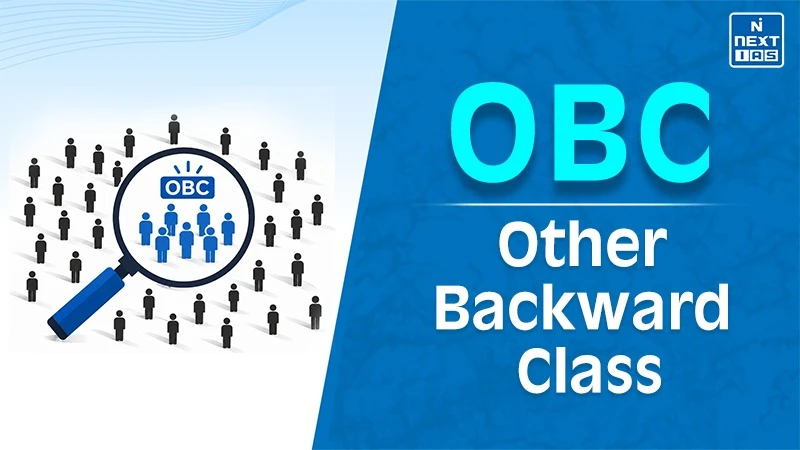
Backward Classes other than Scheduled Castes and Scheduled Tribes (also called Other Backward Classes, OBCs). These are socially and educationally backward classes that have been identified under the Constitution of India. As per the Indian Constitution, under Articles 15(4) and 16(4) the government has the power to implement affirmative measures to promote such classes' educational and social advancements.
As per the recommendation of the Mandal Commission set up by B. P. Mandal in 1979, a 27% reservation is provided in central government employment for OBCs that came into effect from 1990. 102nd Constitutional Amendment Act, 2018 conferred constitutional status on the National Commission for Backward Classes (NCBC). 105th Constitutional Amendment Act, 2021 re-conferred powers upon the states and Union Territories to make outlists of their socially and educationally backward classes. OBCs have reservation benefits in education and employment, subject to rules.
OBCs are classified based on their social and educational backwardness, and not merely on the basis of economic backwardness. National Commission for Backward Classes (NCBC) protects the rights of the OBCs as per Article 338B. 27% reservation in employment and educational institutions for OBCs applies to those who come in the category of non-creamy layer eligible OBCs.
Historical Background
Other Backward Classes (OBCs) have been identified in India through various commissions and governmental efforts undertaken in order to ensure social equality. In 1953, the government set up the 1st Backward Classes Commission, known as the Kaka Kalelkar Commission to study socially and educationally backward groups.
Later on, the Mandal Commission, chaired by B.P. Mandal, was constituted in 1979 to analyze their conditions and come up with recommendations for improving them. Their report was submitted in 1980 and recommended 27% reservation for the OBCs in jobs in the central government establishments. This decision of the commission was notified by the government in 1990. The judgment of the Supreme Court in the case of Indra Sawhney (1992) accepted the 27% reservation, brought in the Creamy Layer concept and fixed total reservations at 50%.
Difference Between SC, ST and OBC
| Basis | SC | ST | OBC |
|---|---|---|---|
| Full Form | Scheduled Castes | Scheduled Tribes | Other Backward Classes |
| Constitutional Provision | Article 341 | Article 342 | Article 342A |
| Identification | Specified caste communities | Specified tribal communities | Socially and educationally backward classes |
| Central Reservation | 15% | 7.5% | 27% |
| Commission | NCSC | NCST | NCBC |
Constitutional Provision
The Indian Constitution contains many clauses which help in protecting the rights and promoting the development of the Other Backward Classes (OBCs).
- The clause 15(4) of the Indian constitution allows the government to make special provisions for the advancement of socially and educationally backward classes.
- Clause 15(5) gives a provision of reservation in educational institutions, including the private institutions, except the minority educational institutions.
- Clause 16(4) allows the provision of reservation in public employment of backward classes which are inadequately represented in the government services.
- Clause 16(4A) of the Indian Constitution gives a special provision about reservation in promotions for the Scheduled Castes and Scheduled Tribes but not the OBCs.
- Article 340 of the Indian Constitution gives a provision of appointment of a commission by the President for investigation of backward class conditions.
- Article 338B of the Indian Constitution gives constitutional status to NCBC.
Difference Between Creamy Layer and Non-Creamy Layer
| Basis | Creamy Layer | Non-Creamy Layer |
|---|---|---|
| Meaning | Relatively advanced sections of OBCs | Socially and educationally disadvantaged eligible OBC sections |
| Reservation | Not eligible for OBC reservation | Eligible, subject to applicable conditions |
| Income Criteria | Subject to government criteria | Generally subject to the prescribed income and other criteria |
| Purpose | Excluded from OBC reservation benefits | Receives affirmative-action benefits |
Reservation Policy for OBCs in India
The reservation scheme of OBC’s tries to ensure greater educational and employment opportunities for socially and educationally underprivileged groups. The Central Government provides 27% reservation in jobs in central government organizations and education institutions of the central government for the eligible OBC candidates.
Reservation is provided in state government jobs and educational institutions in different states in varied percentages. The OBC’s reservation scheme works for eligible candidates falling under the category of Non-Creamy Layer and not the comparatively advanced Creamy Layer. The Supreme Court, in its Indra Sawhney verdict (1992), upheld 27% OBC reservation scheme. It introduced Creamy Layer exclusion and normally limited reservation up to 50%, depending on the situation.
National Commission for Backward Classes (NCBC)
The National Commission for Backward Classes (NCBC) is a constitutional body constituted for the purpose of safeguarding the rights and interests of Other Backward Classes (OBCs). It was 1st constituted in 1993 as a statutory body and later accorded constitutional status under the 102nd Constitutional Amendment Act, 2018 through Article 338B.
NCBC comprises 1 Chairperson, 1 Vice Chairperson and 3 other members who are appointed by the President of India. The main functions of NCBC include investigation of complaints relating to violations of rights of OBCs, monitoring of implementation of welfare measures. It also examining the safeguards and providing advice to the government regarding their social and educational development. NCBC also has power to investigate and summon persons while exercising some of its functions with powers equivalent to that of a civil court.
FAQs
What is the meaning of OBC?
OBC means Other Backward Classes which are communities considered to be socially and educationally backward by the Government.
Whom does OBC comprise of?
Socially and educationally backward communities determined by the Central or state governments come under the OBC category.
Which are the Constitutional provisions concerning OBC?
Provisions for the benefit and reservation of OBCs are enshrined in Articles 15(4), 15(5), 16(4), 340, 338B and 342A.
Which Government setup Mandal Commission?
The Mandal Commission was formed in 1979 during the tenure of the Janata Party government led by Prime Minister Morarji Desai where B. P. Mandal was its chairman.
How much percent of reservation is there for OBCs in India?
The Central Government grants 27% reservation to eligible OBC applicants in central government employment and educational institutions.
