
 80813-00200


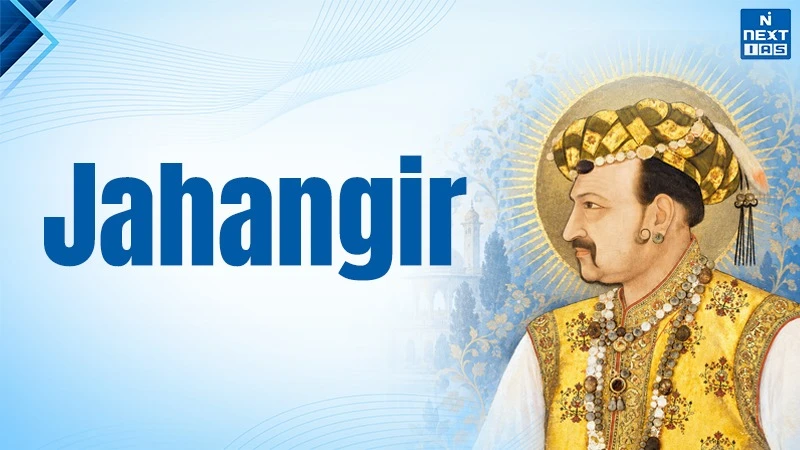
Jahangir (1605-1627), the 4th Mughal ruler, was famous for his love for art, nature, and justice. He was the son of Akbar and ruled over a large empire that he managed to administer and keep stable. Jahangir was a brilliant patron of painting and promoted realistic paintings of people, birds and animals and also the scenes of life in the court.
The art of painting developed to great extent during his time. His autobiography, Tuzuk-i-Jahangiri gives us insight into his character, his administration and also the society of his time. He used the "Chain of Justice" which showed his dedication to the cause of justice.
About Mughal Emperor Jahangir
- Jahangir was the fourth emperor of the Mughal Empire who reigned from 1605 to 1627.
- He was born as Nur-ud-din Muhammad Salim and was the son of Emperor Akbar and Empress Mariam-uz-Zamani.
- Jahangir is known for his love for art and culture, the strengthening of the Mughal Empire, and his troubled personal life and political troubles.
Political Landscape during Jahangir’s Reign
A number of important political occurrences characterized the reign of Jahangir:
- Consolidation of Power: Jahangir, the Mughal Emperor was gifted with a large empire but was faced with challenges in consolidating his power base.
- These challenges included handling of noblemen like his half-brother and also rebellions that occurred in different parts of the region.
- Diplomatic Relations with the British: Diplomatic relations were established between the British and Jahangir. These laid the foundation for colonization in the future.
- The English East India Company was permitted to conduct their trade in the Mughal Empire during the reign of Jahangir.
- Warring with Deccan Sultanates: Jahangir had wars with the Deccan Sultanates.
Cultural Patronage
Jahangir is often celebrated for his contributions to art and culture:
- Artistic Legacy: Jahangir was a generous patron of art, inspiring artists and craftsmen to produce artworks which merged Persian and Indian artistic traditions.
- His court served as the hub of miniature painting, where artists like Mansoor and Abul Hasan created magnificent pieces.
- Architecture: He was not an enthusiastic architect like his father or his son; yet he got built some impressive buildings such as the Shah Jahan Mosque in Thatta and the tomb of his favorite wife, Nur Jahan.
- Literature and Philosophy: Jahangir was also a patron of literature and philosophy.
- The autobiography written by him, Tuzk-e-Jahangiri, gives an insight into his philosophical ideas and challenges as a ruler.
Religious Policies
- Jahangir maintained his father's policy of religious toleration but was confronted by conservative elements within the empire.
- He promoted arts and literature in many religious traditions and had discourses with several religious traditions.
- Nonetheless, Jahangir's reign was marked by the presence of conservative elements who aimed to restrict pluralism.
Jahangir Painting
- Jahangir’s era was important in terms of the development of Mughal painting. Jahangir had a deep love for art, and he strived to develop it further.
- Jahangir’s Paintings had characteristics such as realism, detailed painting, and use of rich colors. The paintings included aspects of court scenes, nature, and symbolism.
- Jahangir inspired the painters to try out European painting methods such as perspective and shading in their works. However, they did this using their Persian and Indian painting styles.
- Jahangir loved paintings that were natural, and he often ordered his painters to paint plants, birds, and animals from other countries.
Major Buildings and Monuments of Jahangir's Era
- Tomb of I’timād-ud-Daulah, Agra: An elaborate white marble building with inlaid decoration and four towers each having chhatris.
- Tomb of Akbar the Great, Sikandra, Agra: This mausoleum, mainly built by Jahangir in memory of his father Akbar, was famous for its extensive use of red sandstone, elaborate gateways, and large structure.
- Tomb of Itmad-ud-Daulah, Agra: This is a tomb built by Nur Jahan for her father and it is considered the first example of an all-marble Mughal monument with intricate inlay work. It was popularly known as “Baby Taj” or “Bachcha Taj.”
- Tomb of Jahangir, Shahdara, Lahore: This is the tomb of Jahangir built after his death. This tomb is famous for its gardens, red sandstone gateways, and beautiful minarets.
- Shalimar Bagh, Srinagar, Kashmir: This garden was built by Jahangir in 1619 as a garden for his wife Nur Jahan. Its design became the model for many other Mughal gardens.
- Begum Shahi Mosque, Lahore: Begum Shahi mosque is one of the earliest Mughal mosques in Lahore built by Jahangir’s mother Mariam-uz-Zamani but completed in the reign of Jahangir.
Additional Architectural Contributions
- Jahangir Mahal (Orchha): Although named after Jahangir, it was built by Bundela ruler Bir Singh Deo to honor Jahangir’s visit to Orchha.
- Development of garden architecture and landscape design reached new artistic levels under Jahangir’s rule, further influencing subsequent Mughal creations.
Jahangir Mahal
Jahangir Mahal, Agra Fort
- The Jahangir Mahal inside Agra Fort was built by Emperor Akbar, primarily to serve as the zenana (residence for royal women, especially his Hindu wives like Mariam-uz-Zamani). Despite its name, it is not directly associated with Emperor Jahangir, but was named after the Hauz-i-Jahangiri, a large bowl located at the entrance. Akbar constructed this palace with a blend of Islamic and Hindu architectural styles.
Jahangir Mahal, Orchha
- The Jahangir Mahal in Orchha, Madhya Pradesh, was built by Bundela ruler Bir Singh Deo (Vir Singh Deo) in honor of the Mughal Emperor Jahangir during the latter's first visit to Orchha in the 17th century. This magnificent palace symbolizes the friendship between Bir Singh Deo and Jahangir and features remarkable Indo-Islamic architecture with elaborate gateways and decorative elements.
Legacy
- The legacy of Jahangir is a complicated one, however, as he is also remembered for his contribution to art and culture as well as for trying to sustain the glory of the Mughal Empire.
- His era saw an outburst of art, and his policies formed a basis for the future development and glory of the Mughal Empire under his son, Shah Jahan.
FAQs
What was Jahangir known for?
Jahangir was known for his support of Mughal paintings, love for nature, and justice.
What is the name of Jahangir's autobiography?
The name of Jahangir's autobiography is Tuzuk-i-Jahangiri or Jahangirnama.
What is the Chain of Justice?
The Chain of Justice was a symbolic method used by Jahangir for direct audience from the common man seeking justice from the emperor.
What did Jahangir do for Mughal paintings?
Jahangir encouraged realistic portraits and nature studies.
