
 80813-00200

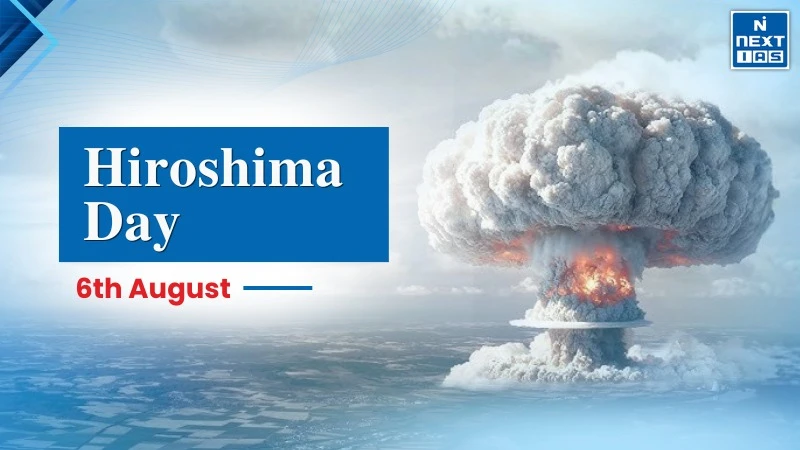
Japan attacked the U.S. Naval Base at Pearl Harbor on December 7, 1941. In retaliation, the two cities of Japan namely Hiroshima and Nagasaki were destroyed with nuclear bombing. In remembrance, Hiroshima Day is commemorated on 6th August marking the anniversary of the atomic bombing of Hiroshima in 1945. US Pilot, The B-29 bomber Enola Gay dropped the "Little Boy" atomic bomb on the Japanese city of Hiroshima.
In 2026, it is the 81st anniversary of the atomic bombing in Hiroshima. Focusing on "Remembrance, Responsibility, and Resilience." Since 1964, the "Flame of Peace" has burned at the Hiroshima Peace Memorial Park for the purpose of global protest against nuclear bombing.
About the Hiroshima Day
- Hiroshima Day is commemorated every year on August 6, marking the anniversary of the atomic bombing of Hiroshima in 1945. It was an event of great significance and catastrophe during World War II.
- In the morning at 8:15 a.m. Local time, the American B-29 bomber "Enola Gay" dropped the atomic bomb "Little Boy" on Hiroshima. Killing about 130,000 people instantly, with gradual deaths from injuries and radiation sickness approaching 140,000 by the end of that year.
- Hiroshima Day is worldwide recognized as a day for commemorating all victims and reflecting on the catastrophic consequences of nuclear warfare.
- Memorial ceremonies, silent vigils, and lantern-floating ceremonies occur worldwide. It is always in tandem with calls for nuclear disarmament and world peace. Hence the determination of humankind in preventing such travesties ever again.
Why did America Bomb Hiroshima, Japan?
- The bombing of Hiroshima took place on 6th August 1945 with the primary motive of compelling Japan to surrender quickly and without any conditions.
- America had entered the war with the intention of completely defeating Japanese militarism following the attack on Pearl Harbour by Japan on 7th December 1941.
- The United States leadership knew that any invasion of Japan would result in hundreds of thousands of Americans losing their lives as well as millions of Japanese.
- By this time, the atomic bomb had been successfully tested in the month of July. This bomb was going to serve the purpose of scaring Japan into surrendering and showing how superior the United States was.
- President Harry Truman justified the bombing by mentioning Pearl Harbor and the crimes committed by the Japanese people.
Hiroshima Nagasaki Bomb
- On 6 August 1945, the United States used the nuclear bomb known as 'Little Boy' against Hiroshima, killing up to 70,000-80,000 individuals at once. By the end of that year, the death toll had reached 140,000 individuals.
- On 9 August 1945, another nuclear bomb which was referred to as 'Fat Man' was used in Nagasaki which led to the instant deaths of 40,000 individuals.
- This death figure went up to 70,000-74,000 by the end of the year. These have been the only military use of nuclear weapons till date.
Human Consequences and Effects of the Atomic Bombing of Hiroshima
- The human consequences of Hiroshima Day are very deep as well as enduring, showing the unfathomable ill effects of nuclear warfare on civilians.
- An estimated 130,000 souls died during the infernal heat or blast injuries on that fateful day due to the atomic bombing of Hiroshima on the morning of August 6, 1945-their deaths occurring instantly or within the first few months.
- Survivors-the hibakusha-have suffered from serious burns, chronic diseases, radiation sickness, cancer, genetic disorders, and much more for generations to come.
- In addition to being physically scarred, the pathology was devastating; the hibakusha bore tremendous psychological scars and survived a lifetime of distress, survivor guilt, and social discrimination, especially in Japanese society.
- Destruction of infrastructure further aggravated the plight of survivors, who were left homeless and with a scarcity of basic needs such as food, water, and medical care.
- Therefore, as the nuclear scientists term it, it is an account of war studies and history, since both sides will argue the human cost of Hiroshima, and worldwide calls will be made for nuclear disarmament so that no more people endure the horrors suffered in Hiroshima.
Commemorations and Memorials of Hiroshima Bombing
- Hiroshima Day is somberly observed worldwide on August 6 through memorials and ceremonies.
- The central venue is the Hiroshima Peace Memorial Park; there, the iconic Atomic Bomb Dome, as preserved after the blast, forms a stark reminder against nuclear warfare.
- The ceremony generally shakes with a moment of silence at 8:15 a.m., the exact time of the bombing. Thousands gather to pray, release paper lanterns down rivers, and listen to speeches advocating for peace and nuclear disarmament.
- The Children's Peace Monument, inspired by Sadako Sasaki, and the Peace Memorial Museum create space for further learning and reflection through exhibits of artifacts and witness tales from survivors.
- Annual events and memorials also stand in remembrance of the victims and impel collective remembrance, healing, and a global resolve for a world free of nuclear weapons.
FAQs about Hiroshima Day
What is Hiroshima Day?
Hiroshima Day is observed on August 6th each year to remember the atomic bombing of Hiroshima in 1945.
Was Hiroshima or Nagasaki bombed first?
The bomb was first dropped on Hiroshima.
How many people died in Hiroshima and Nagasaki?
About 1,40,000 people were killed in Hiroshima and about 70,000 to 74,000 people died in Nagasaki.
