
 80813-00200


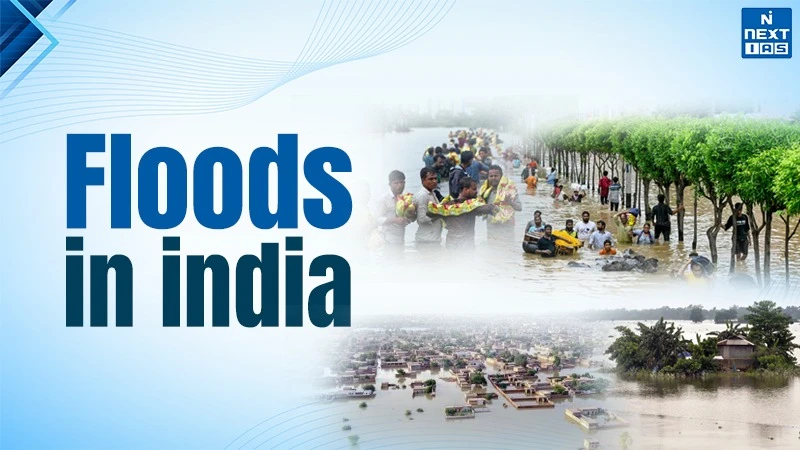
The floods occur due to natural or man-made disasters, mainly caused by heavy monsoon rainfall, river siltation, glacial lake outburst in Himalayas, and unplanned urbanisation. It affects about 12% of the total land area in India. The Ganga and Brahmaputra river basins are flood-prone regions impacting Indian states of Assam, Bihar, and West Bengal every year. The Flash floods have a very high speed which can destroy the infrastructure and livelihood in a short span of time. They are responsible for about 40% of natural disasters globally every year.
Recent Flash Flood in Nepal
The flash floods are fast and sudden outburst resulting in the high speed flow of heavy water, mud and debris down causing catastrophe.
Recently, a disastrous flash flood hit the northern region of Nepal along the Nepal-Tibetan border on 26th August 2026. It was triggered by a massive, high altitude glacial rock and ice avalanche collapse near the mountain peak of Langtang Lirung in the Himalayas, in the region of the Bhotekoshi and Trishuli river system. It swept away villages, roads, bridges and hydropower sites in Rasuwa and other downstream districts.
The flash flood in Nepal has caused thousands of loss of lives with many people still gone missing, and numerous houses were destroyed. The disaster highlighted the growing risk of glacial lake outburst floods (GLOFs) and ice-rock avalanches in the Hindu Kush and Himalayan region.
List of Major Floods in India
| S.No. | Year | Region | Type of Flood | Key Impacts |
|---|---|---|---|---|
| 1 | 2018 | Kerala | Monsoon & river floods |
|
| 2 | 2015 | Chennai (Tamil Nadu) | Urban & monsoon floods |
|
| 3 | 2014 | Jammu & Kashmir | River & rainfall floods |
|
| 4 | 2013 | Uttarakhand (Kedarnath) | Flash floods & landslides |
|
| 5 | 2008 | Bihar (Kosi river) | River flood (avulsion) |
|
| 6 | 2006 | Gujarat | River & monsoon floods |
|
| 7 | 2005 | Mumbai (Maharashtra) | Urban flash flood |
|
| 8 | 1979 | Morbi (Gujarat) | Dam-break flood in Machhu |
|
| 9 | 1970 | Andhra Pradesh coast | Cyclone & coastal floods |
|
| 10 | 1924 | Kerala | Extreme monsoon flood |
|
Types of Floods
- Flash Floods: They are caused by sudden, heavy rainfall or snowmelting which result in fast moving waters that strike within a few hours of precipitation.
- Fluvial Floods: They are also known as Riverine floods and occur at the time of prolonged heavy rainfall or snowmelt. It causes the rivers and water streams to overflow their banks and cover the nearby floodplains.
- Coastal Floods: These floods occur due to extreme weather events such as storms, hurricanes, high tides or tsunamis which allow the ocean water to enter the coastal region.
- Urban Floods: They occur at the time when intense rainfall overpower the blocked drainage of the city. In urban floods, the accumulation of rainwater turns roads and pathways into rapid flowing water channels.
- Pluvial Floods: They occur when heavy rainfall creates standing or flowing water in low lying and flat areas. They occur in those regions which are independent of any river channel.
Reasons or Triggers Causing Massive Floods:
- 1) Torrential Rain
- 2) Rapid Snowmelt
- 3) Tropical Cyclone
- 4) Ice Jams
Impact of Climate Change
Climate Change is increasing the risk of flooding in India. It usually intensifies the hydrological cycle. A warmer atmosphere holds about 7% more moisture in every 1°C rise. It enables short duration, high intensity rainfall which gets merged in rivers, drains and hill slopes. The extreme rainfall events in India have roughly become 3 times in recent decades. It further increases flash floods in the Himalayan and urban areas such as Chennai, Mumbai, and Bengaluru.
The Warming oceans have increased the rate of evaporation and affected the monsoon cycle which produces heavy bursts of rainfall. In mountain regions, higher temperatures increase the melting of glaciers and destabilize glacial lakes. This phenomenon increases the chances of GLOFs and ice-rock avalanches such as in Uttrakhand in 2013 and Nepal in 2026.
The anthropogenic or human made disasters are a result of deforestation, construction in fragile regions, and encroachment of floodplain reduces the natural storage and drainage. The combination of climate driven extreme and land use change make floods more frequent, severe and less predictable.
FAQs about Floods
What is flood?
A flood is an overflow of large amounts of water on dry lands. The water can come from rivers, rain or sea.
How are flood plains formed?
The flood plains are formed by the deposition of sediments at the time of repeated river overflows on adjacent low-lying land.
What is a flash flood?
Flash flood is the sudden, fast moving water that occurs within hours to a few minutes out of heavy rain or other source of water.
What causes floods?
Floods are caused by heavy rain, cyclones, melting of snow, failure of dams and blocked drainage channels.
What is a flood light?
A flood light is a bright and broad beam of light which is used to brighten a large outdoor area during night time.
