
 80813-00200


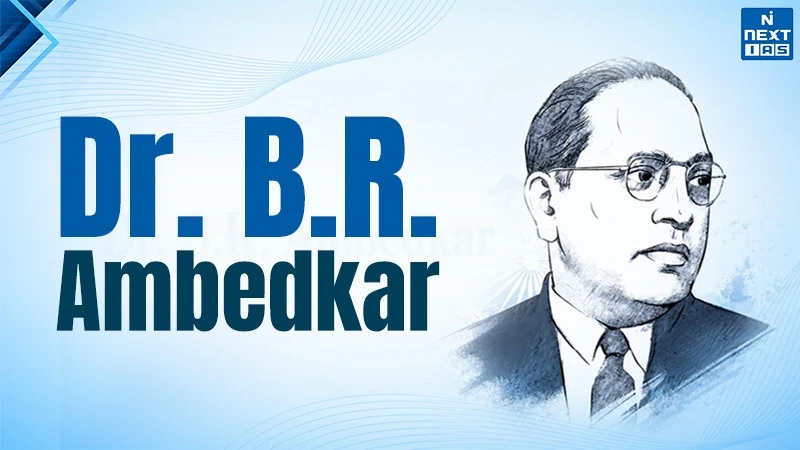
Dr. Bhimrao Ramji Ambedkar (1891 to 1956) was the first law minister of independent India and an Indian jurist and economist. He is famously regarded as the Chief Architect of the Indian Constitution. The Poona Pact of 1932 between Gandhiji and Dr B. R. Ambedkar increased the representation of depressed classes in both the Central and Provincial legislatures.
Interestingly, very few people know that in 1923, Dr. Ambedkar's book 'The Problem of the Rupee: Its Origin and Its Solution' contributed to the development of the Reserve Bank of India (RBI). His book was heavily utilised and referred to by the British Young Hilton Commission of 1925 to examine India's monetary and financial system. The operational guidelines, price stabilisation policies and structural ideas were used to draft the RBI Act of 1934.
Dr. B. R. Ambedkar was posthumously awarded the Bharat Ratna which is India's highest civilian honour in 1990 for his outstanding contribution to frame Indian Constitution and his lifelong commitment in uplifting the marginalized section of society.
Biography of Dr. B.R. Ambedkar: A Synoptic Overview
| Date of Birth | 14 April 1891 |
| Place of Birth | Mhow (now Ambedkar Nagar), Indore, Madhya Pradesh |
| Education | University of Mumbai, Columbia University (New York), Gray's Inn (London), London School of Economics |
| Associations | Independent Labour Party, Scheduled Castes Federation, Republican Party of India |
| Death | 6 December 1956 |
| Nicknames | Babasaheb |
| Epithets | Father of the Indian Constitution, Champion of the Dalits, Modern Manu |
| Prominent Achievements |
|
The 136th Birth Anniversary of Baba Saheb Dr. Ambedkar
- On April 14, 2026, the 136th Birth Anniversary of Baba Saheb Dr. B.R. Ambedkar was celebrated. The events took place at Prerna Sthal, Parliament House, New Delhi. Celebrations focused on his contributions as the architect of the Indian Constitution and his legacy of equality, social justice and the empowerment of women.
Early Life and Education of Ambedkar
He was born on 14 April 1891, in Mhow, Madhya Pradesh, in the Mahar caste. As he was born in a caste that traditionally constituted inferior village servants. His early years were marked by the harsh realities of caste discrimination. His experience of facing societal ostracization, and humiliation during his childhood instilled in him a deep resolve to fight against the injustices of the caste system.
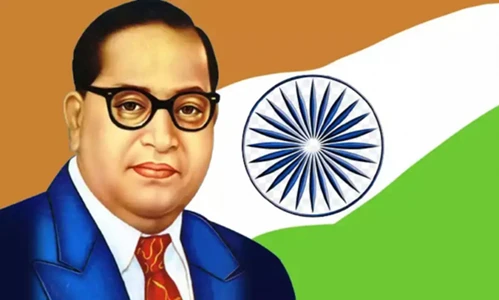
The academic journey of Dr. Bhimrao Ramji Ambedkar began at Elphinstone High School, Mumbai. He was one of the first Dalit students. Despite facing discrimination, he excelled academically. This led him to Elphinstone College, and subsequently, to Columbia University in New York. His time at Columbia University was transformative, exposing him to the works of sociologists and economists, and to the principles of liberty, equality, and fraternity. This later became the bedrock of his vision for India.
In 1916, Dr. Bhimrao Ramji Ambedkar moved to London. Here, he continued his studies at the London School of Economics (LSE) and studied law at Gray's Inn.
Dr. B.R. Ambedkar's Advocacy for Dalit Rights
He returned to India in the early 1920s after completing his studies abroad. Babasaheb life story revolved around this cause. He believed that only an adequate political representation could reform the social status of the untouchables. So, he began to organise the untouchables by means of his newspapers, socio-cultural forums, and conferences.
In 1924, Dr. Bhimrao founded the Bahishkrit Hitakarini Sabha (Society for the Welfare of the Excluded). It aimed at promoting education among the Dalits and improving their socio-economic status. He also started many periodicals like "Mook Nayak" (Leader of the Silent), "Bahishkrit Bharat" (Excluded India), and Equality Janta to voice the concerns of the Dalits.
One of the 1st major public actions led by Babasaheb Ambedkar was the Mahad Satyagraha in 1927. It aimed to assert the rights of Dalits to use water from a public tank in Mahad, Maharashtra. Similarly, the Kalaram Temple Movement in 1930 sought to secure the right of Dalits to enter Hindu temples.
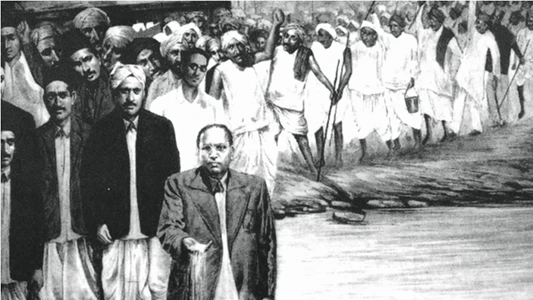
Dr. B.R. Ambedkar also represented the Dalits in front of the British authorities. He attended the Round Table Conferences in London as a representative of the Dalits. He advocated for separate electorates for Dalits to ensure their political representation. The efforts of Babasaheb resulted in the form of the Poona Pact of 1932. This pact provided reserved seats for Dalits in the general electorate.
Political Carrier of Ambedkar
The political life of Dr. B.R. Ambedkar as legislator, party leader, constitution maker and the 1st law minister of independent India was really an extraordinary one. Ambedkar formed the Independent Labour Party in 1936 to safeguard the interests of Dalits. He also founded the Labour Party and formed the Scheduled Castes Federation in 1942. At the role of chairman of the drafting committee, he drafted the Indian constitution with the help of four principles of Justice, Liberty, Equality and Fraternity. He was a strong advocate of Fundamental Rights which includes equality and liberty. For him the Right to Constitutional Remedies was the heart and soul of the constitution.
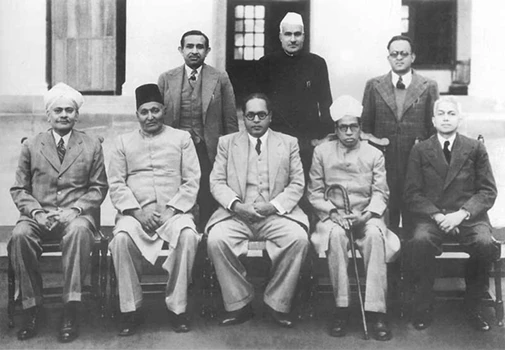
Labor Minister in Viceroy's Executive Council
Dr. B.R. Ambedkar served as the Labour Minister in the Viceroy's Executive Council in 1942-1946. Dr Bhimrao introduced and championed several crucial labor reforms, including the Factories Act of 1946, the Trade Unions Act of 1947, etc.
He also played a role in the groundwork for social security programs for workers. He actively supported the creation of the Employees' State Insurance (ESI) Corporation and the Employees' Provident Fund Scheme (EPF).
Independent India's First Law Minister
Dr. B.R. Ambedkar was appointed as the country's 1st Minister of Law and Justice in Jawaharlal Nehru's cabinet. In this capacity, his most notable contribution was the introduction of the Hindu Code Bill. The Bill, however, could not be passed by the Parliament, which led Babasaheb to resign from the Nehru Cabinet in 1951.
Later Electoral Politics
On 30 September 1956, Babasaheb announced the establishment of the Republican Party of India. After dismissing his earlier organisation the Scheduled Castes Federation.
Conversion to Buddhism and Later Years
Dr. B.R. Ambedkar's interest in Buddhism began early in his career, as he explored various philosophies and religions in his quest for social justice and equality. In 1935, in a provincial conference of the depressed classes held at Yeola (Nasik). He announced publicly for the 1st time that – "I was born in Hinduism, but I will not die as a Hindu".
Do you know?
- Dhamma Chakra Pravartan Divas, celebrated annually on October 14 (often coinciding with Dussehra/Ashoka Vijayadashami).
- It commemorates the historic day of 14 October, 1956 when Dr. B.R. Ambedkar embraced Buddhism at Deekshabhoomi in Nagpur, along with thousands of followers.
On October 14, 1956, Dr. Bhimrao Ramji Ambedkar formally converted to Buddhism in a massive public ceremony held in Nagpur. His decision was not just a personal spiritual choice but also a political and social act, aimed at rejecting the Hindu caste system. Here onwards, Dr. B.R. Ambedkar spent the rest of his life spreading Buddhism.
Dr. B.R. Ambedkar's conversion had a profound impact on Indian society and politics. It sparked a mass movement of conversion to Buddhism among Dalits, known as the Dalit Buddhist movement, which continues to this day.
Navayana Buddhism
- Dr. B.R. Ambedkar followed a distinct form of Buddhism that he personally established and developed, popularly referred to as Navayana (or New Vehicle) or Neo-Buddhism.
- Although, after his formal conversion to the Buddhist religion on October 14, 1956, in Nagpur, he did not identify himself with any of the three principal traditionally accepted forms of Buddhism: Theravada, Mahayana and Vajrayana.
- He instead reformulated the religion to meet his social justice, rational and the complete denial of the Hindu caste system objectives.
The main features of Navayana Buddhism:
The 22 Vows: When training to convert, Ambedkar took 22 vows in front of his disciples.
- Such vows require a renunciation of Hindu gods and traditional practices in particular, as he is supposed to be broken clean of his former religion.
- The Holy Book: The main book of this sect was the one that Ambedkar had completed just before his death and which bore the title of The Buddha and His Dhamma.
- Restatement of Teachings: Navayana does not emphasize as much on metaphysical ideas of karma, rebirth, and nirvana in a spiritual context but on social equality, liberation, and fraternity.
- Ambedkar as a Figure: In this tradition B.R. Ambedkar was revered as a Bodhisattva (an enlightened one) who reemerged Buddhism in India to free the oppressed.
Major Contributions of Bhimrao Ramji Ambedkar
- He contributed to writing of Indian Constitution as Chairman of the Drafting Committee on the principles of justice, freedom, equality and fraternity.
- He played a role in the conception of the Reserve Bank of India (RBI) through his statements before the Hilton Young Commission in the year 1925, where he had suggested the idea of having a central bank. This idea was responsible for some of the recommendations in RBI Act, 1934.
- He was a strong opponent to the problem of caste discrimination in society.
- He believed in and contributed to the cause of social justice and upliftment.
- He is a strong supporter of educational reforms and rights of women through Hindu Code Bill.
- He was a great supporter of labor laws and welfare through Independent Labour Party and Labour Member of the Viceroy's Executive Council.
Achievements of Baba Saheb Ambedkar
| Achievement Category | Details |
|---|---|
| Principal Architect of Indian Constitution | Chairman of the Drafting Committee; ensured fundamental rights, abolition of untouchability, and affirmative action policies for marginalized groups |
| Social Reformer | Championed Dalit rights, fought caste discrimination, launched movements like Mahad March, and promoted mass conversion to Buddhism for social equality |
| Legal Reforms | First Law Minister of independent India; proposed labor reforms, reduction of working hours, and women's rights including Hindu Code Bill (though rejected later) |
| Economic Contributions | Contributed to economic planning, establishment of Reserve Bank of India, finance commission, and labor welfare schemes like Employees' State Insurance and Provident Fund |
| Educational Pioneer | Advocated for education among marginalized communities; established Bahishkrit Hitkarini Sabha to promote socio-economic welfare |
| Political Leadership | First Law Minister; Member of Rajya Sabha; influenced reservation policy in education and jobs for Scheduled Castes, Scheduled Tribes, and Other Backward Classes |
Role as Freedom Fighter in Independence Struggle
Dr. B.R. Ambedkar was an extraordinary leader who had a significant impact on the Indian freedom struggle by advocating not only the independence from British rule but above all the liberation and uplift of the downtrodden Dalit community. He worked against the social drawback of the caste system and started to fight for political rights and social justice for the underprivileged. Ambedkar was at the forefront of movements like the Mahad Satyagraha (1927) which sought to give Dalits access to public resources, and he also set up associations for the education and rights of the depressed classes.
As the Chairman of the Drafting Committee of the Indian Constitution, he made sure that fundamental rights, the abolition of untouchability, and affirmative action for social inclusion were all included. Different from the main leaders who were mainly concerned with getting political independence, Ambedkar stressed social freedom as the key to a just nation.
Ambedkar vs Gandhi on Caste
Mahatma Gandhi and B.R. Ambdedkar were completely polar opposites on caste, Gandhi wanted to reform the Hindu varna system, abolishing untouchability, and preserving the traditional stratification, and Ambedkar insisted on the complete destruction of the Caste, and "Equality" by structural, legal and constitutional reforms.
- Perspective on the Caste system: Gandhi had supported the varnashrama (the four fold division) but had opposed untouchability, to achieve social harmony. To Ambedkar, the whole caste order was simply wrong and had been intertwined with Hinduism hence he proposed that it should be destroyed entirely.
- Methodology: Gandhi concentrated on transforming the Heart of the high caste Hindus by non-violent moral appeal. In his 1936 work, Annihilation of Caste, Ambedkar proposed the abolition of caste legally, so that inter-caste marriage and social equality should exist.
- Political Representations: Gandhi was against the separate electorates of the Depressed Classes because he thought it would disintegrate Hindu unity and the Poona Pact (1932). In this analysis of the debate, Ambedkar maintained that separate electorates were required, as a means of political empowerment of the oppressed.
- Terminology: Gandhi termed marginalized as Harijans (Children of God), which to many Dalits was a derogatory term. Ambedkar called them Dalits and Depressed Classes and he stressed on the legalization of their rights.
Although they were at loggerheads, the two chiefs wanted to empower the disadvantaged. The moral campaign of Gandhi raised the problem of untouchability to the mainstream and the work of Ambedkar gave the legal and political system to the constitutional guarantees of the oppressed castes.
Famous Books and Texts of Ambedkar
- Castes in India: Their Mechanism, Genesis and Development (1916): A relatively early intensive scholarly work on the origin of caste.
- The Problem of the Rupee: Its Origin and Its Solution (1923) – Based upon his doctoral dissertation, and it examines the history and management of Indian currency.
- Waiting for a Visa (1935-36): An autobiographical piece, which talks in detail about the discrimination that he experienced.
- Annihilation of Caste (1936): A radical commentary on Hindu caste system and its scriptural basis.
- Pakistan or the Partition of India (1940): a study of the political circumstances and partition demands.
- Who were the Shudras? (1946): Explores the genesis of the fourth Varna, and claims they were originally Aryan Kshatriyas.
- States and Minorities (1947): A memorandum of fundamental rights of minorities.
- The Untouchables: Who Were They and Why They Became Untouchables? (1948): A scholarly treatise that examines the causes of untouchability.
- The Buddha and His Dhamma (1957): A complete treatise on Buddhist philosophy, published posthumously.
- Riddles in Hinduism (Published posthumously): a critique of Hindu mythology and literature.
Journals and Periodicals
- Mooknayak (Leader of the Dumb – 1920)
- Bahishkrit Bharat (Ostracized India -1927)
- Samatha (Equality – 1928)
- Janata (The People – 1930)
FAQs about Ambedkar
Who is B.R. Ambedkar?
Dr. B.R. Ambedkar was a renowned social reformer, economist, jurist and architect of the Indian Constitution.
What was the Philosophy of B.R. Ambedkar?
Babasaheb Ambedkar's philosophy includes a wide range of issues like social justice, political reform, and economic equality.
What is the role of Dr. B.R. Ambedkar in making of Indian Constitution?
Dr. B.R. Ambedkar's role as the Chairman of the Drafting Committee of the Constituent Assembly.
Who is considered the father of the Indian Constitution?
Dr B.R. Ambedkar is the father of the Indian Constitution.
