
 80813-00200

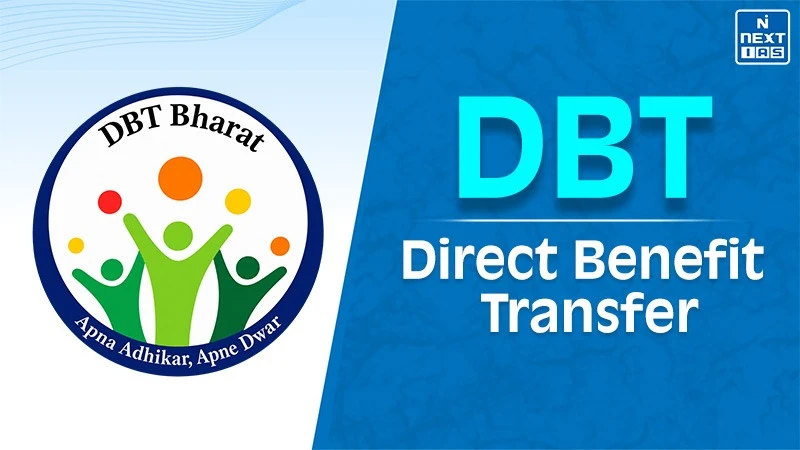
The full form of DBT is Direct Benefit Transfer (डायरेक्ट बेनिफिट ट्रांसफर). The DBT is a government system to transfer the subsidies in the form of money directly into the bank account of the beneficiary. It was launched on 1st January 2013. The DBT programme began with 28 schemes in 2013-14 and expanded to more than 320 schemes by 2024-25. It uses digital payment systems and JAM (Jan Dhan, Aadhar and Mobile) connectivity to transfer welfare benefits directly to the beneficiary. A total of about 966 schemes have been covered by 2025-26 with Rs. 2.87 lakh crore amount has been transferred through more than 200 crore transactions by December 2025.
How Direct Benefit Transfer Works?
| S.No. | Stage | Process |
|---|---|---|
| 1 | Identification of Beneficiary |
|
| 2 | Registration |
|
| 3 | Verification |
|
| 4 | Account linking |
|
| 5 | Payment approval |
|
| 6 | Electronic transfer |
|
| 7 | Credit confirmation |
|
| 8 | Tracking and grievance redressal |
|
DBT Benefits
- The direct benefit transfer (DBT) provides the benefit of welfare schemes by transferring money directly to the bank account of the beneficiary. This has eliminated the need for intermediaries and reduced corruption. This has also reduced the diversion, duplicate beneficiaries, delay and administrative costs.
- Additionally, the electronic payments lead to the creation of a digital footprint which makes the process of auditing easier. The beneficiaries receive the scholarships, pensions, salaries, subsidies including other benefits into their bank accounts.
- The DBT assures transparency, financial inclusion and builds trust of the people. It encourages more individuals to open bank accounts and access banking services in remote locations as well.
- The aadhar authentication and NPCI mapping can be used for the identification of the beneficiary for the related government welfare schemes.
Direct Benefit Transfer Government Subsidy Schemes
| S.No. | Scheme or programme | Key benefit |
|---|---|---|
| 1 | PM-KISAN |
|
| 2 | LPG subsidy |
|
| 3 | MGNREGA |
|
| 4 | National Social Assistance Programme (NSAP) |
|
| 5 | Fertilizer Subsidy Scheme |
|
| 6 | Pradhan Mantri Awas Yojana |
|
| 7 | Janani Suraksha Yojana |
|
| 8 | National Health Mission schemes |
|
| 9 | Skill-development schemes |
|
| 10 | State welfare schemes |
|
DBT Banking Implementation Challenges
- The Direct Benefit Transfer (DBT) faces many challenges in the implementation process. The incorrect details such as name, aadhar number, bank details, and mobile number may hamper the money transfer through the bank. The payments may fail due to closed or frozen bank accounts and inappropriate mapping by NPCI.
- The poor internet connectivity, limited banking facilities and inadequate digital literacy can make it difficult for people in remote areas to access or verify benefits.
- The failure of biometric authentication and aadhar seeding issues can also interrupt some of the payments. Few people may not be able to get the SMS alerts due to their mobile numbers not being updated with the bank.
- The 'exclusion' is another main challenge where the eligible beneficiaries can be left out due to database errors, documentation issues or complicated application processes.
- Thus, DBT needs a multi-faceted payment option, offline support, timely database correction, and regular complaints resolution.
FAQs about DBT
What is the full form of DBT?
The DBT full form is Direct Benefit Transfer. It enables the government to directly transfer the benefit into the bank account to the real beneficiary.
How to check DBT linked Account?
You can check DBT linked accounts by verifying the bank aadhar-NPCI mapping by your bank branch, mobile banking, internet banking or official web portal.
What is DBT in bank?
The DBT in bank means directly transferring eligible subsidies by government, pension, scholarships and welfare payments into the bank accounts of the beneficiary.
