
 80813-00200


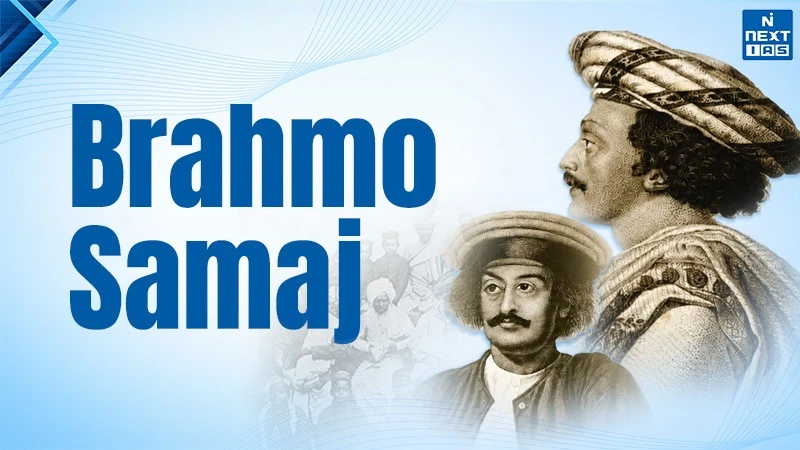
Raja Ram Mohan Roy was born on 22nd May 1772 at Radhanagar in Bengal. He was a social reformer and also known as the 'Father of Indian Renaissance'. He knew more than 10 languages, for example he learned Hebrew and Greek languages just to read the bible in its actual format. One of his most significant achievements was the campaign against the social evil of the Sati system. In which the wife or widow had to accept the funeral pyre along with her 'dead' husband and was simultaneously burnt in the fire.
In 1811, Raja Ram Mohan Roy's own sister was forced into the funeral pyre after the death of her husband. His sincere efforts led to the legal abolition of Sati in 1829 by Governor-General Lord William Bentinck. In 1831, the title 'Raja' was conferred on him by Akbar Shah II. Later, he supported Roy for going to England to argue for the legalisation of the abolition of Sati. In 1828, he founded Brahmo Samaj who advocated Monotheism or belief in one god and rejected idol worship and unnecessary rituals.
Raja Ram Mohan Roy was a pioneer in journalism and published the first Bengali weekly 'Sambad Kaumudi' in 1821 and a Persian weekly 'Mirat-ul-Akbar' in 1822. He was a strong supporter of Western Scientific Education and was instrumental in establishing the Hindu college in Calcutta in 1817. Raja Ram Mohan Roy died on 27th September 1833.
Important Contributions of Brahmo Samaj
| S.No. | Aspect | Contribution | Importance |
|---|---|---|---|
| 1 | Abolition of sati |
|
|
| 2 | Women's rights |
|
|
| 3 | Religious reform |
|
|
| 4 | Atmiya Sabha |
|
|
| 5 | Brahmo Sabha or Samaj |
|
|
| 6 | Modern education |
|
|
| 7 | Educational institutions |
|
|
| 8 | Freedom of the press |
|
|
| 9 | Journalism and writings |
|
|
| 10 | Political and administrative reform |
|
|
| 11 | Opposition to social evils |
|
|
Biography of Raja Ram Mohan Roy
- Raja Ram Mohan Roy (1772 to 1833) was an Indian social, religious, and political reformer at the time of British India. He is famously known as the Pioneer of Indian Renaissance.
- Raja Ram Mohan Roy was born in Bengal Presidency into a Brahmin family. He learned a dozen languages such as Sanskrit, Persian, Arabic, Bengali, English, among others. It helped him to know about other religious and philosophical traditions. He opposed idol worship, caste rigidity, and other social customs. He promoted monotheism and rational thinking.
- He founded the Atmiya Sabha in Calcutta in 1815 to discuss religious and social reform. He strongly raised his voice against the social evil of the Sati system. Additionally, he favoured the rights for women such as widow remarriage, education, and inheritance rights. The continuous year-long efforts of Roy helped create public support for the Bengal Sati Regulation of 1829 by Lord William Bentinck. This regulation declared sati as illegal in Bengal.
- Raja Ram Mohan Roy advocated for modern education and increasing the scientific temper of the people. He particularly emphasized on learning of science, English, Mathematics and thus increasing the rational thought process of the society.
- He supported the freedom of Press and published journals namely Sambad Kaumadi and Mirat-ul-Akhbar. He formed Brahmo sabha in 1828 and later Brahmo Samaj. He traveled to England as the envoy of the Mughal Emperor and died in Bristol in 1833.
Founder of Brahmo Samaj
- Raja Ram Mohan Roy founded the Brahmo Sabha in Calcutta in 1828 and later established it into Brahmo Samaj. It was formed for the sole purpose of religious and social reform. It emphasized on the belief of one formless God, moral conduct, developing rational thinking, and the teachings of Upanishads.
- The philosophy of Brahmo Sabha rejected polytheism or Idol worship, elaborate rituals, discrimination based on caste system, domination of priests and other religious customs.
- The Brahmo Samaj always promoted the concept of Universalism. It respected the ethical truths of various religious but opposed superstitions. It also emphasized on social reforms and supporting the education for women, opposition to decade long Sati system, widow remarriage and modern education.
- The constant work of the Brahmo Sabha encouraged the leaders such as Debendranath Tagore and Keshab Chandra Sen in the 19th century Bengal region. Therefore, the Brahmo Samaj was not limited to a religious organization but in fact played a crucial role in the social awakening of India and the renaissance of Bengal.
Adi Brahmo Samaj & Sadharan Brahmo Samaj
| S.No. | Basis | Adi Brahmo Samaj | Sadharan Brahmo Samaj |
|---|---|---|---|
| 1 | Year of formation | 1866 | 1878 |
| 2 | Origin | It was the original or older section of Brahmo Samaj after the 1866 division. | It was formed after a split within Keshab Chandra Sen's Brahmo Samaj of India. |
| 3 | Key leader | Debendranath Tagore | Anandamohan Bose with leaders such as Sivanath Sastri, Shib Chandra Deb, Umesh Chandra Dutta, and Gurucharan Mahalanobis. |
| 4 | Immediate cause | Differences between Debendranath Tagore's relatively conservative wing and Keshab Chandra Sen's more radical and universalist wing. | Opposition to Keshab Chandra Sen's authoritarian leadership and the marriage of his minor daughter Suniti Devi to the Maharaja of Cooch Behar which was contrary to the reformist principles associated with the movement. |
| 5 | Parent organisation at split | Original Brahmo Samaj founded by Raja Rammohan Roy. | Brahmo Samaj of India founded by Keshab Chandra Sen in 1866. |
| 6 | Ideology |
|
|
| 7 | Approach to reform | It favoured gradual and moderate social reform. | It emphasized on stronger reforms which included women's education, opposition to child marriage, and broader social equality. |
| 8 | Organisational character | It was more leadership centred and traditional in style. | It was more democratic and participatory in organisation. |
Maharishi Debendranath Tagore
- Maharishi Debendranath Tagore founded the Tatvabodhini Sabha in 1839. This organisation had a rationalist outlook and studied Indian tradition in a systematic manner. Debendranath Tagore joined the Brahmo Samaj in 1843.
- Raja Rammohan Roy denounced the belief of polytheism. However, he never questioned the authority of the Vedas and considered them infallible.
- But Debendranath denied the infallibility of the Vedas and gave the Brahmo Samaj a distinctly sectarian character. Debendranath relied on the Upanishads.
- After 1843, 'Tatvabodhini Sabha' became the main organisational wing of the Samaj. At a later stage, the Tatvabodhini sabha was merged into Brahmo Samaj.
- In August 1843, he started the 'Tattvabodhini Patrika' which was a Bengali monthly and popularized the ideals of Brahmo Samaj.
- In August 1861, he started the 'Indian Mirror' which was the first English daily journal with Keshub Chandra Sen as its editor.
- Under Tagore's influence, many youths joined the Brahmo movement. However, it became an all-India movement under the leadership of Keshub Chandra Sen.
Keshub Chandra Sen
- Keshub Chandra Sen introduced a progressive element into the Brahmo Samaj. He was in favour of universalism, intercaste marriages, widow remarriages and the destruction of the caste system, child marriages and purdah. He established the Sangat Sabha to hold moral debates and formed the Indian Reform Association in 1870.
- Keshub Chandra Sen emphasized on social reforms and refused to accept certain rites such as the tying of the sacred thread. It created a conflict with the conservative elements of the movement including Debendranath Tagore.
- Due to these differences, he separated from the Brahmo Samaj and founded the Brahmo Samaj of India in 1866.
FAQs about Raja Ram Mohan Roy
Who founded Brahmo Samaj and why?
Brahmo Samaj was founded by Raja Ram Mohan Roy in 1828 to purify Hinduism and promote monotheism.
What was the main aim of Brahmo Samaj?
The aim of Brahmo samaj was to modernize the hindu society by abolishing social evils such as sati practice.
Who was Raja Ram Mohan Roy?
Raja Ram Mohan Roy was a 19th century social and religious reformer in British India. He is famously regarded as the 'Father of Indian Renaissance'.
When was Raja Ram Mohan Roy born and Died?
Raja Ram Mohan Roy was born on 22nd May 1772 and died on 27th September 1833.
