
 80813-00200


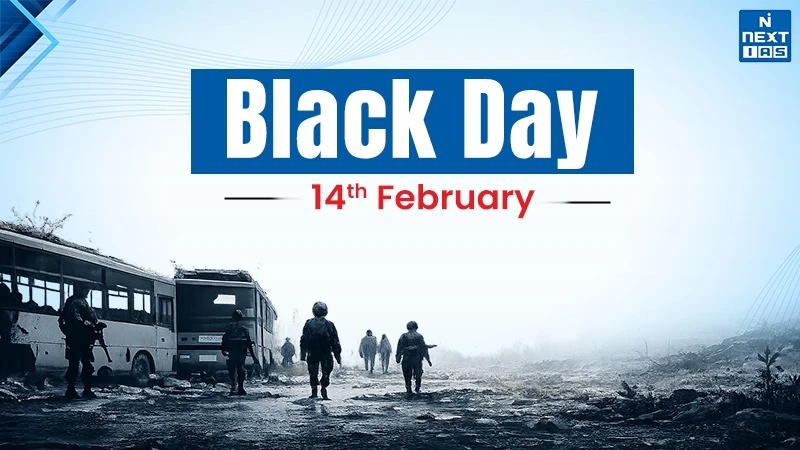
The Black Day is a dark day marked by a terrible incident and deep shock, leaving a country in mourning or sorrow. The black day for India is marked on February 14th every year as "Black Day", in remembrance of the Pulwama terror attacks. The attack was carried out by a Suicide Bomber of Jaish-e-Mohammed, who targeted a CRPF convoy in Pulwama, Jammu & Kashmir, killing 40 valiant jawans on February 14th, 2019. This is the deadliest attack on Indian security forces.
Background of the Black Day - Pulwama Attack
On 14 February, 2019, a convoy of vehicles carrying over 2,500 CRPF personnel was moving along the Jammu-Srinagar Highway. This convoy was targeted by a suicide bomber driving a vehicle loaded with explosives in Pulwama district. This incident happened as the CRPF personnel were on the way to Srinagar from Jammu. A large group of the soldiers were travelling together, therefore, the fatalities were more.
Adil Ahmad Dar, the suicide bomber of the attack, was a local kashmiri. He was earlier radicalised and recruited by the Pak-based terror group Jaish-e-Mohammed (JeM). This group had claimed responsibility for the attack that killed 40 Indian soldiers and left many others injured. This ferocious terrorist attack shocked the entire nation and further escalated tensions between India and its neighbouring country Pakistan.
About Pulwama Terrorist Attack
- The Pulwama terrorist attack was planned and executed by JeM, a terrorist organisation which is placed under the first schedule of the Unlawful activities (Prevention) act, 1967 by India.
- The attacker or the suicide bomber rammed a vehicle full of explosives into the CRPF vehicles which caused massive blast.
- This strike demonstrated a draconian assault on the state security forces of our nation.
- It was widely condemned both nationally and internationally.
- The attack led to many sanctions on Pakistan including revoking Pakistan’s Most Favoured Nation Status & raising tariffs on Pakistani goods.
- Eventually, the Indian Air Force(IAF) launched the Balakot airstrike on 26 February, 2019.
- The airstrike targeted the JEM camps in Pakistan occupied Kashmir (PoK).
- This military response was highly applauded both nationally and globally.
- Diplomatic relations were impacted afterwards and it also raised the security concerns.
Impact of 14th Feb 2019 - Black Day for India
- The Pulwama attack impacted the cross-border security measures in India.
- It was a reminder of the threats emerging from terrorism worldwide.
- The tragic loss of 40 soldiers instilled nationwide grief and solidarity.
- Nationwide public outrage in the form of marches and protests were held to honor the martyrs.
- The attack resulted in renewed emphasis on intelligence and counter-terrorism operations & improved measures.
- It also instigated political and diplomatic efforts to disassociate the terrorist networks and their sponsored states.
- The incident further deteriorated the Indo-Pak relations, resulting in tensions and trust issues between the two neighbors.
Timeline of India’s Retaliation to the Attack
| S.No. | Date | Key Details |
|---|---|---|
| 1 | 14th Feb 2019 |
|
| 2 | 15 to 16 Feb 2019 |
|
| 3 | 18 to 19 Feb 2019 |
|
| 4 | 26th Feb 2019 |
|
| 5 | 27th Feb 2019 |
|
| 6 | 28th Feb 2019 |
|
| 7 | 1st Mar 2019 |
|
| 8 | 1st May 2019 |
|
International Reactions and Solidarity
- The international reactions on Black Day marked the Pulwama attack of 14 February, 2019 showcased a global condemnation of terrorism.
- It also supported the right to protection of the citizens of one’s countrymen.
- Countries like the United States, Russia, France and the United Kingdom also condemned the attack.
- They emphasized the need for a peaceful resolution in South Asia.
- The United Nations Secretary General also expressed solidarity and called for efforts to prevent further violence.
- International Civil Society, Media and Indian diaspora communities held campaigns raising awareness against terrorism.
- They also advocated for peace and tranquility.
- Overall, the international reactions on Black Day sends a message of unity against the terrorism.
- It offers strong moral support to India and calls for collaborative efforts to ensure such heinous attacks or an act of war are not repeated in future.
Significance of Black Day
- Black day or 14 Feb, 2019 marks the sacrifice of Indian soldiers and honoring their bravery and dedication.
- It also signifies a day of national unity which reminds people across regions of their shared obligation to peace and security.
- Additionally, Black Day highlights the ongoing challenges in the form of terrorism and the importance of resilience and building robust defense capabilities.
- It showcases a commitment to combat terrorism and uphold the democratic values.
- The remembrance of the ‘black day’ sends a message loud and clear that sacrifices are never forgotten and that the fight against terrorism shall continue till it ends.
Way Forward
Black Day should evolve from mere mourning to constructive resolve such as strengthening intelligence and convoy security, ensure sustained support for martyrs’ families, counter radicalisation and prevent misinformation, and use annual observances in schools and communities to promote national unity, constitutional values, and public awareness against terrorism’s human and social costs.
Conclusion
Black Day in India on 14 Feb, 2019 is not just a random day of grief but a dignified pledge to remember the martyrs of the Pulwama attack. By doing this, one can keep their legacy alive through the unwavering commitment to national security. It calls for introspection on the costs of terrorism and the need for continued vigilance, unity at times of adversity. Black Day stands as a powerful symbol of sacrifice, courage and the longlasting spirit of the nation.
FAQs about Black Day
When is black day observed in India?
Black Day is observed on 14 Feb every year. On 14 February 2019, 40 CRPF personnel faced a brutal terrorist attack at Pulwama in Jammu & Kashmir.
What is the 14 February Black day Pulwama attack?
A brutal terrorist attack occurred at Pulwama in Jammu & Kashmir on 14 February, 2019 and is regarded as a black day in India.
