
 80813-00200


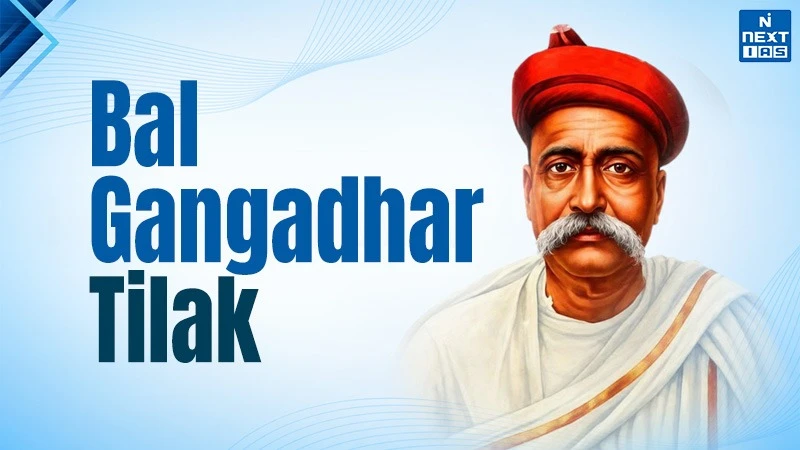
Bal Gangadhar Tilak popularly nicknamed as Lokmanya (accepted by the people) or the uncrowned king of India. Bal Gangadhar Tilak, born on 23rd July 1856 in a Maharashtrian Brahmin family in Ratnagiri, Maharashtra. He was a prominent leader of India's freedom struggle and a pioneer of Indian nationalism. He is remembered for his call for Swaraj. His efforts to unite the masses and his revolutionary contributions to the independence movement. He is one of the persons who contributed to the revolutionary movement in India.
Tilak was often called the "Father of Indian Unrest" by British author Valentine Chirol in his book Indian Unrest and "Maker of Modern India" by Mahatma Gandhi. His clarion call for Swaraj and his unique blend of religion with politics established him as a leader of the masses, inspiring countless Indians to join the freedom struggle.
The Lokmanya Tilak National Award Information
- It was Instituted in 1983 by Tilak Smarak Mandir Trust.
- It is an annual honor presented on the death anniversary (1 August) of Tilak.
- It honors individuals who contribute extraordinarily to national development and progress.
- It includes a prize of Rs. 1 lakh, a memento, and a citation.
- Recipients 2025: Union Minister Nitin Gadkari, for his work in transforming India's infrastructure. 2024: Author and social worker Sudha Murty.
Biography of Lokmanya Tilak
Bal Gangadhar Tilak, also popularly known as Lokmanya Tilak, was born on 23rd July, 1856 in Ratnagiri of Maharashtra. He belonged to a very educated family and had an inherent inclination towards education and culture of India. He got married to Satyabhamabai (Tapibai) in the year 1871. He completed his studies from the Deccan College and also pursued studies in law.
He helped to found the Deccan Education Society in 1884 and also played a significant role in the formation of Fergusson College. Tilak used Kesari and The Mahratta to promote the ideas of nationalism and denounce British rule. He popularized public celebrations of Ganapati and Shivaji Jayanti in order to create political consciousness. His slogan was "Swaraj is my birthright and I shall have it."
Religious and Cultural Revivalism
- Through the use of religious symbols and celebrations, Tilak managed to bring people together and nurture their nationalistic feelings.
- He came up with Ganesh Utsav and Shivaji Festival. These served as platforms to bring the masses together and instill anti-British feelings among them.
- In this way, his leadership transcended both social and economic boundaries.
Home Rule Movement and Political Contributions
- He started the Home Rule League movement with Annie Besant in 1916.
- This movement called for self-rule under the British Empire and fuelled nationalistic sentiments across India.
- Tilak was very instrumental in trying to bridge the gap that existed between the moderate and the extremist factions within the Congress Party after the Surat Split in 1907.
Contributions of Bal Gangadhar Tilak as Freedom Fighter
| Contribution Area | Details |
|---|---|
| Swaraj (Self-rule) | 1st leader to proclaim, "Swaraj is my birthright and I shall have it". |
| Mass Mobilization | Popularised Ganesh Utsav and Shivaji Jayanti as public festivals for unity . |
| Extremist Leadership | Formed the "Lal-Bal-Pal" trio; advocated assertive, direct action in Congress. |
| Swadeshi & Boycott Movements | Key leader in the Swadeshi, boycott during the Anti-Partition of Bengal (1905). |
| Journalism | Started Kesari (Marathi) & Mahratta (English) to spread nationalist sentiments. |
| Texts |
During his imprisonment in Mandalay, he wrote
Gita Rahasya. He also authored The Arctic Home in the Vedas. |
| Home Rule Movement | Founded the Home Rule League (1916) for wider agitation, with Annie Besant. |
| Social & Educational Reform | Advocated for national education and uplift of society. |
| Hindu-Muslim Unity | Signed the Lucknow Pact (1916) with Jinnah for joint demands from the British. |
| Cultural Nationalism | Revived festivals; used cultural symbols for political awakening. |
| Legacy | Inspired mass nationalism; called "Maker of Modern India" by Gandhi. |
Tilak Swaraj Fund
- Tilak Swaraj Fund was established by Mahatma Gandhi in 1920 after the death of Bal Gangadhar Tilak.
- The Fund was aimed at supporting the Non-cooperation movement in 1920-21.To promote indigenous goods (Khadi) etc.
- It was aimed to collect 1 crore rupees to support freedom struggles and national education.
Ideology of Lokmanya Tilak
Tilak's ideology revolved around the following principles:
- Swaraj (Self-Rule): He was the first to articulate the demand for complete independence as India's ultimate political goal.
- Mass Movement: He believed in involving the masses in the freedom struggle.
- Educational Reform: He emphasised quality education as a means to awaken the national consciousness and empower the youth.
- Cultural Nationalism: He aimed to instill pride and unity among Indians through cultural symbols and festivals.
Legacy
- Educator: He established educational organizations such as Poona New English School and Fergusson College. Thus emphasizing education as an instrument of social and political reform.
- Mobilization: His efforts in employing festivals for political ends were remarkable in that regard.
- Radicalism: The radical ideas espoused by Tilak added another level of intensity to the fight for freedom.
- Home Rule League: He and Annie Besant mobilized the masses through Home Rule League.
FAQs on Lokmanya Tilak
Who was Lokmanya Tilak?
Bal Gangadhar Tilak was popularly known as Lokmanya.
What are the 4 principles of Bal Gangadhar Tilak?
His 4 principles include: Swaraj, Swadeshi, National Unity and Social Reform.
