
 80813-00200
Raghav Jhunjhunwala, All India Rank-4, UPSC CSE 2025
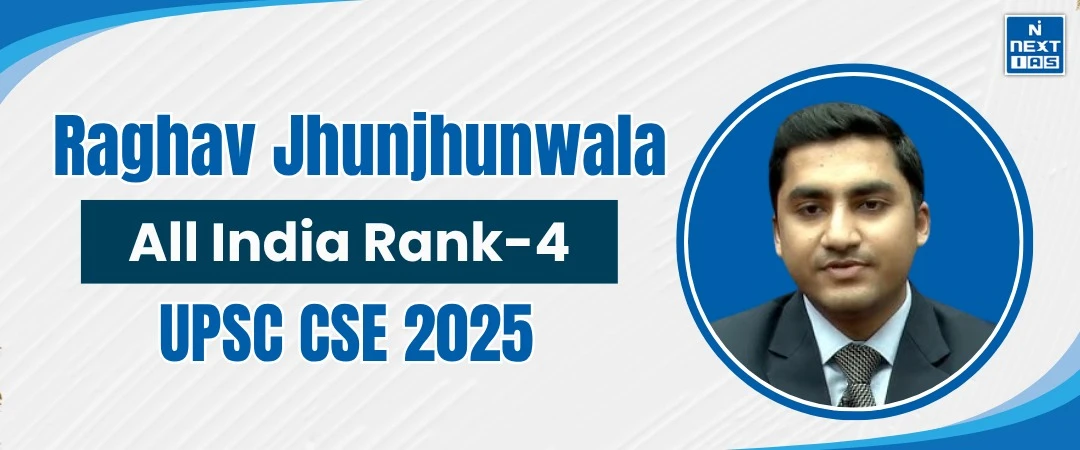
Raghav Jhunjhunwala at the age of 25, an alumnus of Shri Ram College of Commerce (SRCC), University of Delhi and belongs to Bihar. He secured All India Rank (AIR) 04 in the UPSC CSE 2025 in his 3rd attempt. He has chosen Economics as his optional subject.
Personal Details of Raghav Jhunjhunwala
| Category | Details |
|---|---|
| Name | Raghav Jhunjhunwala |
| Rank | AIR-4, UPSC CSE 2025 |
| Hometown | Muzaffarpur |
| State | Bihar |
| Attempt in UPSC | 3rd |
| Graduation Degree | B.A. (Honours) in Economics |
| College | Shri Ram College of Commerce |
| Optional Subject | Economics |
About Raghav Jhunjhunwala & His Preparation Journey
Raghav Jhunjhunwala, hails from Muzaffarpur, Bihar and comes from a supportive middle-class family that emphasized education and public service. A bright student since childhood, he got 10 CGPA in high school. He pursued B.A. (Honours) in Economics from Shri Ram College of Commerce, University of Delhi, one of India’s premier institutions.
His academic training in economics strengthened his analytical thinking and understanding of governance and policy issues.Motivated by public service, he began UPSC preparation after graduation, building strong basics through NCERTs, standard books, current affairs, and consistent answer-writing practice, ultimately achieving outstanding success.
All India Rank-4, UPSC CSE 2025 Marksheet
The marks of UPSC CSE 2025 topper Raghav Jhunjhunwala (AIR-04) reflects a strong performance in both the written examination and the personality test.
| Name | Written Marks | Interview Marks | Total Marks | Rank |
|---|---|---|---|---|
| RAGHAV JHUNJHUNWALA | 847 | 195 | 1042 | 4 |
FAQs about AIR 4, CSE 2025
Who is Raghav Jhunjhunwala?
Raghav Jhunjhunwala achieved fourth place in the UPSC Civil Services Examination 2025 after passing his exams to become a successful candidate. His achievement reflects perseverance, disciplined preparation, and consistent improvement through multiple attempts.
Where is Raghav Jhunjhunwala from?
Raghav Jhunjhunwala belongs to Muzaffarpur. His success in the UPSC Civil Services Examination results from the academic dedication and determination he developed during his childhood years in Bihar.
Which courses were taken by Raghav Jhunjhunwala at NEXT IAS?
During the journey of UPSC preparation, Raghav Jhunjhunwala (AIR-4 UPSC CSE 2025) took the coaching for Economics Optional Foundation Course and GS Mains Advance Course from NEXT IAS.
Our GS Mains Advance Course provides quality guidance and enrichment for the mains exam because preparation without practice is just reading. This course brings together the full depth that GS demands, which includes an ethics enhancer program that builds the required thinking for GS-4 Paper, an essay guidance program, and GS value addition classes by experts who actually know what is required for mains.
