
 80813-00200



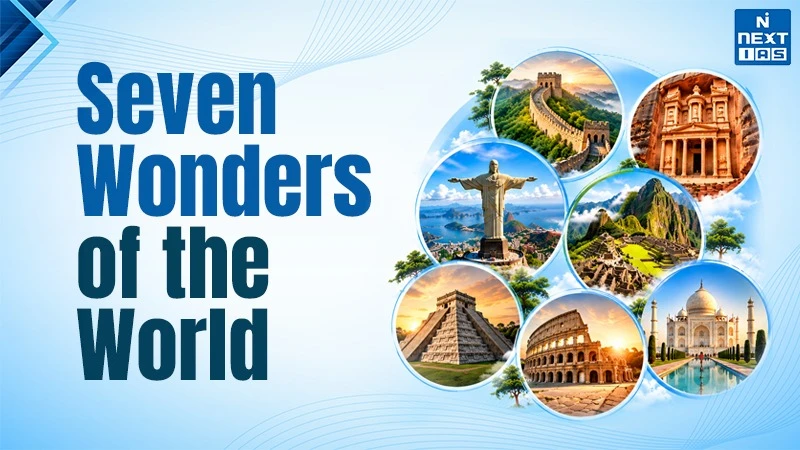
The 7 Wonders of the World demonstrate some of the incredible feats achieved by mankind through architectural marvels and engineering skills and creativity. The New Seven Wonders of the World, declared in 2007 as a result of a worldwide ballot held by the New 7 Wonders Foundation. They include the Great Wall of China (China), Petra (Jordan), Christ the Redeemer (Brazil), Machu Picchu (Peru), Chichen Itza (Mexico), Colosseum (Italy) and Taj Mahal (India).
All these monuments represent individual civilisations, ranging from the ancient Mayan city of Chichen Itza to the amazing Incan citadel of Machu Picchu in Peru. The Taj Mahal of India, a white-marble architectural wonder constructed by Mughal emperor Shah Jahan in honour of Mumtaz Mahal. It is an architectural masterpiece. Notably, the Great Pyramid of Giza of Egypt, the sole survivor of the seven wonders of the ancient world, was awarded a special place in the 2007 campaign.
About the Seven Wonder of the Worlds
- Civilisation always expresses its creativity, faith, power and imagination through architecture and structure and other forms etc. Throughout history or the world, countless buildings, structures and monuments have been built, but a few of them represent extraordinary beauty, engineering excellence and cultural significance, which at present marks as the seven wonders of the world.
- These seven wonders span different continents, cultures and time periods, yet all share one common theme: they are living testaments to the capacity of human beings to dream beyond their time.
- The seven wonders of the world includes -
- Great Wall of China,
- The Taj Mahal of India,
- Machu Picchu of Peru,
- Christ the Redeemer Statue of Brazil,
- Petra of Jordan,
- Colosseum of Italy, and
- Chichen Itza of Mexico.
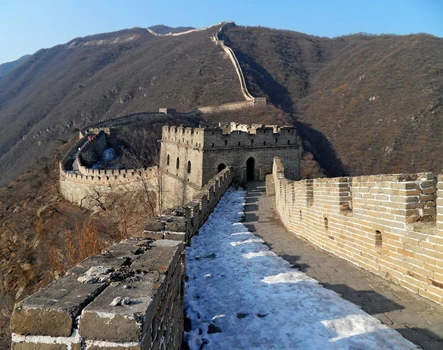
- The Great Wall of China is one of the most impressive architectural structures in history.
- The wall stretched across a total of 5,500 miles (8,850 km), extending from Lop Lake in the west to Dandong in the east.
- It comprises 3,889 miles of actual wall, 223 miles of trenches and 1,387 miles of natural barriers that included things like hills or rivers.
- The material used for The Great Wall is made up of stone, brick, tampered earth, wood and related materials.
- Different walls were built or updated throughout the various emperors, but history shows that construction began as early as the 7th century BC.
- The majority of the wall that exists today comes from the Ming Dynasty between the years 1368-1644.
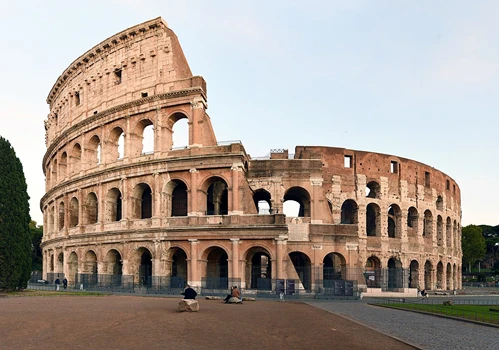
- The Roman Colosseum, originally named Flavian Amphitheatre, is the world’s largest amphitheater ever built.
- It is an elliptical building constructed 615 feet long and 510 feet wide.
- The base encompasses 24,000 sqm and the outer wall reaches a height of 48 metre.
- The outer wall is believed to have needed 3,531,467 cubic feet of travertine stone.
- Completed in 80 AD, it is constructed out of travertine, tuff, and brick-faced concrete.
- The average audience capacity range was approximately 65,000 spectators.
- It was used for contests among the gladiators, and unfortunately, around 9,000 animals were killed during the inaugural games.
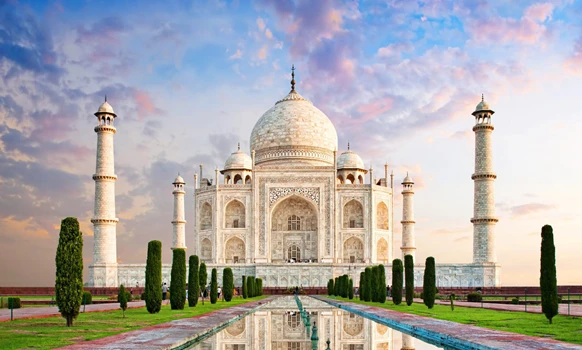
- The Taj Mahal is a mausoleum, which name translates to, “Crown of the Palace.”
- The Taj Mahal is located on the Yamuna River near Agra, India.
- Mughal Emperor Shah Jahan commissioned the mausoleum in 1632 to serve as the tomb for his favorite wife, Mumtaz Mahal.
- Her tomb is the crowning centerpiece of the It is constructed out of ivory-white marble.
- The complex consists of a mosque and a guest house all encompassed by a garden.
- The base of the mausoleum is a multi-chambered cube with chamfered corners.
- Although not symmetrical, the 8-sided structure is 55 m on the four long sides.
- The marble dome is the crowning feature measuring 115 feet (35 m) high.
- Each corner features a minaret that stands 130 feet tall. The entire structure reflects the designers leaning towards symmetry.
- Between 7 and 8 million people visit the Taj Mahal every year.
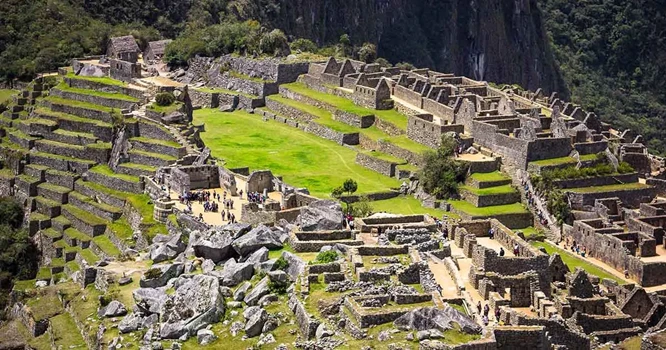
- Machu Picchu is a Peruvian treasure found within the Cusco Region.
- It was an Inca citadel constructed during the 15th century.
- It sits atop a mountain range at 2,430 m above sea level.
- From the Quechua language, the name Machu Picchu means “old peak.”
- It was constructed between 1450 and 1460, only inhabited for about 80 years before being abandoned due to the Spanish Conquest.
- It comprises an urban section, an agricultural section, an upper town area, and a lower town area.
- The temples were also located in the upper town whereas the warehouses were in the lower town area.
- There are approximately 200 buildings that housed approximately 750 people who were mostly there to support the royal family.
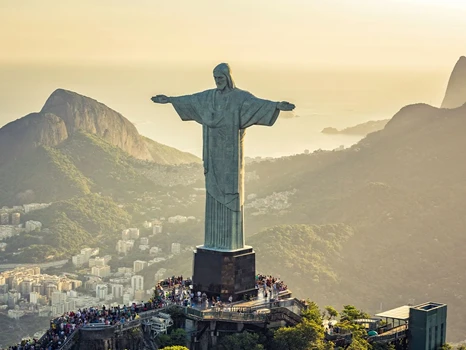
- This massive sculpture built by Paul Landowski, Heitor da Silva Costa, and Albert Caquot between 1922 and 1931 stands 98 feet high and weighs 635 metric tons.
- Standing tall atop Corcovado mountain in the Tijuca National Park, Christ the Redeemer overlooks the entire city of Rio.
- The span from finger tip to fingertip is 28m and there is a small chapel housed in the base.
- The entire monument stands 38 meters tall, with the statue itself standing at 30 meters. Towering over the city of Rio de Janeiro, it is one of the tallest statues in the world.
- Due to its massive size and optimal location, this epic sculpture can be enjoyed from both above and below.
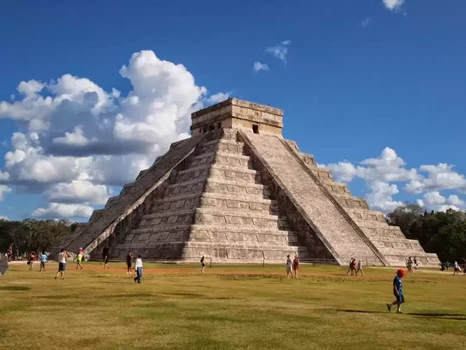
- Located in Yucatan, Mexico, Chichen Itza, once one of the largest Maya cities, had numerous pyramids and temples that were used to track celestial events.
- This sacred site was one of the greatest Mayan centres of the Yucatan peninsula.
- Throughout its nearly 1,000-year history, different peoples have left their mark on the city.
- The Maya and Toltec vision of the world and the universe is revealed in their stone monuments and artistic works.
- The fusion of Mayan construction techniques with new elements from central Mexico make Chichen-Itza one of the most important examples of the Mayan-Toltec civilization in Yucatan.
- Several buildings have survived, such as the Warriors’ Temple, El Castillo and the circular observatory known as El Caracol.
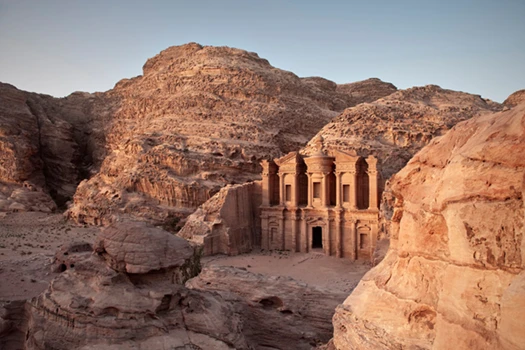
- Originally known to its inhabitants as Raqmu, Petra is a historic city in Southern Jordan dating back to the fourth century BC.
- This once-great metropolis continues to marvel at due to its rock-cut architecture and technologically-advanced irrigation system.
- Another name for Petra is the Rose City due to the color of the stone out of which it is carved.
- Because of the city’s unsuitable location amongst desert and mountains, it is only due to this irrigation system that the “Rose City” was able to thrive.
- The exceptional natural and architectural beauty, as well as its historical and cultural significance showcase the pinnacle of human creativity.
- They are the testament of old civilizations and an ongoing source of inspiration.
- Each different structure reflects the history, tradition, belief, culture and values of the civilization that built it. Eg. Petra showing its desert culture and Tajmahal showing it indo-islamic architectural synthesis etc.
- They attract visitors from worldwide features in many educational resources.
- Some of the structure hold spiritual and national symbolism eg. Christ the Redeemer is a significant symbol of christianity.
- They act as a connector of modern society to ancient society.
- They attract millions of tourists from around the world generating employment, economic activities and livelihood etc.
- Housing and urbanization activities around these places should be regulated by the government or local authorities.
- Buffer zone and heritage-sensitive urban planning around these structures can help to maintain environmental and visual integrity.
- Promoting responsible tourism behaviour like signage, guided tours and enforcement of regulations to control vandalism and behaviour of visitors.
- To promote global cooperation for expertise, best practices and resources through international platforms.
- Authorities should prioritize scientific restoration methods, regular assessment and conservation over reactive repairs.
- Collaboration with the United Nations Educational, Scientific and Cultural Organization UNESCO) and global experts is essential.
1. Great Wall of China
2. Roman Colosseum
3. Taj Mahal
4. Machu Picchu
5. Christ the Redeemer
6. Chichen Itza
7. Petra
Significance of the Seven Wonders
Way Forward
FAQs about 7 Wonders of the World
What is the distance of the great wall of China?
The great wall of China stretched across a total of 5,500 miles (8,850 km).
What is Petra?
Petra or Rose city is a historic city in Southern Jordan, known for its rock-cut ancient architecture. It is one of the seven wonders of the world.
Where is Christ the Redeemer located?
The iconic Christ the Redeemer statue is located in Rio de Janeiro, Brazil, is one of the seven wonders of the world.
