
 80813-00200


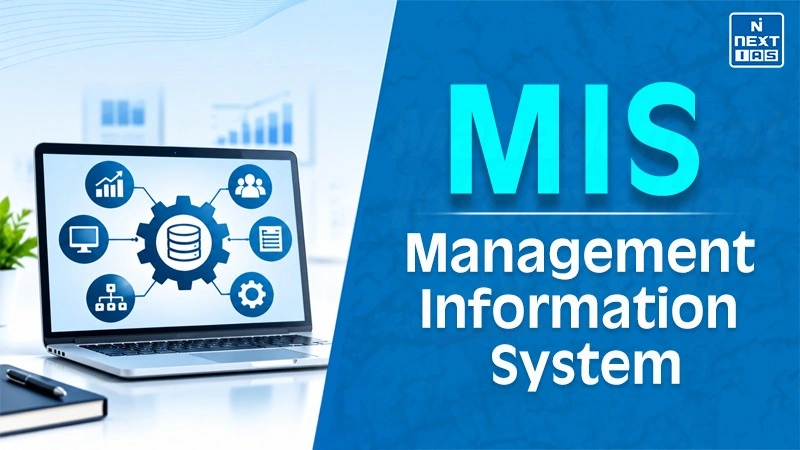
The MIS full form is Management Information System (मैनेजमेंट इंफॉर्मेशन सिस्टम ). It is a software to collect, process, store, and present information to help companies to plan, monitor, and decision making. The components of MIS are people, business procedures, data, hardware and software.
The Management Information System (MIS) reports generally provide the summary of sales, expenses, inventory, production, and staff performance. It helps the companies or managers to compare the actual result with the desired targets, and identify the trend.
MIS provides the reports on a daily, weekly and monthly basis. However, it can be customized as per the desired dates. Its utility depends on accurate data, timely updates and better interpretation. MIS helps in improving the managerial decision making by presenting essential information.
The Customer Relationship Management (CRM), Enterprise Resource Planning (ERP), and Human Resource Information System (HRIS) are some of the latest examples of the Management Information System (MIS).
Types of Management Information System
| S.No. | Types of MIS | Main Purpose | Example Output |
|---|---|---|---|
| 1 | Sales and Marketing | It monitors the sales performance, customer pattern, and marketing outcome. | Monthly sales by product or region. |
| 2 | Financial and Accounting | It maintains a track record of revenue, expenditure, budgets, and financial performance. | Budget vs Actual expense report. |
| 3 | Inventory | It monitors the stock. | Low stock and Inventory ageing report. |
| 4 | Human Resource | It organises the workforce information, attendance, monthly payroll, and staff data. | Department wise attendance report of all employees. |
| 5 | Production | It monitors the manufacturing output, resource usage, and production efficiency. | Planned vs Actual production report. |
| 6 | Integrated Enterprise | It combines the information across departments to support coordinated management. | Performance dashboard of Company. |
Steps to Form a MIS Report
| Steps | Stage | Action Required |
|---|---|---|
| 1 | Define Objective | You need to identify your target audience and select relevant Key Performance Indicator (KPI) to be measured. |
| 2 | Data Collection | You need to gather raw data from the database, ERP software, CRM systems, and financial ledgers. |
| 3 | Data Processing | You need to find errors, and remove duplicate records. |
| 4 | Analysis & Aggregation | You need to calculate the changes, and measure performance aggregate. |
| 5 | Visual Formatting | You can make use of clear tables, charts, status indicators, and summary sections. |
| 6 | Review & Distribution | You are required to audit data for accuracy, secure necessary approvals, and share with the stakeholders. |
Applications
- The companies make use of MIS reports for comparing the actual sales, production, and expenses for achieving the desired target.
- The revenue and budget report provides for the financial planning of the company. It helps in analysing the changes in business performance and enables better informed allocation of resources.
- The Stock and Production reports help in monitoring the inventory, identify the slow moving item and enhance the operational performance. It makes coordination among the purchasing, production, sales, and warehouse teams.
- The attendance, monthly payroll, and staff report help companies to analyse the workforce performance pattern and other departmental needs.
Components
- People: It includes the Managers, Employees, and Specialists who use the MIS, make use of information, and make informed decisions.
- Data: It includes the facts and records which are collected and processed to produce meaningful information.
- Business Procedure: These are the defined steps for collection, validation, processing, and sharing information.
- Technology: It includes the hardware and software used to store, process, analyse, and present information.
Example of an MIS report
| Product | Target sales | Actual sales | Variance | Target achievement | Suggested Action |
|---|---|---|---|---|---|
| A | Rs.5 Lakh | Rs.5.5 Lakh | +Rs.50,000 | 110% | You need to review the drivers of higher sales. |
| B | Rs.4 Lakh | Rs.3.6 Lakh | −Rs.40,000 | 90% | You need to look into the shortfall in sales. |
| C | Rs.3 Lakh | Rs.3 Lakh | Rs.0 | 100% | You need to monitor whether performance remains stable. |
| Total | Rs.12 Lakh | Rs.12.10 Lakh | +Rs.10,000 | 100.83% | You need to review product level differences despite meeting the overall target. |
Other Full Forms of MIS
| S.No. | Full form of MIS | Context |
|---|---|---|
| 1 | Monthly Income Scheme | Banking and savings |
| 2 | Minimally Invasive Surgery | Medicine |
| 3 | Marketing Information System | Marketing |
| 4 | Market Information System | Trade and commerce |
| 5 | Management Information Services | Business and IT |
| 6 | Medical Information Services | Healthcare |
| 7 | Medical Insurance Scheme | Health insurance |
FAQs
What is the full form of MIS?
The MIS full form is Management Information System.
What is the objective of MIS report?
The objective of the MIS report is to provide timely report, accurate performance data to companies for assessing the performance, planning, and operational control.
