
 80813-00200


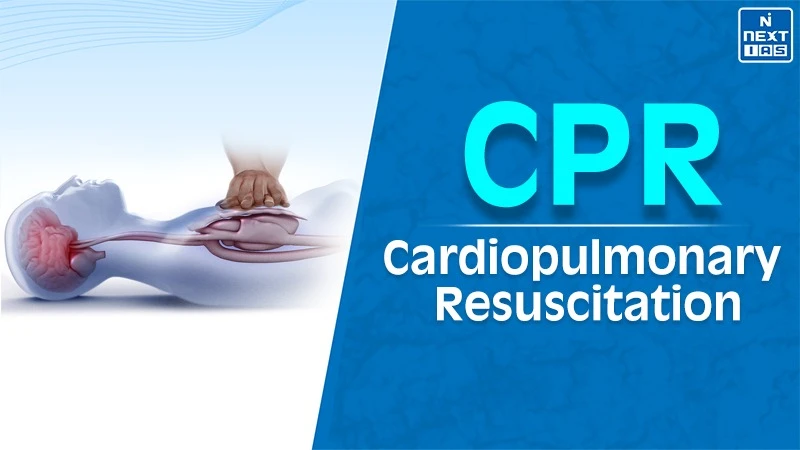
CPR full form is Cardiopulmonary resuscitation, it is an emergency medical process of giving artificial breaths to revive an abnormal heart pulse rate. It entails chest compressions together with rescue breaths in order to save a person whose breathing and heartbeat have ceased due to such conditions as sudden cardiac arrest, drowning or suffocation. This process serves as an artificial pump which keeps the oxygen-filled blood flowing to the critical organs of the body including the brain manually. The "golden hour" saves lives from being lost irreversibly before the arrival of emergency medical services.
कार्डियोपल्मोनरी रिससिटेशन (CPR) एक आपातकालीन जीवन-रक्षक प्रक्रिया है जो तब की जाती है जब किसी व्यक्ति का दिल काम करना बंद हो जाए या वह सांस न ले रहा हो। इसमें छाती पर लगातार दबाव (कम्प्रेशन) और कृत्रिम सांस देना शामिल होता है, ताकि मस्तिष्क और अंगों तक ऑक्सीजनयुक्त रक्त पहुंचता रहे।
मूल चरण: मरीज को सपाट सतह पर लिटाएं, छाती के बीच में दोनों हाथ रखकर 100–120 कम्प्रेशन प्रति मिनट की दर से दबाएं, और प्रत्येक 30 कम्प्रेशन के बाद 2 रेस्क्यू ब्रेथ दें (यदि प्रशिक्षित हों)।
CPR Steps in an Emergency
| S.No. | Steps | Action |
|---|---|---|
| 1 | Check & Call |
|
| 2 | Position & Hand Placement |
|
| 3 | Chest Compressions |
|
| 4 | Rescue Breaths |
|
| 5 | Continue & Use AED |
|
What Happens to the Human Body During Cardiac Arrest?
When someone is going through cardiac arrest, the heart will suddenly stop pumping blood in an effective manner, which will result in the loss of oxygen supply to the brain and organs. In less than a minute, the person will become unconscious and stop breathing. Brain cells start dying because of the lack of oxygen and suffer irreversible damage in a matter of minutes. CPR works by performing manual chest compressions and giving breaths for the supply of oxygen to the patient. While it does not restore the normal beating of the heart, it keeps the organs functioning until defibrillation is administered.
Cardiopulmonary Resuscitation Process and Guidelines
The procedure known as Cardiopulmonary Resuscitation (CPR) is performed on individuals who have gone into cardiac arrest or ceased breathing. Firstly, it is important to make sure that the environment where you perform CPR is safe before going near the individual. Checking their responsiveness can be done through a gentle tap on their shoulder and shouting out loudly. If the individual does not respond and does not breathe, one should call 911 right away and get an Automated External Defibrillator (AED) if there is one available.
Current CPR is done according to CAB, which stands for Compressions, Airway, and Breathing. The process starts with chest compressions, done at a rate of 100-120 compressions per minute. The chest is pressed down 5-6 cm (2-2.4 inches) deeply in adults and let it fully rebound from each compression. After 30 compressions, the airway will then be opened with the head-tilt, chin-lift technique and give 2 breaths of rescue breathing if there is training for it. The CPR cycle should continue until medical assistance has arrived or the individual recovers. If there is an available AED, use it following the prompts of the device.
Why is CPR Important?
- Permanent death and brain damage would quickly occur once blood circulation stops. Therefore, it is necessary to ensure that blood circulation and breathing continue until help from medically trained personnel arrives, and this can be done through CPR.
- CPR can be performed by any expert, where it involves external chest compression and rescue breaths.
- CPR is done during the first six minutes after the heart stops beating and can keep a person alive until medical aid starts.
- CPR is done until the heartbeat resumes its normal rhythm or until the person dies.
FAQs about CPR
What is CPR?
CPR is a technique of providing chest compressions and rescue breaths to ensure that there is circulation while in a state of cardiac arrest.
When is CPR required?
In cases where someone is unconscious and not breathing.
How many compressions should be performed?
There should be 100 to 120 compressions per minute.
