
 80813-00200


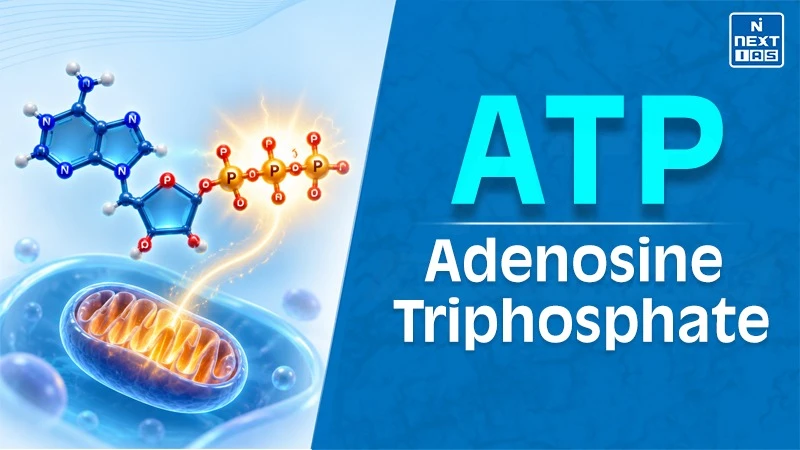
Adenosine Triphosphate (ATP) is called the energy currency of the cell. It provides the energy needed for virtually all the vital cellular functions. In chemical form, ATP is made up of an adenine ring, a ribose sugar and three phosphate groups. Energy is released during hydrolysis whereby ATP is converted to ADP (Adenosine Diphosphate) and inorganic phosphate.
The energy released during the process powers muscle contraction, nerve signal transmission, active transport, protein synthesis, and metabolism among other functions. ATP is regenerated by cellular respiration occurring primarily in mitochondria and through photosynthesis in plant cells. An interesting thing about ATP is that the human body regenerates massive amounts of ATP each day instead of having big stores of ATP.
Structure of ATP
ATP (Adenosine Triphosphate) is a type of nucleotide. It has three primary parts such as adenine, ribose sugar, and three phosphate groups. Adenine is a nitrogen base whereas ribose is a five-carbon sugar. Adenine and ribose form a compound called adenosine. Three phosphate groups are bound to the ribose sugar with the help of some bonds. The chemical formula of ATP is C₁₀H₁₆N₅O₁₃P₃. Bonds that are present between phosphate groups in ATP molecules play a very significant role in transferring energy. Removal of the terminal phosphate group via hydrolysis results in ATP becoming ADP.
Difference Between ATP, ADP and AMP
| Feature | ATP | ADP | AMP |
|---|---|---|---|
| Full form | Adenosine Triphosphate | Adenosine Diphosphate | Adenosine Monophosphate |
| Phosphate groups | 3 | 2 | 1 |
| Energy status | Higher energy potential | Lower than ATP | Lower than ADP |
| Formation | Regenerated using energy | Formed from ATP | Formed from ADP or other pathways |
The Working Process
ATP functions through a hydrolysis reaction, where ATP loses its energy. Through the breaking of the bond between the terminal phosphate group and the rest of the molecule through water. As a result of the reaction, ATP breaks down to form ADP (Adenosine Diphosphate) and an inorganic phosphate. This releases energy which is used for many functions in the cell, like muscle contraction, active transport, neurotransmission, and protein synthesis. Due to the constant need for energy by cells, the ATP molecules are continually replenished through the formation of ATP from ADP and inorganic phosphate through cellular respiration. Photosynthesis produces ATP in plants.
Major Functions
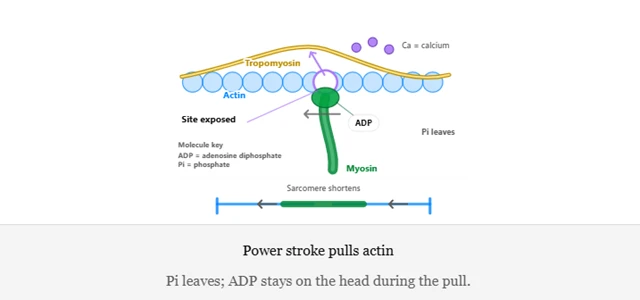
- Muscle Contraction: Used for the contraction and relaxation of muscle fibres allowing body movement.
- Transmitting Nerve Impulses: Helps in the functions of the nerve cells by providing energy to pump the ions which keep up the electrical gradient.
- Active Transport: Gives energy for the transport of substances like sodium, potassium, and calcium ions through the cell membrane.
- Protein Synthesis: Energy used in making proteins from amino acids.
- Cell Division and Growth: It provides energy required in DNA replication, cell division, and growth of new cells.
- Maintenance of Cells' Activities: Used in vital metabolic reactions and repair of cells.
Main Role of Mitochondria in ATP Production
- Mitochondria are known as the powerhouse of the cell as they provide almost all the ATP needed for the processes going on inside the cells by means of aerobic respiration.
- It should be emphasized that the inner mitochondrial membrane is especially important as it includes the proteins of the Electron Transport Chain (ETC).
- These proteins are responsible for the transfer of electrons and transport of protons from the mitochondrial matrix to the intermembrane space, thus creating the proton gradient.
- This gradient serves as the source of energy that is necessary for ATP formation.
- There is an enzyme in the inner mitochondrial membrane called ATP synthase which allows forming ATP by the reaction of ADP with inorganic phosphate using the proton flow into the matrix.
Importance of ATP
- Muscle Contraction: Energy used in muscle movement like walking, running, heartbeat, and respiration.
- Nerve Impulse Transmission: Provides energy needed in maintaining the ion gradients for the transmission of nerve impulses.
- Active Transport: Provides the energy needed in the transport of substances across membranes from higher concentration to lower concentration.
- Protein Synthesis: Provides the energy needed in the synthesis of proteins.
- Cell Division and Growth: Provides the energy needed in DNA replication and cell division.
- Metabolic Reactions: Provides energy for various reactions in metabolism.
- Maintenance of Cellular Activities: Maintains cell structure and activities.
- Regulation of Body Temperature: Energy is used in various metabolic reactions leading to heat production.
FAQs
What is the full form of ATP?
The full form of ATP is Adenosine Triphosphate.
Explain why ATP is known as energy currency of the cell.
ATP is known as energy currency because it acts as a store house of energy and provides energy for various processes.
Where is ATP synthesized in the cells of humans?
ATP is synthesized in mitochondria during the process of cellular respiration. Some ATP is also synthesized in the cytoplasm.
What is the chemical reaction that occurs in the breakdown of ATP?
During the breakdown of ATP, it is split into ADP and Inorganic Phosphate to release energy.
Give any five uses of ATP in the body of a human being.
ATP is involved in various physiological processes such as muscle contraction, nerve impulse conduction, protein synthesis, active transport etc.
