
 80813-00200

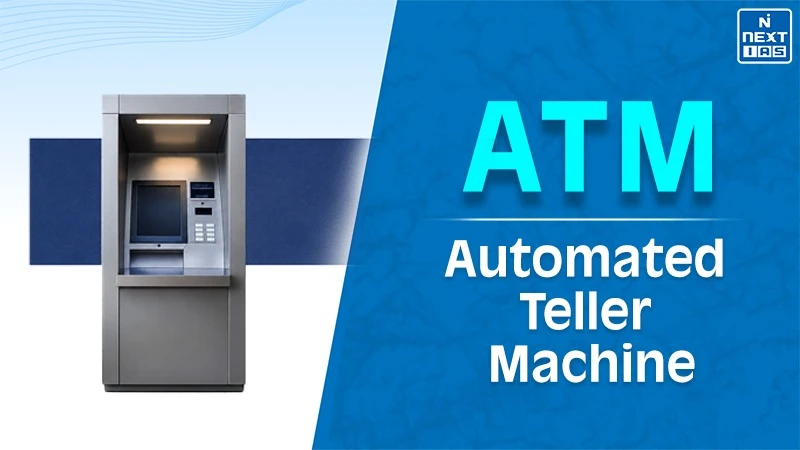
ATM full form is Automated Teller Machine. It is an electronic banking machine where a customer can withdraw money as well as avail services like PIN generation, cash deposit, check balances, fund transfers, and print mini statements. ATMs majorly operate 24 hours per day and are located in convenient locations such as near banks, shopping malls, airports, and petrol pumps. The purpose of ATMs is to make banking easy and convenient for the customers.
Evolution of ATM
The Automated Teller Machine (ATM) was invented in the 1960s. The first ATM was installed in 1967, which allowed customers to withdraw money even when the bank branches were closed. Major changes with magnetic stripe cards and the introduction of PINs in the 1970s and 1980s increased the security of transactions at ATMs.
From the 1990s onwards, the services offered by ATMs have evolved and grown from cash withdrawal to account inquiry, fund transfer, bill payments, and cash deposits. ATMs have also been integrated into networks that allow customers to use ATMs at any other bank apart from their own bank.
The current ATMs have high-tech features such as touchscreen interface, cash recycling, contactless cards, biometric systems, and even no-card withdrawal through mobile banking applications. ATMs are regularly being transformed to offer more digital banking services with the help of AI technologies.
Types of Automated Teller Machines
1. On-site ATMs
On-site ATMs are those ATMs that are set up either inside or outside the bank branches. The on-site ATMs are maintained by the bank itself and provide customers with easy access to banking facilities both during and after the operational hours of the banks. These ATMs provide various banking services like withdrawal of money, deposits, account inquiry, transferring funds, and others.
2. Off-site ATMs
The off-site ATMs are those ATMs which are set up at places other than the bank branches like shopping malls, airport, railway station, hospital, petrol pumps, and commercial complexes. Off-site ATMs help the customers to have easy access to their banking facilities in high traffic areas.
3. Cash Dispenser ATMs
The Cash Dispenser ATMs are used for cash withdrawals only. Unlike full service ATMs, these ATMs do not offer any kind of banking services other than the cash withdrawals.
4. Smart ATMs
Smart ATMs offer a variety of sophisticated banking services other than cash withdrawal through conventional ATMs. These include cash deposits, cheque deposits, payment of bills, transfer of funds, passbook updates, cash withdrawal without cards, QR codes-based payments, and video banking at some places. Most smart ATMs have touch screens and better customer service features.
5. Biometric ATMs
It involve the use of biological factors such as fingerprint scanning, iris scanning, or face recognition for identifying customers rather than using passwords alone. The technology improves security against fraud, offers an easy verification process. It is especially useful in geographical regions where there is a drive toward digitization of the financial sector.
6. White Label ATMs
White label ATMs are owned and operated by private companies other than banks but are authorized by regulatory bodies in order to offer ATM services. Even though they do not come under any particular bank, their users from various banks can withdraw money and conduct some basic banking operations. These ATMs facilitate the provision of banking services to rural or underserved areas.
Applications of the Machine
| S.No. | Application | Description |
|---|---|---|
| 1 | Cash withdrawal |
|
| 2 | Cash deposit |
|
| 3 | Balance enquiry |
|
| 4 | Mini statement |
|
| 5 | Fund transfer |
|
| 6 | Bill payments |
|
| 7 | PIN services |
|
| 8 | Cheque drop |
|
| 9 | Special purpose ATM |
|
| 10 | Mobile or micro ATM |
|
| 11 | White label ATM |
|
ATM Advantages and Disadvantages
Automated Teller Machines (ATMs) have facilitated easy and fast transactions by giving customers an alternative to going to the physical branches of banks. One of the key benefits that have been achieved with the help of ATMs is the fast and convenient processing of financial transactions by providing users with the facility of withdrawing cash, checking balances, transferring money, and accessing other banking facilities. Moreover, being open throughout the week for twenty-four hours, ATMs are the best option for emergency and out-of-office hour services for banking facilities.
However, some weaknesses have been experienced with the use of ATMs. First of all, there are chances of security concerns such as card skimming or theft of PINs or other types of fraud if no measures have been taken by the users. Secondly, daily limits on the amount of cash withdrawal have been set by most of the banks, which could cause inconvenience for bigger withdrawals. Moreover, there are chances of technical interruptions such as machine malfunction or network failure.
FAQs about ATM
What is the full form of ATM?
The full form of ATM is an automated teller machine.
Is it safe to use an ATM in the night time?
It is rather safe to use ATM during the night hours provided that you visit a well-lit ATM located in a safe place.
What should I do if my card is stuck in an ATM?
Do not run away from such a situation immediately. Instead, contact the customer service of your bank and report the issue.
Is it possible to withdraw money without using an ATM card?
Yes, some banks allow withdrawing money without using the ATM card nowadays. It is enough to use a special code generated by mobile app.
