


Syllabus: GS2/IR
Context
- The Indian delegation discussed cross-border cooperation with Chinese officials during the Working Mechanism for Consultation and Coordination (WMCC) on border affairs.
Key Highlights
- The meeting was part of efforts by the two sides to normalise bilateral relations.
- It also came in the wake of Prime Minister Narendra Modi’s recent remarks about India-China cooperation being essential for global stability and prosperity.
- India and China explored ways to rebuild ties, focusing on people-to-people exchanges, including resumption of direct flights and Kailash Manasarovar Yatra.
- The two sides discussed resuming dialogue in a “step-by-step” manner to stabilize relations.
India-China Relations (2025 marks the 75 Years of Ties)
- Panchsheel Agreement:
- Signed in 1954 which emphasized the principles of peaceful coexistence, mutual respect for sovereignty, and non-interference in each other’s internal affairs, forming the foundation of India-China diplomatic relations.
- Historical Tensions:
- Strained since the 1962 Sino-Indian war, deepened by recent clashes and mistrust.
- India restricted Chinese investments, banned Chinese apps (e.g., TikTok), and halted flights to China.
- Trade Relations: China overtook the U.S. in 2024 as India’s largest trading partner, with over $100 billion in imports. Despite tensions, economic ties continue to grow.
- Ongoing Mechanisms: Despite tensions, mechanisms like the Special Representatives (SR) and Working Mechanism for Consultation and Coordination (WMCC) have been in place to address the boundary issue.
- Recent Developments:
- 2024 Disengagement: India and China announced successful disengagement in eastern Ladakh.
Key areas of concern in India-China Relations
- Ongoing Border Tensions:
- The unresolved border dispute spans over 2,000 miles, marked by frequent clashes.
- Incidents in Doklam (2017), Galwan Valley (2020), and northeastern states (Sikkim, Arunachal Pradesh).
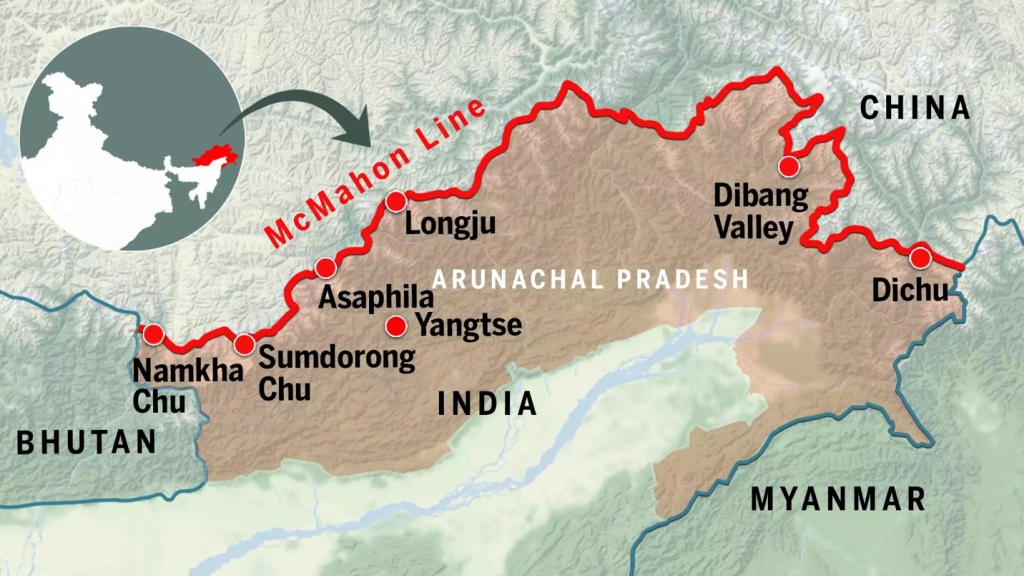
- Military Infrastructure: Both countries have heavily fortified the border with roads, railways, and airstrips for rapid troop mobilization.
- Belt and Road Initiative (BRI): India has expressed reservations about China’s Belt and Road Initiative, especially regarding the China-Pakistan Economic Corridor (CPEC), which passes through territory of India.
- Trade imbalance: While politically desirable, reducing trade dependence is complicated by China’s economic influence and India’s need for foreign investment.
- China’s growing presence in the Indian Ocean Region:
- Sri Lanka: China’s presence at Hambantota Port and investments in an oil refinery raise concerns in India.
- Nepal: China’s investments in infrastructure (e.g., Pokhara airport) challenge India’s strategic position.
- Bangladesh: China’s growing influence, including loan agreements, threatens India’s regional influence.
- Myanmar: China’s deepening ties with Myanmar’s junta, including the China-Myanmar Economic Corridor, strengthen its presence in India’s backyard.
India’s Efforts to Address these concerns
- India’s Defense Partnerships: Strengthened ties with France, Germany, Spain, and expanded naval alliances in Southeast Asia.
- Quadrilateral Security Dialogue (Quad): India’s shift towards the U.S. and its allies to counter China’s growing influence.
- Maritime Security: India has prioritized maritime security, expanding its naval capabilities and strengthening defense ties with the U.S. and Japan.
- Countering the Belt and Road Initiative (BRI): India joined alternative infrastructure projects such as the Global Infrastructure Facility and India-Middle East-Europe Economic Corridor to counter China’s BRI.
- Trade Relations: India seeks to reduce reliance on Chinese goods, especially in electronics and renewable energy.
Way Ahead
- Addressing the Border Issue: Resolving boundary disputes remains critical. Continued efforts through military and diplomatic negotiations—such as recent developments regarding Depsang and Demchok along the Line of Actual Control (LAC)—are essential to ensure stability and prevent future escalations.
- Diplomatic Engagements: Sustaining open and constructive dialogue is key. India should strengthen bilateral communication mechanisms and actively engage through regional and multilateral platforms such as BRICS, Shanghai Cooperation Organisation (SCO), and others to foster mutual understanding and strategic stability.
Source: IE
Previous article
India Pitch for UNSC Reforms
